How Bulky Waste Disposal Works in Singapore
What happens to bulky waste in Singapore after the town council collects it, from dismantling and metal recovery to incineration at Tuas South and the ash that reaches Semakau Landfill.
You have a bulky item, a sofa, a fridge, a mattress, that will not fit down the chute or into the rubbish bin. You call your town council, or book online, and the Public Waste Collector (PWC) arrives within a few days to take it away. That is the easy part. What happens next is a process most residents never see, and the answer is almost certainly not what you expect.
Singapore's bulky waste disposal system is designed for one outcome: burning. The collected item goes to a waste-to-energy plant, Tuas South, Senoko, Keppel Seghers, or the older Tuas Incineration Plant, unless it is metal, concrete, or something else that will not burn. If it burns, it is burned. If it does not, it is landfilled directly at Semakau Landfill. There is no municipal sorting centre for sofas, no repair-and-resale scheme run by the Government, and no guarantee that the metal in your old washing machine is recovered before the rest is destroyed. The system is efficient at volume reduction. It is not designed for material recovery.
Town Council Bulky Item Removal: Who Collects and What It Costs
HDB and Landed Property Collections
If you live in an HDB flat or a landed property, your town council bulky item removal is managed by the PWC that holds the NEA licence for your sector. The PWC must collect up to three bulky items per household per month at no charge. That is the rule under the current contract period, which runs from 2021 to 2028. Book a slot by phone or online. Leave the item at the kerbside or a designated drop-off point on the agreed day. The PWC truck arrives.
The cost to you is zero. The cost to the system is folded into the refuse collection fee you pay via your monthly town council service and conservancy charges. That fee covers general waste, recyclables, and bulky items, a bundled service that makes each individual stream look cheaper than it would be if separated.
Condo Residents: Arrange Your Own
If you live in a condominium, you are outside the NEA scheme. The Management Corporation Strata Title (MCST) must arrange its own bulky waste removal service with a general waste collector. That is a private transaction. The cost varies by collector, item type, and the number of items. Expect a fee per item of SGD 20 to SGD 60 for a sofa or mattress, and a schedule that depends on the collector's route. Do not assume your MCST's contract includes bulky waste. Check the terms before you leave a sofa by the loading bay.
Singapore Bulky Waste Collection: The PWC Route From Kerbside to Incineration Plant
Once the PWC truck loads your item, it goes to one of two destinations depending on the item's composition.
Combustible Bulky Items
Furniture, mattresses, carpets, and most large household goods are combustible. They are taken directly to a waste-to-energy plant. The closest plant depends on the PWC sector and the plant's availability. The largest is Tuas South Incineration Plant, commissioned in 2000 with a capacity of roughly 3,000 tonnes per day. Senoko Incineration Plant (2,100 tonnes/day) and Keppel Seghers Tuas WTE Plant (800 tonnes/day) also receive bulky waste. The NEA does not publish a breakdown of how much of each plant's throughput is bulky versus general waste, but the process is the same: combustion at high temperature reduces volume by roughly 90%, leaving incineration bottom ash (IBA) and a smaller fraction of fly ash.
The energy recovery efficiency of these plants is the reason the system is called waste-to-energy, not just incineration. The heat generates electricity, which is fed into the national grid. NEA publishes gross efficiency figures; the net output is lower because the plant consumes part of its own electricity to run the combustion and pollution-control systems.
Non-Combustible Bulky Items
Items made of metal, concrete, or stone do not burn. They are classified as non-incinerable waste and sent directly to Semakau Landfill without passing through a plant. The same applies to large items that have been dismantled and contain metal components. If the metal is not separated at the point of pickup, it goes to landfill embedded in the rest of the item. There is no routine metal recovery from bulky waste at the PWC level. The NEA does not mandate separation, and the commingled pickup system makes it impractical.
Appliances and E-Waste: A Separate Route
Since 1 July 2021, regulated e-waste, including large appliances such as refrigerators, washing machines, air-conditioners, and televisions, is covered by the Producer Responsibility Scheme (PRS) operated by ALBA E-waste Smart Recycling. If you put a fridge out for bulky waste collection by the PWC, the PWC is contractually required to hand it to ALBA, not to burn it. In practice, ALBA offers a free doorstep collection service for households. Book directly with ALBA and bypass the PWC entirely.
The failure case: if you do not book separately and leave the appliance with the PWC, it may still end up in the combustion plant because the PWC driver does not always segregate e-waste from other bulky items on the truck. The system relies on the resident to use the correct channel. It is a poor design for a population that does not know the distinction exists.
What Happens to Bulky Waste After Incineration: Ash, Landfill and the Semakau Timeline
The incineration bottom ash, roughly 20% of the original waste mass, is barged to Semakau Landfill. Fly ash, which is a smaller fraction (2-5%), is treated separately as hazardous waste before going to the same landfill. Semakau is an engineered offshore enclosure built between Pulau Semakau and Pulau Sakeng. It has been receiving ash since 1999, and the government has stated its capacity is sufficient until approximately 2035. That date has been moving outward for two decades; it is a projection, not a fixed volume limit. The landfill's Phase I filled in 2016, and Phase II is now in use. If waste generation does not slow, the closure date will keep shifting.
The Numbers That Matter
The NEA's Zero Waste Masterplan, published in 2019, set a target of reducing per capita daily domestic waste sent to landfill by 30% by 2030, using 2018 as the baseline. The overall recycling rate target is 70% by the same year, with a domestic recycling rate target of 30%. The 2023 domestic recycling rate was 12%, the lowest in over a decade. The gap between the target and the actual number is the single most important fact about Singapore's waste system: the commingled collection method, embodied in the blue bin, produces contamination rates above 40%. Contaminated material that reaches the materials recovery facility (MRF) is sent for burning, not reprocessed. The same logic applies to bulky waste, but without even the pretence of sorting.
Semakau receives roughly 2,000 tonnes of ash per day. The landfill is 350 hectares. The closure date depends on the ash-to-waste ratio, which is a function of what people throw away. More metal and glass in the waste means less ash per tonne, but the share of packaging and organic waste has been rising.
Dispose Furniture Singapore: What the System Does Not Do
The phrase "dispose furniture Singapore" is a search a resident types because they want the furniture gone. The system handles that reliably. What it does not handle is the furniture's reuse potential.
There is no municipal furniture reuse programme. The NEA does not operate a bulky-waste sorting centre where a sofa could be inspected, cleaned, and sold second-hand. The Zero Waste Masterplan mentions reuse as a preferred option over recycling, but the operational infrastructure to support it, beyond the informal Karang Guni collectors who roam HDB estates with a van, does not exist. Online platforms like Carousell and Facebook Marketplace are the main channels for giving away furniture. Charity organisations such as The Salvation Army take donations, but they have strict condition requirements and limited collection capacity. A sofa with a torn fabric is almost certainly going to the incinerator, not to someone else's living room.
If you want your furniture to be reused, you must arrange that yourself, before the PWC collects it. The PWC has no incentive to divert items to reuse because its contract metrics are based on pickup volume and disposal, not diversion. The same applies to mattress disposal: a mattress is combustible, and the PWC will burn it. There is no mattress-recycling facility in Singapore that takes post-consumer mattresses at scale. The foam, springs, and fabric are not separated because the economics of manual dismantling do not work at the gate fee the system pays.
The Real Journey of a Bulky Item: What Happens to Bulky Waste From Collection to End of Life
Trace a specific item, say, a three-seater fabric sofa, from the point the resident books a collection with the PWC.
Day 1: The PWC truck arrives at the kerbside. The driver and assistant load the sofa. They do not inspect it for salvageable fabric or loose cushions. The truck does not have separate compartments for metal, wood, or fabric. The sofa is mixed with whatever else was collected on that route, a broken plastic table, a mattress, a metal filing cabinet.
Day 1 to Day 2: The truck empties at the transfer station or directly at the combustion plant. The filing cabinet, if it is steel, goes into the same hopper as the sofa. The hopper feeds the incinerator. The steel does not burn; it melts and ends up in the bottom ash. At the bottom-ash processing stage, after combustion, some metals are recovered magnetically. The NEA does not publish a recovery rate from this stream, but the IBA is then barged to Semakau. The metal that was not recovered stays in the ash and is landfilled.
Day 3: The sofa's fabric and foam have been combusted. The carbon has left as CO₂. The mineral content, the metal springs, if any, and any non-combustible fillers, is now part of the bottom ash. The ash is loaded onto a barge at the Tuas Marine Transfer Station and taken to Semakau Landfill.
The entire process takes roughly 48 hours from collection to ash deposition. There is no point at which the sofa is diverted for reuse, repair, or material recovery unless the resident made a separate arrangement. The system is designed for speed and volume, not for material circularity.
Compare this to the journey of a large appliance under the PRS: ALBA collects the fridge, takes it to a licensed e-waste recycler, where the refrigerant is recovered, the compressor is removed, and the metal, plastic, and glass are separated and sold as secondary raw materials. The e-waste scheme works because it is mandated by the Resource Sustainability Act and financed by producers. The same logic does not apply to a sofa because consumer furniture is not covered by any EPR framework, and the NEA has not proposed one.
What the NEA Says and What the Numbers Show
The NEA's annual waste statistics do not report bulky waste as a separate category. It is subsumed under general household waste or specific material streams. The 2023 total waste generated was 6.86 million tonnes; 3.55 million tonnes were recycled (a 52% overall rate); 3.31 million tonnes were disposed, almost entirely by burning. The domestic recycling rate was 12%.
The distinction between the national recycling rate and the domestic recycling rate is the most commonly misunderstood statistic about Singapore's waste system. The national rate includes industrial waste, which is dominated by construction scrap, metal offcuts, and homogeneous manufacturing waste that is easy to recycle. The domestic rate covers households and trade premises. A 12% domestic rate means 88% of what households throw away is burned or landfilled. Bulky waste is part of that 88%, and because it is not sorted, its recycling rate is effectively zero.
The NEA publishes a figure for blue bin contamination rate, 40% in 2019, but MRF operators report rates exceeding 50% in some sectors. Contamination means the material is sent to the incinerator, not sorted. The measurement point is at collection, not at material recovery, which inflates the domestic recycling rate by roughly the contamination rate. The real rate after MRF sorting is lower.
Also in Waste streams
Common Questions
Does the town council pick up bulky items for free?
Yes, if you live in an HDB flat or landed property. The PWC must collect up to three bulky items per household per month at no charge. Condominium residents must arrange and pay for their own collection.
Can I leave bulky waste next to the blue bin?
No. Bulky waste must be booked for collection. Leaving it unscheduled constitutes illegal dumping under the Environmental Public Health Act, with fines up to SGD 2,000 for a first offence.
Will my old mattress be recycled?
Almost certainly not. Mattresses are combustible and are incinerated. There is no post-consumer mattress recycling facility in Singapore at scale.
What happens to the metal in my old washing machine?
If you book with ALBA E-waste under the PRS, the metal is recovered and recycled. If you leave it with the PWC as bulky waste, it goes to incineration and the metal is lost in the bottom ash, though some may be recovered magnetically from the ash.
What should I do to ensure my bulky item is reused?
Use online platforms like Carousell or Facebook Marketplace, or donate to charities such as The Salvation Army, before the PWC collects it. The PWC has no mandate to divert items to reuse.
Read next
-
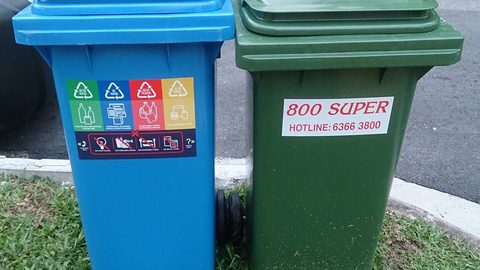 What the Blue Bin Actually Takes and What Happens When It Gets Contaminated
What Singapore's blue bin actually takes—and what happens to a whole truckload when one item is wrong. The contamination rule, not just the list.
What the Blue Bin Actually Takes and What Happens When It Gets Contaminated
What Singapore's blue bin actually takes—and what happens to a whole truckload when one item is wrong. The contamination rule, not just the list.
-
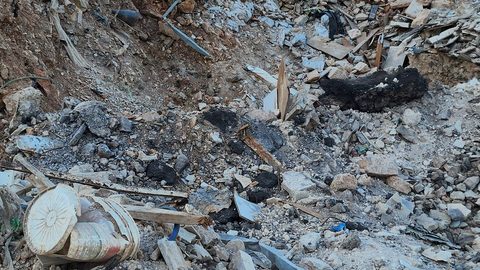 What Must Never Go in a Singapore Household Bin and Where It Goes Instead
Batteries, lamps, chemicals and sharps must never go in a Singapore household bin. Where each goes instead, scoped to Singapore disposal law.
What Must Never Go in a Singapore Household Bin and Where It Goes Instead
Batteries, lamps, chemicals and sharps must never go in a Singapore household bin. Where each goes instead, scoped to Singapore disposal law.
-
 E-waste
Singapore's e-waste Producer Responsibility Scheme makes producers fund collection and recycling. Small tonnage, high value, and a genuine battery fire risk.
E-waste
Singapore's e-waste Producer Responsibility Scheme makes producers fund collection and recycling. Small tonnage, high value, and a genuine battery fire risk.
-
 Plastic
Resin codes are not a recyclability rating. In Singapore's blue bin system, a plastic item is recycled only if it survives the MRF sort and finds a buyer.
Plastic
Resin codes are not a recyclability rating. In Singapore's blue bin system, a plastic item is recycled only if it survives the MRF sort and finds a buyer.
-
 Household batteries
Why household batteries cause fires in Singapore's waste system and the correct disposal pathway through ALBA E-waste collection points under the Producer Responsibility Scheme.
Household batteries
Why household batteries cause fires in Singapore's waste system and the correct disposal pathway through ALBA E-waste collection points under the Producer Responsibility Scheme.
-
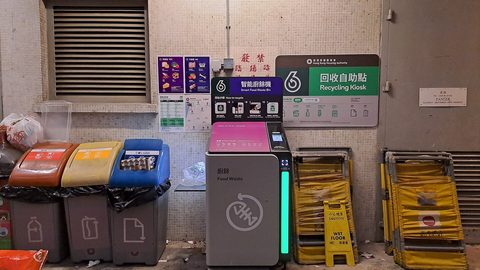 Food waste
 is Singapore's heaviest household stream and the hardest to recover. Moisture and decomposition make it a problem before sorting even begins.
Food waste
Food waste is Singapore's heaviest household stream and the hardest to recover. Moisture and decomposition make it a problem before sorting even begins.
-
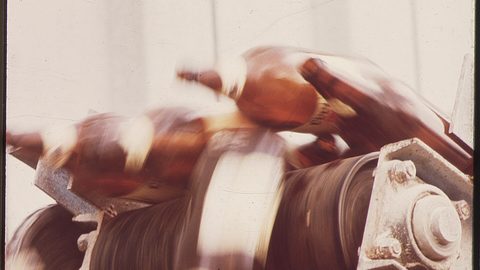 Glass
Glass is infinitely recyclable in theory but breaks in Singapore's commingled blue bin and contaminates paper. Ceramics are the specific poison.
Glass
Glass is infinitely recyclable in theory but breaks in Singapore's commingled blue bin and contaminates paper. Ceramics are the specific poison.
-
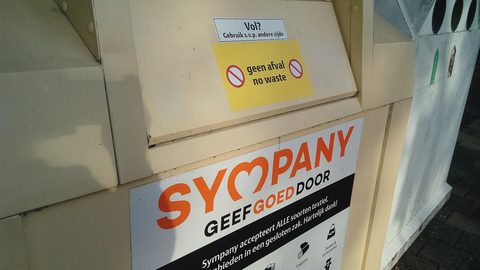 Textiles
Textile waste in Singapore is growing faster than any other stream with almost no recycling. Blended fibres cannot be separated, so reuse is the only real option for households.
Textiles
Textile waste in Singapore is growing faster than any other stream with almost no recycling. Blended fibres cannot be separated, so reuse is the only real option for households.