Glass Waste in Singapore and the Problem of Ceramics in the Blue Bin
Glass is infinitely recyclable in theory but breaks in Singapore's commingled blue bin and contaminates paper. Ceramics are the specific poison.
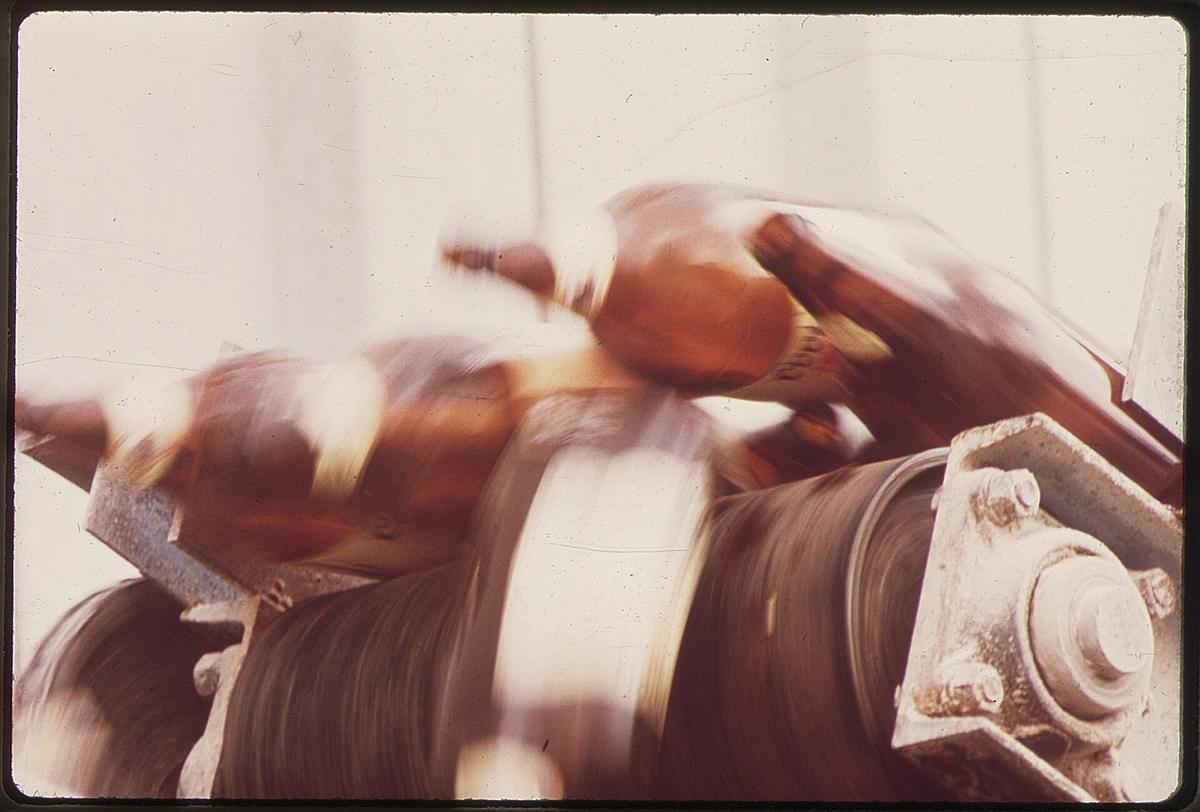
A wine bottle drops into a blue bin on a Housing Board estate in Toa Payoh. The bottle breaks. Shards of glass now mix with newspapers, magazines, and cardboard. That single breakage sets in motion a chain of rejection that explains why, of the 75,000 tonnes of glass waste Singapore generated in 2023, only 9,700 tonnes were recycled. The 13% recovery rate for glass that year, published by the National Environment Agency in their annual Waste and Recycling Statistics, is not a failure of participation. It is a failure of the commingled collection system itself.
Glass is infinitely recyclable in theory. Melt it down and it becomes new glass with no loss of quality, and you can do that forever. In practice, the blue bin system makes reliable glass recovery almost impossible. The problem is not that people refuse to recycle. The problem is that the engineering of single-stream commingled collection fights against the physics of the material. Glass breaks. Broken glass contaminates paper. Ceramics and heat-resistant glass, dropped into the same bin by residents who do not know the difference, destroy entire batches of cullet. The result: the domestic recovery rate for glass hovers near the bottom of all materials tracked by the NEA.
Why Breakage Matters More Than Participation
The blue bin is a commingled collection receptacle. Paper, plastic, metal, and glass all go into the same container. That is the National Recycling Programme convenience proposition: one bin for everything, no sorting required at the household level. The trade-off is that the materials recovery facility, the MRF that sorts these streams back out, cannot separate broken glass from shredded newspaper. A shard embedded in a wet newspaper sheet cannot be sorted by optical scanners or air jets. It becomes contamination in the paper bale, and a contaminated bale is rejected by overseas offtakers.
Paper fouled by broken glass is the first failure mode. The second is that glass itself gets contaminated by labels and food residue from the bottles that carry it. A peanut butter jar that went into the bin unrinsed carries sugar and oil into the cullet. The cullet then enters the remelting furnace with organic content that burns off and creates bubbles or discolouration in the new glass. Those problems are manageable. They are problems of rinsing and label removal. The catastrophic contaminant is ceramics.

Glass Waste in Singapore: How Breakage Destroys the Paper Stream
Ceramics: The Specific Poison in a Glass Batch
Ceramics are the specific poison. A single ceramic fragment, a broken mug or a piece of a dinner plate, has a melting point far higher than that of soda-lime container glass. When the cullet enters the glass furnace at around 1,500 degrees Celsius, the ceramic fragment does not melt. It remains as a solid inclusion in the molten glass. That inclusion creates a point of structural weakness in the finished bottle or jar. The bottle cracks under pressure. The jar shatters during filling. A contamination threshold of as little as 5 grams of ceramic per tonne of cullet can cause an entire batch to be rejected by the offtaker.
Heat-resistant glass, the borosilicate glass used for Pyrex ovenware and laboratory beakers, causes the same problem. It does not melt at the same temperature as container glass. It disrupts the viscosity of the melt and creates crystalline inclusions called devitrification zones. These weaken the finished product and make it unusable for the food and beverage packaging industry. The glass manufacturer buying the cullet has no way to detect ceramics or borosilicate fragments before the melt. The contamination only shows up when the furnace batch fails quality control. At that point, the entire batch is lost.
The National Environment Agency accepts glass containers in the blue bin, but the list of what is not accepted includes window glass, mirrors, light bulbs, and drinking glasses. Ceramics and heat-resistant glass enter the stream anyway because residents do not know the difference between a wine bottle and a coffee mug. Both feel like glass to the hand. Both go into the blue bin. One is recyclable. The other ruins a batch.
Ceramics Contamination Blue Bin Singapore: the Specific Poison
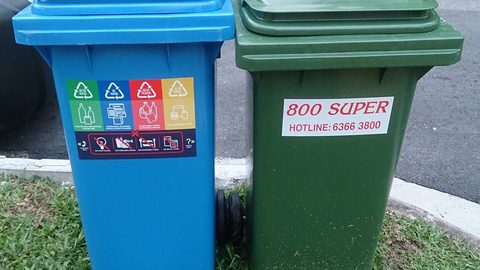
The blue bin accepts glass bottles, jars, and containers. Window glass, mirrors, light bulbs, drinking glasses, heat-resistant glass, and ceramics are not accepted. The instructions are printed on the bin. The outcome differs sharply from the instruction.
The table below spells out what survives the system and what kills a batch. Use it before you drop anything into the bin. If it is not a bottle or jar, bin it in general waste.
| Item | Accepted | Notes |
|---|---|---|
| Glass bottles and jars | Yes | Empty and rinse; remove lids |
| Window glass | No | Different composition; ruins cullet batch |
| Mirrors | No | Silver coating contaminates melt |
| Light bulbs | No | Metal and glass composite; not recyclable here |
| Drinking glasses | No | Heat treated; different melting point |
| Ceramics (mugs, plates, bowls) | No | Higher melting point; causes devitrification |
| Heat resistant glass (Pyrex) | No | Borosilicate; does not melt at container glass temperature |
Glass Incineration Singapore: Where the Unrecycled Glass Goes
Of the 65,300 tonnes of glass waste disposed in 2023, nearly all went through a waste-to-energy plant. Glass does not burn. In the furnace at a WtE plant such as Tuas South or Keppel Seghers Tuas, the glass melts and fuses into the incineration bottom ash. That ash, roughly a fifth of the original waste mass, is then barged to Semakau Landfill, the engineered enclosure between Pulau Semakau and Pulau Sakeng. Fly ash captured by the baghouse filters is treated separately and landfilled in a different containment system.
The NEA projects that Semakau Landfill will reach capacity around 2035 based on current disposal rates. That projection moves outward every time a new WtE plant is commissioned, as TuasOne did recently, because more efficient incineration reduces the volume of ash that needs landfilling. But the fundamental architecture does not change. Glass that enters the incineration stream contributes to the ash fraction. It does not disappear. It becomes part of the material that fills the only landfill Singapore has.
What The Domestic Recycling Rate Actually Measures
The national recycling rate for Singapore, the figure that appears in headlines and government briefings, was approximately 55% in 2023. That number includes industrial and construction waste streams, which dominate the total tonnage. The domestic recycling rate, what households actually recycle, was 12%. Glass recovery sits at 13%. The gap between the headline number and the household number is roughly 40 percentage points. The domestic rate is the one that responds to resident behaviour. It is also the one that stays low because of what breaks inside the blue bin.
Singapore Glass Recycling Rate: Why the Number Stays Low
The NEA reports a glass recovery rate of 13% for 2023. That is 9,700 tonnes recovered out of 75,000 tonnes generated. The primary recovery route is remelting into new glass containers at local manufacturing plants. The secondary route is crushing into aggregate for road base, concrete, and backfill. The tertiary route is partial replacement for sand in cement-stabilised materials. None of these routes can absorb the volume if the cullet is contaminated.
The contamination rate in the blue bin, reported by the NEA at 40% for mixed recyclables, means a significant fraction of the glass that enters the bin never reaches an offtaker. A truckload of blue bin contents carrying ceramic fragments, food-soiled paper, plastic bags enclosing recyclables, or broken glass embedded in wet cardboard is rejected at the MRF gate. The entire load goes to incineration. The glass in that load becomes bottom ash and ends up at Semakau. That is the mechanism that sets the 13% recovery rate. It is not a rate of participation. It is a rate of survival through a system not designed for the material it collects.
What You Can Do With Glass In Practice
Empty and rinse the bottle. Remove the lid. Do not put anything that is not a bottle, jar, or container into the blue bin. A coffee mug belongs in general waste. A Pyrex dish belongs in general waste. A mirror belongs in general waste. A wine bottle, rinsed and lid removed, belongs in the blue bin. That is the difference between a bottle that survives the system and a batch that gets rejected. Rinse it. Check the table. If there is any doubt, the general waste chute is the safer choice for the whole batch.
Who This Subject Suits and Who Should Skip it
This subject matters to a householder who wants to know whether the bottle they just rinsed actually gets turned back into glass. It matters to a resident who has noticed the blue bin overflow rate is high and the contamination rate higher, and who wants to know whether their sorting choice changes anything. It matters to an international zero-waste practitioner comparing systems, because the engineering and behavioural constraints that make Singapore hard to transplant are the constraints described here: commingled collection, high contamination rates, a single landfill, and an incineration-first architecture.
Skip this if you handle construction and demolition debris professionally. That stream is governed by different collection contracts and different contamination thresholds. Skip it if you work on water systems, because the NEWater closed loop is a separate infrastructure. Skip it if you are a corporate sustainability auditor who needs company-specific compliance data, because this describes the system, not individual firm performance. The blue bin is not a recycling solution for glass. It is a collection solution. What happens after collection depends on whether the glass survived the journey without breaking or being poisoned by ceramics.
Full specification
| Accepted in the blue bin | Yes | manufacturer |
|---|---|---|
| What ruins a batch | Ceramics and heat-resistant glass, which melt at a different temperature and spoil the batch | manufacturer |
| Where it ends up | Recovered, or used as construction aggregate | manufacturer |
| Prepare it like this | Empty and rinse; lids off | manufacturer |
| Why this stream is difficult | It breaks in collection and then contaminates the paper it is mixed with | manufacturer |
Figures labelled manufacturer are the maker's own claim and are measured by them. Owner reported figures are aggregated from owners and are the ones worth planning around.
Common Questions
Why is glass not reliably recycled even though it is placed in the blue bin?
Glass breaks during commingled collection. The shards foul the paper stream, and ceramics or heat-resistant glass that enter the same bin ruin the cullet batch during remelting. The contamination rate in the blue bin means a significant fraction of the glass placed in the bin is rejected at the MRF and sent to incineration.
What is the difference between the national recycling rate and the domestic recycling rate in Singapore?
The national recycling rate, approximately 50 to 60%, includes industrial and construction waste streams. The domestic recycling rate, which measures household performance only, stays below 15%. The gap is roughly 40 percentage points. Glass recovery sat at 13% for 2023.
Can I put ceramics in the blue bin if they break?
No. Ceramics have a higher melting point than container glass and do not melt in the glass furnace. They remain as solid inclusions that weaken the finished product. A single ceramic fragment can cause an entire batch of cullet to be rejected. Ceramics belong in general waste.
What happens to glass that is not recycled?
It goes to a waste-to-energy plant where it does not burn but melts and fuses into incineration bottom ash. The ash is barged to Semakau Landfill, the offshore ash landfill between Pulau Semakau and Pulau Sakeng. The NEA projects Semakau will reach capacity around 2035.
How should I prepare a glass container for the blue bin?
Empty the container completely. Rinse it to remove food residue. Remove the lid and drop it in separately if it is metal or plastic. Only glass bottles, jars, and containers are accepted. Window glass, mirrors, light bulbs, drinking glasses, ceramics, and heat-resistant glass are not accepted.
Read next
-
 What the Blue Bin Actually Takes and What Happens When It Gets Contaminated
What Singapore's blue bin actually takes—and what happens to a whole truckload when one item is wrong. The contamination rule, not just the list.
What the Blue Bin Actually Takes and What Happens When It Gets Contaminated
What Singapore's blue bin actually takes—and what happens to a whole truckload when one item is wrong. The contamination rule, not just the list.
-
 What Must Never Go in a Singapore Household Bin and Where It Goes Instead
Batteries, lamps, chemicals and sharps must never go in a Singapore household bin. Where each goes instead, scoped to Singapore disposal law.
What Must Never Go in a Singapore Household Bin and Where It Goes Instead
Batteries, lamps, chemicals and sharps must never go in a Singapore household bin. Where each goes instead, scoped to Singapore disposal law.
-
 E-waste
Singapore's e-waste Producer Responsibility Scheme makes producers fund collection and recycling. Small tonnage, high value, and a genuine battery fire risk.
E-waste
Singapore's e-waste Producer Responsibility Scheme makes producers fund collection and recycling. Small tonnage, high value, and a genuine battery fire risk.
-
 Bulky waste in Singapore
What happens to bulky waste in Singapore after the town council collects it, from dismantling and metal recovery to incineration at Tuas South and the ash that reaches Semakau Landfill.
Bulky waste in Singapore
What happens to bulky waste in Singapore after the town council collects it, from dismantling and metal recovery to incineration at Tuas South and the ash that reaches Semakau Landfill.
-
 Plastic
Resin codes are not a recyclability rating. In Singapore's blue bin system, a plastic item is recycled only if it survives the MRF sort and finds a buyer.
Plastic
Resin codes are not a recyclability rating. In Singapore's blue bin system, a plastic item is recycled only if it survives the MRF sort and finds a buyer.
-
 Household batteries
Why household batteries cause fires in Singapore's waste system and the correct disposal pathway through ALBA E-waste collection points under the Producer Responsibility Scheme.
Household batteries
Why household batteries cause fires in Singapore's waste system and the correct disposal pathway through ALBA E-waste collection points under the Producer Responsibility Scheme.
-
 Food waste
 is Singapore's heaviest household stream and the hardest to recover. Moisture and decomposition make it a problem before sorting even begins.
Food waste
Food waste is Singapore's heaviest household stream and the hardest to recover. Moisture and decomposition make it a problem before sorting even begins.
-
 Textiles
Textile waste in Singapore is growing faster than any other stream with almost no recycling. Blended fibres cannot be separated, so reuse is the only real option for households.
Textiles
Textile waste in Singapore is growing faster than any other stream with almost no recycling. Blended fibres cannot be separated, so reuse is the only real option for households.