Singapore Zero Waste Kitchen: Food Storage, Meal Planning, and Durable Swaps
A zero-waste kitchen in Singapore starts with food-waste prevention through meal planning and storage. Swaps help, but food waste is the biggest tonnage lever.
Singapore Zero Waste Kitchen: Food Storage, Meal Planning, and Durable Swaps
Food waste is the largest single component of the domestic waste stream, and it has the most direct line to Semakau Landfill. A zero waste kitchen Singapore food waste reduction approach starts with prevention, not swaps, because Singapore has no household food-waste collection stream. The segregation mandate in the Resource Sustainability Act applies only to large commercial premises generating more than one tonne of food waste per week. Your household's uneaten food goes straight into general waste, then to one of four waste-to-energy plants, Tuas South, Senoko, Keppel Seghers Tuas, or the newest Keppel Seghers plant, where it is incinerated. The residue, incineration bottom ash, roughly a fifth to a quarter of the original mass, is barged to Semakau Landfill, the engineered enclosure between Pulau Semakau and Pulau Sakeng. Semakau's total capacity is 63 million cubic metres. At current disposal rates the projected closure date is 2035, a date that has been stated as "around 2035" for over a decade. The single highest-impact action in your kitchen is preventing food from becoming waste in the first place.
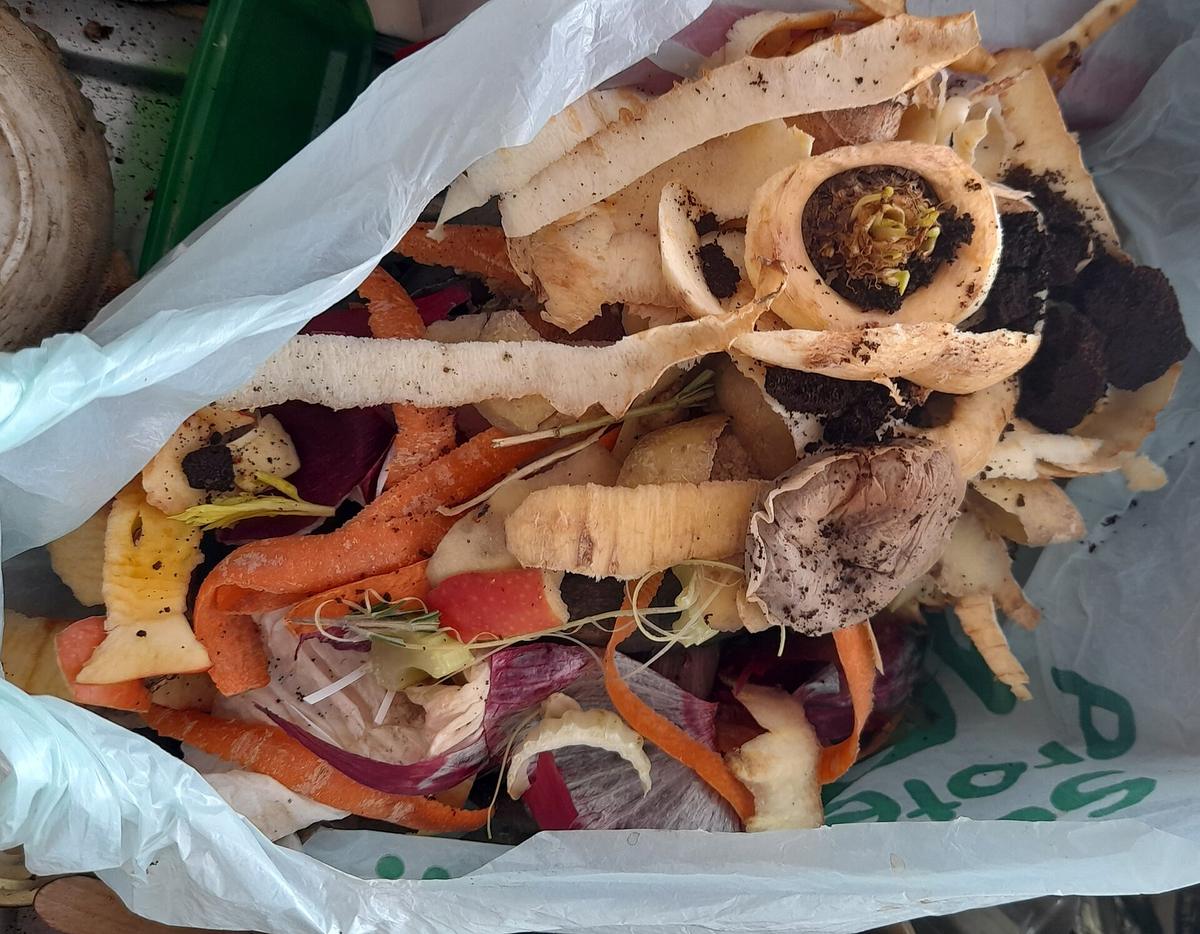
Reduce Food Waste Singapore Household: The Measured Effect of Meal Planning
Households generated 1.87 million tonnes of domestic waste in 2023, of which an estimated 11 percent was food waste. That figure comes from the National Environment Agency's annual waste statistics, published with a one-year lag. Across the whole island, 755,000 tonnes of food waste were generated, and only 18 percent was recycled. That recycling rate is dominated by homogenous industrial streams, spent grains from breweries, soya bean waste from food manufacturers. The post-consumer household and hawker-centre rate sits in single digits.
The error that sinks household effort is wishcycling: placing contaminated packaging in the blue bin hoping it will be recycled, then assuming the food waste problem is solved. It is not. The blue bin is a commingled system, and its contamination rate was roughly 40 percent in 2023. Food residue and liquids in a recyclable container contaminate the surrounding material in the bin and at the Materials Recovery Facility in Tuas, where SembWaste sorts the commingled stream. The real domestic recycling rate after MRF sorting is lower than the published 12 percent by roughly that contamination rate.
Meal planning is the highest-impact action because it prevents food from becoming waste at all. A plan that matches portions to actual consumption, not aspirational consumption, reduces the volume of perishables that rot in the refrigerator. The secondary effect: you buy less plastic-packaged food, because you are not restocking ingredients that went uneaten. The pitfall here is overambition. Planning seven days of elaborate meals when your schedule accommodates three. Plan for the week you will actually cook, not the week you wish you would cook.
How Meal Planning Changes the Domestic Waste Stream
Domestic waste disposed of in 2023 was 1.64 million tonnes. Only 0.23 million tonnes of domestic waste was recycled. The gap between what is generated and what is recycled is nearly all incinerated. Reducing food waste shrinks that incineration tonnage directly. The National Environment Agency does not publish a breakdown of domestic waste by housing type, but the pattern is consistent: households that buy bulk without a plan discard more perishable food than households that buy weekly. In Singapore's climate, a head of lettuce left in the crisper for five days is waste. A plan that uses it on day two is not.
The food waste segregation mandate that took effect in 2024 applies to premises generating more than one tonne per week. That threshold covers large hotels, shopping malls, and food courts. It does not cover your kitchen. The absence of a household collection stream means that the only way to divert food waste from incineration is to not generate it. Home composting operates at a very small scale in Singapore's housing context. Most HDB flats lack the outdoor space, and the balcony space that exists is insufficient for a system that processes the volume of a household's food waste. If you compost in a flat, you are managing a trickle, not the flow.
Singapore Kitchen Zero Waste Swaps: Where They Fit in the Priority Order
Reusable jars, beeswax wraps, silicone lids, stainless steel straws. These are the most visible zero-waste kitchen tools. They are also secondary in effect to food-waste prevention. A beeswax wrap keeps a cut cucumber fresh for an extra day. That matters. But it does not change the tonnage of food waste that reaches Semakau. The swap that matters more is the one that prevents you from buying something you will not use.
The research is clear on what works at scale in a high-density, high-temperature city. Singapore's incineration plants process roughly 7,600 tonnes per day across four operational plants. The ash-to-waste ratio is about a fifth to a quarter by mass. Every kilogram of food waste you prevent is a kilogram that never reaches the grate, never becomes ash, and never occupies space at Semakau. A reusable jar that you use once a week for a bulk-buy refill at a store like Scoop Wholefoods or The Source reduces plastic packaging waste. That matters because Singapore's plastic waste recycling rate was 5 percent in 2023. But a swap that reduces plastic packaging does not reduce the 755,000 tonnes of food waste generated annually. The swap that reduces food waste is a meal plan.
Which Swaps Work in a Singapore Kitchen
Beeswax wraps are effective for short-term storage of cut produce and bread. They last about a year if washed in cold water and kept away from heat. Silicone stretch lids fit bowls and jars of irregular shapes. Reusable glass or stainless steel jars are durable and do not absorb odours, but they are heavy and take up space. The error with swaps is accumulation: buying a drawer full of wraps and lids that you do not rotate through, then defaulting to cling film because it is faster. Own one set per use, not one set per product.
The Singapore-specific constraint on swaps is the domestic waste stream's composition. Food waste is the largest single component, but plastic waste was 958,000 tonnes in 2023, with a 5 percent recycling rate. The blue bin accepts plastic bottles and jars but not soft plastics, which entangle MRF sorting equipment. A swap from single-use cling film to a beeswax wrap removes soft plastic from your waste stream. That is a meaningful reduction even if the tonnage is small per household. The effect scales with adoption, not with the individual swap.
| Action | Direct Effect on Food Waste Tonnage | Plastic Waste Reduction | Infrastructure Required |
|---|---|---|---|
| Meal planning and portion control | High: prevents waste at source | Medium: reduces overbuying of packaged food | None: uses existing kitchen tools |
| Proper food storage (reusable jars, beeswax wraps) | Medium: extends shelf life of perishables | High: eliminates single-use plastics | Minimal: jar purchase once |
| Bulk buying at refill stores | Low: no direct effect on food waste | High: reduces plastic packaging at purchase point | Requires access to a refill store with reusable jar |
| Home composting | Low: operates at small scale in HDB context | None | Requires outdoor space or a bokashi system; limited throughput |
Meal Planning Reduce Waste Singapore: A System, Not a Resolution
Meal planning that reduces waste in a household has three components. None require a special app or a printed template. First, inventory: check the refrigerator, the freezer, and the dry pantry before you buy anything. The error is buying ingredients you already have, then watching them spoil while you cook the new ones. Second, match portions to your actual eating pattern. A household of two that cooks dinner five nights a week does not need a week's supply of the same vegetable. Third, build meals around the most perishable item. If you buy fresh spinach, cook it on day one or two. Root vegetables have a five- to ten-day window. The order of consumption matters more than the list of meals.
The Zero Waste Masterplan, published in 2019 by the Ministry of Sustainability and the Environment, set a target of a 30 percent reduction in daily waste-to-landfill by 2030 and a domestic recycling rate of 30 percent. The domestic rate in 2023 was 12 percent. The gap is not a participation problem. It is a contamination and food-waste problem. Meal planning is the lever that addresses both. It reduces the volume of food that enters the general waste stream and it reduces the volume of contaminated packaging that enters the recycling stream. A household that plans meals and cooks accordingly buys less food, throws away less food, and generates less packaging waste from takeaway and convenience meals.
The Perishable Rule
Perishable food in Singapore spoils faster than in temperate climates. The ambient temperature in a HDB kitchen averages 28 to 32 degrees Celsius most of the year. A refrigerator set to the correct temperature, below 4 degrees Celsius, slows spoilage. It does not stop it. The rule for perishables: use within two days of purchase, or freeze. The error is treating the refrigerator as a preservation chamber that halts decay. It does not. A cucumber stored in the crisper drawer for five days becomes limp and loses nutritional value even if it has not developed visible mould. By day seven, it is waste. The meal plan that uses the cucumber on day two or three is the one that prevents it from reaching Semakau.
Food Storage Singapore Plastic Free: What Actually Keeps Food Fresh
Plastic-free food storage in Singapore's climate is possible, but the choices are narrower than in drier or cooler climates. Glass jars with airtight lids are the most effective option for refrigerator and freezer storage. They are inert, do not absorb odours, and last indefinitely if handled carefully. The error is thermal shock: placing a hot glass jar directly into the refrigerator or pouring boiling water into a cold glass jar. Let food cool to room temperature before transferring it to a glass jar, then refrigerate.
Beeswax wraps work for dry or semi-dry foods: bread, cut vegetables, cheese. They do not work for raw meat, wet produce like sliced tomatoes, or long-term storage. A beeswax wrap on a cut avocado will keep the exposed surface from browning for about a day. After that, the avocado oxidises and the wrap becomes a breeding surface for bacteria. Use wraps for short-term, dry storage only. For wet or high-moisture foods, use a glass or stainless steel jar.
Silicone lids are a hybrid solution: they create a seal on bowls and pots, replacing cling film. They are heat-resistant to about 200 degrees Celsius, so they can be used on hot pots that are going into the refrigerator. The error with silicone lids is fit. A lid that is too loose will not seal, and the food will dry out or absorb odours from the refrigerator. Measure the diameter of your bowls before buying lids. Buy lids that are slightly smaller than the opening so they stretch to seal.
Where to Buy Plastic-Free Storage in Singapore
Refill stores like Scoop Wholefoods, The Source, and UnPackt sell reusable jars and beeswax wraps. The UnPackt store on the second floor of Century Square in Tampines carries a selection of glass jars, silicone lids, and beeswax wraps from local suppliers. The Source has a store on Upper Bukit Timah Road and a second location in the Bukit Batok area. Scoop Wholefoods has stores in Novena and at Great World City. All three require you to bring your own jar for bulk purchases. They tare the jar before filling it so you pay for the contents only. The error with refill shopping is forgetting the jar. Most refill stores sell reusable jars at the counter, but buying one every visit defeats the purpose. Keep a dedicated bag with jars by your front door, not in the kitchen.
The Single Thing That Most Often Goes Wrong
The most common error in a Singapore zero-waste kitchen is treating swaps as the primary action and meal planning as secondary. A household buys beeswax wraps, silicone lids, and stainless steel straws, continues to overbuy perishable food, and wonders why the rubbish bin is still full of food waste. The waste statistics are unambiguous: 755,000 tonnes of food waste generated in 2023, an 18 percent recycling rate that is driven by industrial streams, a domestic recycling rate of 12 percent that is dragged down by contamination, and a Semakau closure date of 2035 that moves every year. The swap that changes the tonnage is the one that prevents food from becoming waste. The jar that keeps a leftover stir-fry edible for an extra day is a tool, not a solution. The solution is cooking the amount you will eat.
Open your refrigerator right now. Identify the three most perishable items. Cook them tonight or tomorrow, or freeze them. That single action, repeated weekly, reduces your household's contribution to the 1.64 million tonnes of domestic waste that are incinerated every year. The rest of the swaps can wait.
Common Questions
Does the blue bin in my HDB estate accept food waste?
No. The NEA's blue bin accepts only paper, cardboard, plastic bottles, plastic jars, glass bottles, metal cans, and aluminium foil. Food waste, liquids, textiles, e-waste, batteries, styrofoam, soft plastics, and contaminated packaging are unacceptable. Food waste in the blue bin contaminates the surrounding material and sends the entire batch to incineration.
Can I compost food waste in an HDB flat?
Yes, but at a very small scale. A bokashi bin or a small worm-composting system can process kitchen scraps from a household of one or two people. The volume is too low to significantly reduce the 755,000 tonnes of food waste generated nationally each year. Home composting in a flat is a practice, not a waste-management strategy.
What is the cheapest swap I can make today?
A set of three glass jars with airtight lids costs about SGD 15 to 25 at a refill store or a supermarket. That replaces cling film and disposable jars for refrigerator storage. The cost per use drops to near zero after about 10 uses. The error is buying jars that are too small. Buy the largest size you will use.
Does meal planning actually reduce waste if I still cook the same amount?
No. Meal planning reduces waste only if it changes your buying and cooking behaviour. The mechanism is matching portions to actual consumption. If you plan seven meals and cook four, the ingredients for the three uncooked meals will spoil. Plan fewer meals than you think you need, and supplement with a small restock mid-week.

