What Happens to Used Cooking Oil Collected in Singapore
How used cooking oil from Singapore's F&B premises is collected by licensed operators and processed into biodiesel, and why household oil lacks a dedicated recycling pathway.
Used Cooking Oil Recycling Singapore: The Legal and Practical Chain
The pathway for used cooking oil in Singapore runs from F&B premises through NEA-licensed collectors to biodiesel refineries. That chain works. The household stream has no dedicated collection at all and ends up incinerated. This page maps the chain, the regulations that govern it, and the gap between the commercial and domestic streams.
Under the Environmental Public Health Act, any premises that generates used cooking oil must have it collected by a holder of a General Waste Collector licence (Class A or Class B) issued by the National Environment Agency. Pouring oil down a sink or drain is illegal, enforced by PUB under the Sewerage and Drainage Act, and carries penalties including fines and prosecution.
For food and beverage premises, compliance is straightforward: engage a collector, store the oil in sealed drums, and keep collection records. The collector takes the oil to a treatment facility. A General Waste Disposal Facility processes clean oil into biodiesel feedstock. Contaminated oil goes to an incineration plant.
Cooking Oil Collection Singapore: How It Works for F&B Premises
Singapore's cooking oil collection Singapore market serves thousands of licensed food premises plus hawker stalls and caterers. The collection process follows a standard sequence:
- Storage. Oil is kept in sealed drums or tanks on the premises. The collector supplies the containers. Never pour oil into a general waste bin without bagging it. NEA requires bagged and tied waste for disposal.
- Collection. A licensed collector picks up full drums on a schedule, weekly or bi-weekly for busy kitchens. The collector issues a receipt or manifest that documents the volume and destination.
- Transport. The oil moves to a treatment facility. If the collector does not own one, they subcontract to a facility that holds a General Waste Disposal Facility licence.
Failure to use a collector with the proper NEA authorisation is an offence under the Environmental Public Health Act. The NEA does not publish a specific used cooking oil recycling rate, the stream is aggregated under food waste in its annual statistics. The 2023 figures show total food waste of 755,000 tonnes, of which 18% was recycled. The proportion of that 18% that is used cooking oil is unknown because the data is not disaggregated.
Biodiesel From Used Oil Singapore: The Processing Pathway
How Commercial Oil Becomes Fuel
Biodiesel from used oil Singapore is produced at private facilities that hold a General Waste Disposal Facility licence. The oil undergoes rendering to remove solids and water, then chemical conversion (transesterification) to produce fatty acid methyl esters (FAME), biodiesel. The fuel is sold as transport fuel or industrial heating oil.
The commercial stream is ideal for this because it is homogenous: mostly clean frying oil from chain restaurants, hawker centres and central kitchens. Contamination, by water, food solids, or detergents, is low because the collector and generator share a financial interest in quality. The collector pays the generator for the oil, a per-litre price that fluctuates with crude oil and biodiesel markets. That price creates a market incentive to keep the oil clean.
When Oil Cannot Be Recycled
Oil that is too contaminated for biodiesel, mixed with grease trap waste or detergent, goes to incineration. It still produces electricity at waste-to-energy plants, but the energy value is lower because the water content suppresses combustion.
F&B Waste Oil Disposal: Rules and Costs
F&B waste oil disposal has three compliance requirements every operator must meet:
- Authorised collector. Only a collector holding an NEA General Waste Collector licence can legally take used cooking oil from your premises. The NEA maintains a list of collectors on its website; as of 2023 there were roughly 100 such licence holders in Singapore, though not all handle oil.
- Grease trap maintenance. The Sewerage and Drainage (Trade Effluent) Regulations mandate a grease trap on any F&B premises. The trap must be sized per Singapore Standard CP 48 and emptied regularly by a contractor with the correct permit. Grease trap waste is a different stream from used cooking oil. It is more contaminated and incinerated, not rendered into biodiesel.
- Documentation. Keep collection manifests for at least two years. The NEA may inspect them during routine audits.
Costs vary by collector and volume. Small hawker stalls pay a nominal fee or receive a small payment for clean oil; large central kitchens negotiate per-litre rates. The gate fee at incineration plants, set administratively by NEA, is a floor cost for disposal if the oil is too contaminated to recycle.
| Aspect | Commercial Stream (F&B Premises) | Household Stream |
|---|---|---|
| Collection system | Licensed collector collects sealed drums | No dedicated collection; oil goes in general waste bin or is disposed illegally |
| Regulation | Environmental Public Health Act + Sewerage and Drainage Act | Sewerage and Drainage Act (illegal to pour down drain); NEA advisory only |
| Typical destination | Biodiesel facility or incineration | Incineration at Tuas South or Senoko, ash to Semakau Landfill |
| Recycling rate | Not separately published, but high for clean oil | Effectively 0%; incinerated |
| Contamination level | Low (homogenous stream, financial incentive to keep clean) | High (mixed with food residue, other waste) |
| Market incentive | Collector pays generator for oil | None; disposal costs the household |
NEA Used Cooking Oil Rules: What the Law Requires
The NEA used cooking oil rules are not a standalone regulation. They are embedded in the Environmental Public Health Act and the Resource Sustainability Act. The key obligations:
Licensing
Any person who collects, transports, treats or disposes of used cooking oil must hold the appropriate NEA licence. Collectors need a General Waste Collector licence (Class A for more than 10 vehicles, Class B for 10 or fewer). Treatment facilities need a General Waste Disposal Facility licence. The NEA does not publish a separate count of used cooking oil recyclers; they are categorised under waste disposal facilities.
Disposal Prohibitions
Pouring oil into a public sewer is illegal under the Sewerage and Drainage Act. PUB enforces this with fines and, for repeat offenders, prosecution. Disposal in a general waste bin is only allowed if the oil is bagged and tied, never poured loose. The NEA advises that household quantities, up to a few litres, can be absorbed in paper or tissue and bagged.
Mandatory Food Waste Segregation
From 2024, large commercial premises that generate significant food waste, including used cooking oil, must segregate it for treatment under the Resource Sustainability Act. The threshold is set by ministerial order and covers shopping malls, hotels, and large food courts. The requirement applies to food waste broadly; used cooking oil is captured under that umbrella, not separately mandated.
The Gap: Why Household Used Cooking Oil Is Not Recycled
The Blue Bin Trap
The single thing that most often goes wrong for a householder trying to recycle used cooking oil is the assumption that it can go in the blue bin. It cannot. The blue bin accepts only dry recyclables: paper, plastic, metal, glass. Contamination by liquids causes the entire bin load to be rejected and incinerated. The NEA's contamination rate for blue bins was 40% in 2019; MRF operators report rates above 50% in some housing types.
Why No Collection Exists
Household used cooking oil lacks a dedicated collection stream because the volume per household is low and the cost of separate collection outweighs the value of the oil. The commercial stream works because a single restaurant generates dozens of litres per week, enough to make collection economically viable. For households, the pragmatic advice is to solidify the oil, mix it with paper or absorbent, and bag it for the general waste bin. It will be incinerated, which is legal and preferable to pouring it down the drain.
The Policy Reality
The Zero Waste Masterplan's target to reduce food waste disposed to Semakau by 30% from baseline by 2030 does not address household used oil specifically. The masterplan focuses on large commercial premises where segregation mandates can be enforced. Household behaviour change relies on voluntary participation, which has not shifted the domestic recycling rate. It sat at 12% in 2023, among the lowest published figures for a developed economy.
Also in Waste streams
Common Questions
Can I pour used cooking oil down the drain in Singapore?
No. Pouring oil into a sink, toilet, or floor drain is illegal under the Sewerage and Drainage Act. It blocks pipes and causes sewer overflows. The penalty is a fine and, for commercial premises, potential prosecution by PUB.
Where can I dispose of used cooking oil from my home?
Household used oil has no dedicated collection scheme. The NEA advises absorbing small quantities in paper or tissue and bagging them for the general waste bin. Large quantities can be taken to a recycling point if one is available, but these are rare and not part of the blue bin system.
Do I need a licence to collect used cooking oil from restaurants?
Yes. You must hold a General Waste Collector licence (Class A or B) from NEA. Collecting without one is an offence under the Environmental Public Health Act. The licence covers the collection vehicle and the premises where the oil is stored.
What happens to used cooking oil that is not recycled?
It goes to a waste-to-energy incineration plant such as Tuas South or Senoko. The oil burns at high temperature, contributing to electricity generation. The bottom ash, roughly 20% of the original waste mass, is barged to Semakau Landfill, which is projected to close around 2035 at current disposal rates.
Read next
-
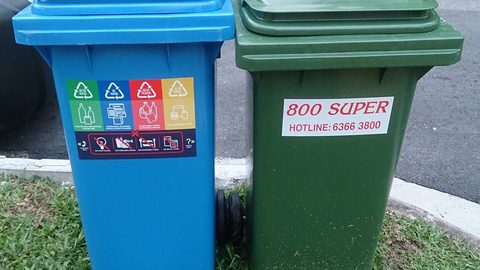 What the Blue Bin Actually Takes and What Happens When It Gets Contaminated
What Singapore's blue bin actually takes—and what happens to a whole truckload when one item is wrong. The contamination rule, not just the list.
What the Blue Bin Actually Takes and What Happens When It Gets Contaminated
What Singapore's blue bin actually takes—and what happens to a whole truckload when one item is wrong. The contamination rule, not just the list.
-
 What Must Never Go in a Singapore Household Bin and Where It Goes Instead
Batteries, lamps, chemicals and sharps must never go in a Singapore household bin. Where each goes instead, scoped to Singapore disposal law.
What Must Never Go in a Singapore Household Bin and Where It Goes Instead
Batteries, lamps, chemicals and sharps must never go in a Singapore household bin. Where each goes instead, scoped to Singapore disposal law.
-
 E-waste
Singapore's e-waste Producer Responsibility Scheme makes producers fund collection and recycling. Small tonnage, high value, and a genuine battery fire risk.
E-waste
Singapore's e-waste Producer Responsibility Scheme makes producers fund collection and recycling. Small tonnage, high value, and a genuine battery fire risk.
-
 Bulky waste in Singapore
What happens to bulky waste in Singapore after the town council collects it, from dismantling and metal recovery to incineration at Tuas South and the ash that reaches Semakau Landfill.
Bulky waste in Singapore
What happens to bulky waste in Singapore after the town council collects it, from dismantling and metal recovery to incineration at Tuas South and the ash that reaches Semakau Landfill.
-
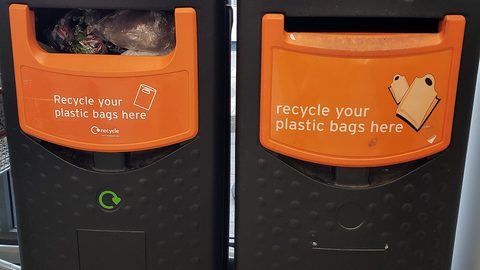 Plastic
Resin codes are not a recyclability rating. In Singapore's blue bin system, a plastic item is recycled only if it survives the MRF sort and finds a buyer.
Plastic
Resin codes are not a recyclability rating. In Singapore's blue bin system, a plastic item is recycled only if it survives the MRF sort and finds a buyer.
-
 Household batteries
Why household batteries cause fires in Singapore's waste system and the correct disposal pathway through ALBA E-waste collection points under the Producer Responsibility Scheme.
Household batteries
Why household batteries cause fires in Singapore's waste system and the correct disposal pathway through ALBA E-waste collection points under the Producer Responsibility Scheme.
-
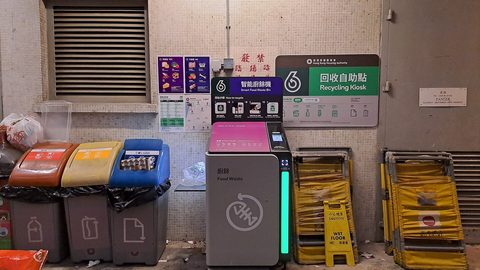 Food waste
 is Singapore's heaviest household stream and the hardest to recover. Moisture and decomposition make it a problem before sorting even begins.
Food waste
Food waste is Singapore's heaviest household stream and the hardest to recover. Moisture and decomposition make it a problem before sorting even begins.
-
 Glass
Glass is infinitely recyclable in theory but breaks in Singapore's commingled blue bin and contaminates paper. Ceramics are the specific poison.
Glass
Glass is infinitely recyclable in theory but breaks in Singapore's commingled blue bin and contaminates paper. Ceramics are the specific poison.