Singapore's Waste Streams and What Happens to Each One
Singapore incinerates over 95% of disposed waste and barges the ash to Semakau. Here is what happens to each waste stream, and which ones actually work.
Singapore Waste Streams: What Most People Get Wrong
Look up Singapore's waste numbers and you find a recycling rate of 57% (National Environment Agency, 2023). That figure is repeated as proof the city recycles well. It does not describe what households do. The domestic recycling rate, the number that measures what happens after you drop something into a blue bin or a refuse chute, was 12% in 2023. The gap between those two numbers, 45 percentage points, is the single most important fact to understand about the system. The national rate is dominated by construction and demolition waste (99% recycled in 2023) and metal scrap (99% for ferrous, 98% for non-ferrous). Household waste mostly ends up burnt. Singapore incinerates more than 95% of disposed waste. The ash goes to Semakau Landfill, the country's sole offshore landfill. The collection bins, the sorting facilities, the policy targets, all exist downstream of that incineration-first architecture.
Who This Guide Is For
The guide maps each type of waste in Singapore to what actually happens to it, routes you to detailed breakdowns on each stream, and names which streams work and which do not. Use it if you are a householder wondering whether your blue-bin effort matters, a small-business operator facing mandatory packaging reporting or e-waste rules, a policy-curious resident who needs the honest difference between the national and domestic rates, or an international practitioner comparing systems. If you need construction-waste data or company-specific compliance figures, look elsewhere.

- Waste disposed of (total, 2023): 6.86 million tonnes (National Environment Agency)
- Waste recycled (total, 2023): 3.96 million tonnes (National Environment Agency)
- Overall recycling rate (2023): 57% (National Environment Agency)
- Domestic recycling rate (2023): 12% (National Environment Agency)
- Non-domestic recycling rate (2023): 68% (National Environment Agency)
- Domestic waste disposed of (2023): 1.86 million tonnes (National Environment Agency)
- Domestic waste recycled (2023): 0.25 million tonnes (National Environment Agency)
- Incineration plants operating: 4 (Tuas South, Senoko, Tuas, Keppel Seghers Tuas)
- Semakau Landfill projected closure: 2035 (Zero Waste Masterplan target, subject to revision)
What Happens to Waste in Singapore: the Incineration-First System
Waste that is not reclaimed in Singapore is incinerated. The National Environment Agency (NEA) contracts Public Waste Collectors (PWCs) to run sector-based rounds. General waste from households, the material that goes down the refuse chute in high-rise Housing Board blocks or into the bin at a landed property, is collected and delivered to one of four Waste-to-Energy (WtE) plants: Tuas South Incineration Plant, Senoko Incineration Plant, the Tuas plant, and Keppel Seghers Tuas WtE Plant. A fifth plant, TuasOne, is the most recent addition. Together they process roughly 8,700 tonnes per day. Burning reduces the waste mass by about 80%. The remaining bottom ash and fly ash amount to roughly 20% of the original input. The bottom ash is barged to Semakau Landfill, the artificial enclosure built between Pulau Semakau and Pulau Sakeng. The fly ash, captured by baghouse filters in the air-pollution control system, is treated separately and landfilled. The energy recovered supplies approximately 2% of Singapore's electricity.
Why the System Looks This Way
The system is a deliberate structural choice. The Zero Waste Masterplan, published in 2019, set a target of reducing daily ash disposal to Semakau by 30% by 2030. The planned Integrated Waste Management Facility (IWMF), now under construction, will co-locate incineration, materials recovery, and water reclamation on a single site. The fundamental architecture, burn first, landfilling the ash, has not changed and is not expected to change soon. The binding constraint on the entire system is the remaining capacity of Semakau. The landfill's projected closure date was originally around 2035 under the Masterplan's modelling, but that date moves outward each time a new incineration plant is commissioned or consumption patterns shift. It is a modelled projection, not a fixed deadline.
Singapore Recycling Streams: the Blue Bin and What Goes Wrong
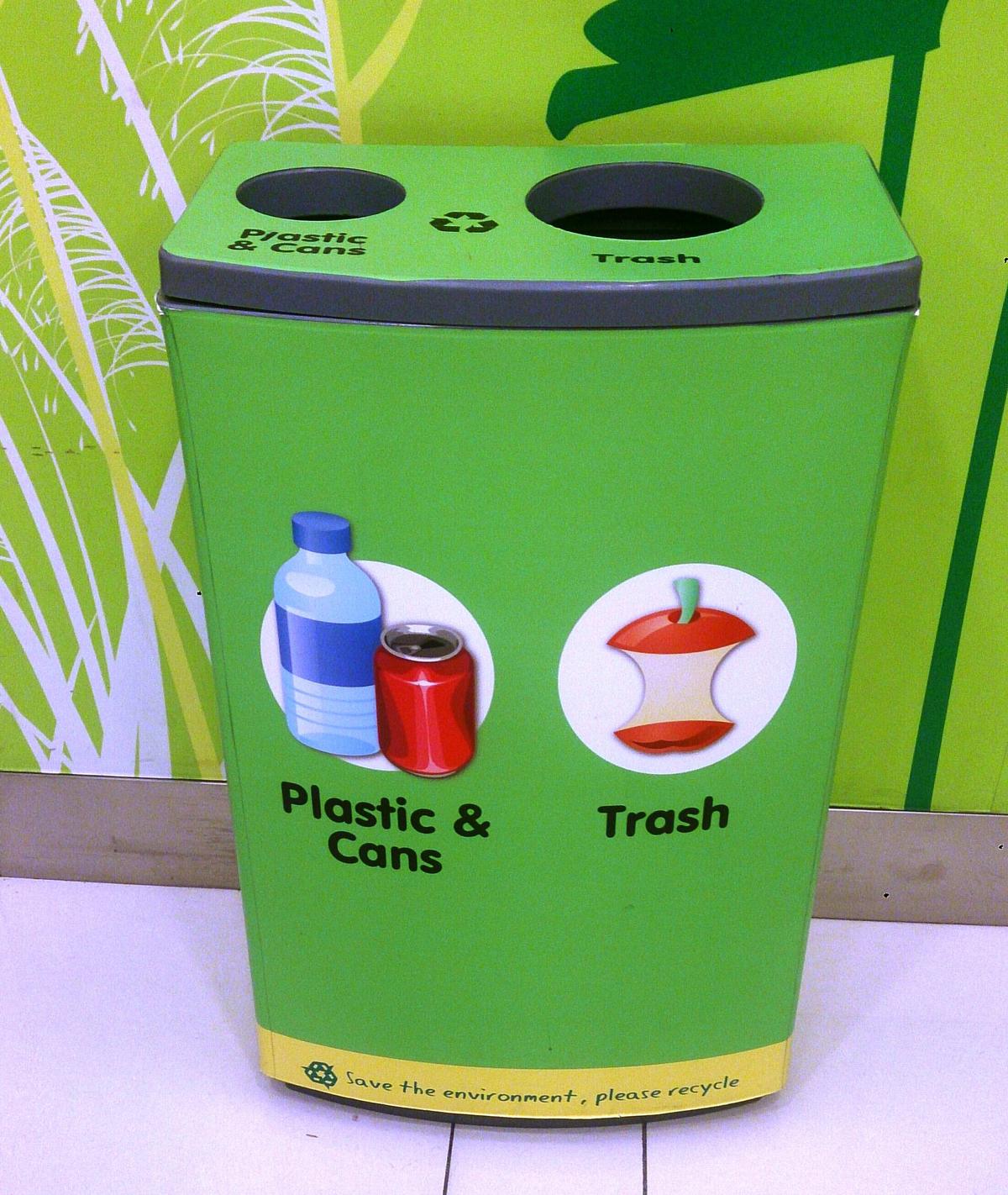
The blue bin, the commingled kerbside receptacle of the National Recycling Programme, is how most households participate. Acceptable materials: paper, cardboard, plastic bottles and containers, glass bottles and jars, metal cans and tins, and drink cartons including Tetra Pak. Unacceptable items: plastic bags, styrofoam, food-contaminated packaging, textiles, shoes, toys, furniture, ceramics, light bulbs, batteries, and electronic waste. The contamination rate in the domestic stream is approximately 40%. A single food-soiled pizza box or a plastic bag full of mixed items can render an entire truckload unrecyclable.
The Convenience-Versus-Contamination Trade-Off
The commingled model creates a structural problem. Because households do not pre-sort and the pickup is single-stream, the materials recovery facility (MRF) must separate recyclables mechanically and manually. The output, baled recyclables, is sold into global commodity markets. Singapore has limited domestic remanufacturing capacity, so purity standards are set by offtaker demand overseas. That means an item that is technically recyclable may not be recyclable in Singapore's system if no buyer will take the baled material at the required purity.
Types of Waste in Singapore: Which Streams Work and Which Do Not
The NEA's annual statistics break Singapore's waste into 14 categories. Performance across them is wildly uneven. Metal recovery works. Ferrous metal had a 99% rate in 2023 (1.35 million tonnes generated). Non-ferrous metal had 98% (201,000 tonnes). Construction and demolition waste also works: 99% of 1.36 million tonnes. Scrap tyres recover at 92%. Wood (75%) and horticultural waste (73%) do reasonably well. Everything else is weak.
- Paper and cardboard: 1.07 million tonnes generated in 2023, recovery rate 31%. The gap is driven by food-soiled paper and cardboard that cannot be recovered from the blue bin commingled pickup.
- Plastic: 941,000 tonnes generated, recovery rate 5%. Plastic is the system's most public failure. Most plastic packaging is not recoverable in Singapore's MRFs, and the small fraction that is, clean PET and HDPE bottles, is often lost to contamination.
- Food waste: 755,000 tonnes generated, recovery rate 18%. Most food waste goes into the general stream and is incinerated. Its high moisture content reduces energy recovery efficiency and increases ash volume.
- Glass: 72,000 tonnes generated, recovery rate 11%. Glass is heavy, low-value, and often ends up as aggregate or is landfilled rather than remelted.
- Textiles and leather: 214,000 tonnes generated, recovery rate -2% (the negative figure in NEA's reporting reflects more material being withdrawn from inventories than recycled in the measurement year). Textiles are almost entirely incinerated.
- Ash and sludge: 204,000 tonnes generated, recovery rate 7%. This includes incineration residues from other processes and wastewater treatment sludge.
These categories make the central problem visible. The streams that work, metal, construction waste, scrap tyres, are industrial and commercial. They arrive at the recycler clean, homogeneous, and in large volumes. The streams that fail, plastic, glass, textiles, food, are the ones that pass through households. The contamination that plagues the blue bin is the mechanism of that failure.
Singapore Waste Disposal System: the Producer Responsibility and Policy Layer
Singapore's policy response to the waste problem sits under the Resource Sustainability Act 2019 and the Zero Waste Masterplan. Two schemes affect householders and small businesses directly: the Producer Responsibility Scheme (PRS) for e-waste and Mandatory Packaging Reporting (MPR).
E-Waste PRS
Since 2021, producers of regulated consumer electrical and electronic equipment must fund the pickup and recovery of their products at end-of-life. The appointed operator is ALBA E-Waste Smart Recycling Pte Ltd. Channels under the scheme include retail take-back for ICT equipment at 302 participating outlets as of 2023, retail take-back for large appliances at 27 outlets, quarterly drives at housing estates, and over 600 ALBA e-bins across the island. The regulated categories are ICT equipment, large household appliances, batteries, lamps, and solar panels. The scheme is funded by producers, not by residents. What this means for you: do not put e-waste in the blue bin or the rubbish chute. It will be incinerated, and the embedded materials, including metals that recover at 99%, are lost. Use the ALBA e-bins or drop off at a scheduled collection drive.
Mandatory Packaging Reporting
Since 2021, obligated producers, companies with annual turnover above a regulatory threshold, must report their packaging volumes and waste-reduction plans to NEA. This is a reporting scheme, not a pickup obligation. It is widely seen as a precursor to a future packaging Extended Producer Responsibility scheme, but that has not been legislated. The Beverage Container Return Scheme, announced in the Zero Waste Masterplan, is planned but implementation has been delayed with no set date as of 2023.
Semakau Landfill Capacity
Semakau Landfill receives incineration bottom ash and non-incinerable waste. As of 2023, roughly a quarter of its engineered capacity was filled. The projected full-closure date under the Zero Waste Masterplan is 2035, but that projection is recalculated annually based on disposal trends and new plant commissioning. Each new WtE plant, TuasOne most recently, pushes the date outward. The closure date is not a countdown; it is a modelled estimate that responds to policy and consumption.

The Domestic Recycling Rate Versus the National Rate
The 57% national rate for 2023 is the headline figure in NEA's annual statistics. The domestic rate is 12%. The non-domestic rate, covering industrial, commercial, and construction sectors, is 68%. The gap is structural: the national figure is dominated by high-volume, high-recyclability streams that never touch a household blue bin. Construction and demolition waste alone was 1.36 million tonnes in 2023, recovered at 99%. Ferrous metal was 1.35 million tonnes, recovered at 99%. Add scrap tyres, non-ferrous metal, wood, and horticultural waste, and the total reclaimed tonnage reaches 3.96 million tonnes, enough to push the national rate above 50% while the domestic rate stays below 15%.
This is not a statistical trick. NEA publishes both figures clearly. The confusion arises when the national rate is cited without the domestic rate alongside it, which happens routinely in media and corporate reporting. The Zero Waste Masterplan targets raising the domestic rate to 30% by 2030. That would mean more than a doubling of current performance. Whether the target is reachable depends on solving the blue-bin contamination problem, which the current pickup model, commingled and with no pre-sort requirement, directly causes.
Failure Modes: What Actually Goes Wrong in Singapore’s System
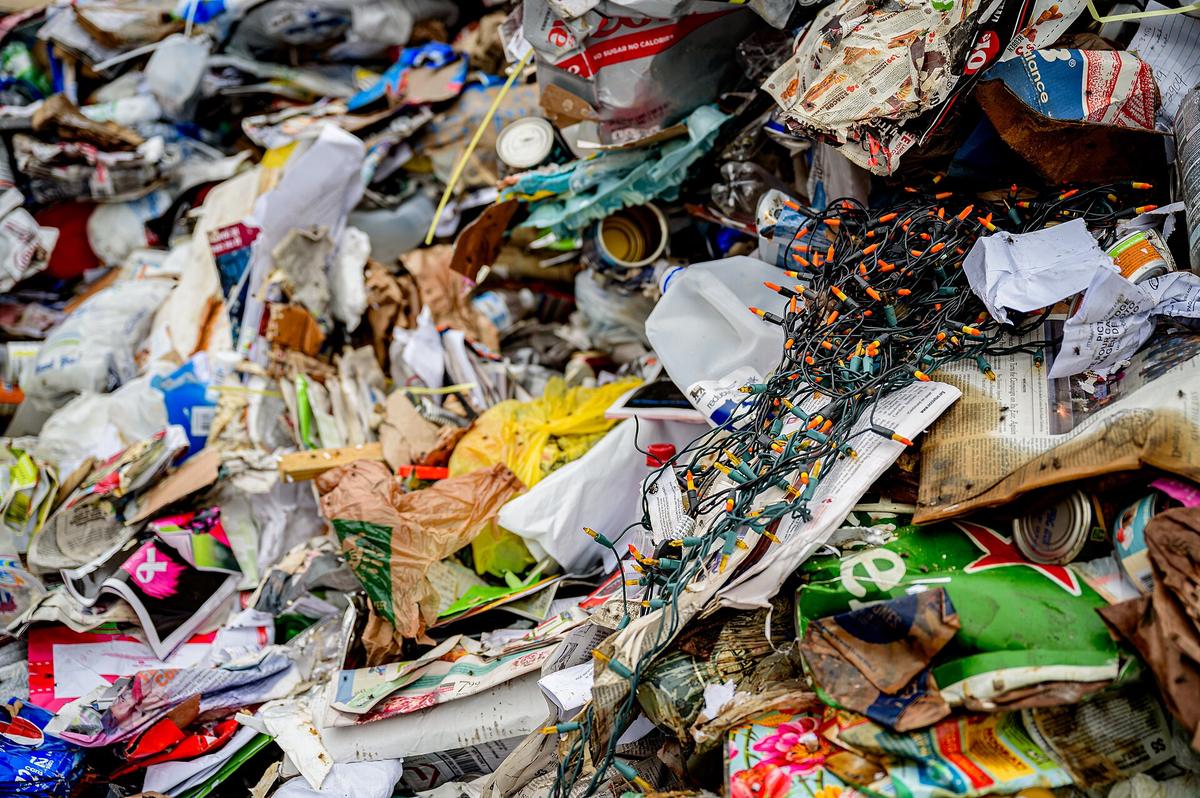
The dominant failure mode is blue-bin contamination. Food-soiled paper and cardboard, unwashed plastic containers, and non-recoverable items like textiles, toys, and styrofoam are placed in the commingled bin. At the MRF, a contaminated batch may be rejected entirely. NEA reports contamination rates around 40%. Nearly half the material collected for recovery is not recoverable in practice.
Other failure modes:
- Recyclable bagging: Recyclables placed in plastic bags before going into the blue bin. The bag is treated as contamination; the contents may not be recovered because the sorting equipment cannot see them.
- E-waste in general waste: Regulated e-waste discarded through the refuse chute or in a blue bin. The item is incinerated. The embedded metals are lost.
- Lithium-ion battery fires: Batteries in general waste or blue bins cause fires in collection vehicles, MRFs, and incineration plants. The small size of batteries makes them easy to discard casually.
- Packaging label mismatch: A package marked recyclable under an international labelling system may not be accepted by Singapore's MRFs or by the overseas offtakers who buy the baled output.
- Cross-contamination in pickup: General waste and recyclables mixed during collection, by operator error or by co-collection in the same vehicle compartment, destroys the recoverable stream.
Each of these failures is preventable. The practical question is whether the system's structure, commingled bins, no household pre-sort, low gate fees for incineration, makes it easier to burn than to fix the recovery stream. The Semakau closure date keeps moving outward, which reduces the political urgency of change.
More in Waste streams
-
 Bulky waste in Singapore
What happens to bulky waste in Singapore after the town council collects it, from dismantling and metal recovery to incineration at Tuas South and the ash that reaches Semakau Landfill.
Bulky waste in Singapore
What happens to bulky waste in Singapore after the town council collects it, from dismantling and metal recovery to incineration at Tuas South and the ash that reaches Semakau Landfill.
-
 Construction and demolition waste
Why Singapore's construction and demolition waste recycling rate exceeds 99%, how it shapes the national recycling figure, and what happens to the recovered concrete and metal.
Construction and demolition waste
Why Singapore's construction and demolition waste recycling rate exceeds 99%, how it shapes the national recycling figure, and what happens to the recovered concrete and metal.
-
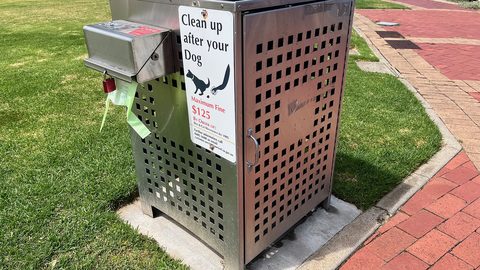 E-waste
Singapore's e-waste Producer Responsibility Scheme makes producers fund collection and recycling. Small tonnage, high value, and a genuine battery fire risk.
E-waste
Singapore's e-waste Producer Responsibility Scheme makes producers fund collection and recycling. Small tonnage, high value, and a genuine battery fire risk.
-
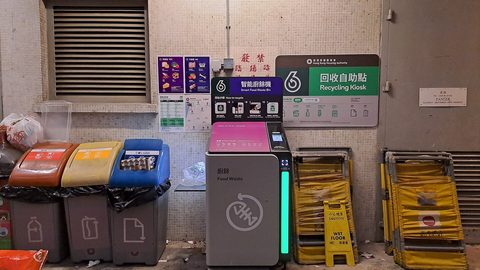 Food waste
 is Singapore's heaviest household stream and the hardest to recover. Moisture and decomposition make it a problem before sorting even begins.
Food waste
Food waste is Singapore's heaviest household stream and the hardest to recover. Moisture and decomposition make it a problem before sorting even begins.
-
 Glass
Glass is infinitely recyclable in theory but breaks in Singapore's commingled blue bin and contaminates paper. Ceramics are the specific poison.
Glass
Glass is infinitely recyclable in theory but breaks in Singapore's commingled blue bin and contaminates paper. Ceramics are the specific poison.
-
 Household batteries
Why household batteries cause fires in Singapore's waste system and the correct disposal pathway through ALBA E-waste collection points under the Producer Responsibility Scheme.
Household batteries
Why household batteries cause fires in Singapore's waste system and the correct disposal pathway through ALBA E-waste collection points under the Producer Responsibility Scheme.
-
 Metal
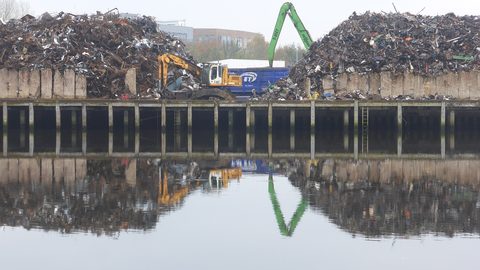
Metal is the Singapore waste stream that works. It is recovered from the blue bin and from incineration bottom ash, with a recovery rate others do not approach.
Metal
Metal is the Singapore waste stream that works. It is recovered from the blue bin and from incineration bottom ash, with a recovery rate others do not approach.
-
 Packaging waste
A package marked recyclable internationally may not be recyclable in Singapore. Laminated materials and local MRF limits explain the gap.
Packaging waste
A package marked recyclable internationally may not be recyclable in Singapore. Laminated materials and local MRF limits explain the gap.
-
 Paper and cardboard
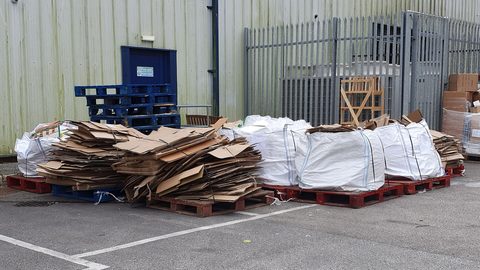
Moisture and grease break paper fibre, which is why food-soiled paper ruins a blue bin load in Singapore's commingled recycling system.
Paper and cardboard
Moisture and grease break paper fibre, which is why food-soiled paper ruins a blue bin load in Singapore's commingled recycling system.
-
 Plastic
Resin codes are not a recyclability rating. In Singapore's blue bin system, a plastic item is recycled only if it survives the MRF sort and finds a buyer.
Plastic
Resin codes are not a recyclability rating. In Singapore's blue bin system, a plastic item is recycled only if it survives the MRF sort and finds a buyer.
-
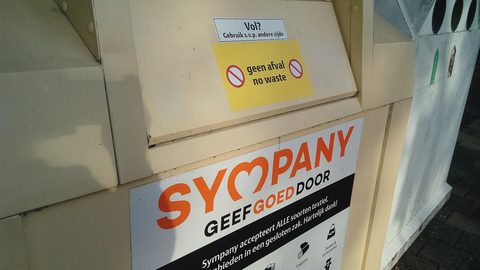 Textiles
Textile waste in Singapore is growing faster than any other stream with almost no recycling. Blended fibres cannot be separated, so reuse is the only real option for households.
Textiles
Textile waste in Singapore is growing faster than any other stream with almost no recycling. Blended fibres cannot be separated, so reuse is the only real option for households.
-
 Used cooking oil
How used cooking oil from Singapore's F&B premises is collected by licensed operators and processed into biodiesel, and why household oil lacks a dedicated recycling pathway.
Used cooking oil
How used cooking oil from Singapore's F&B premises is collected by licensed operators and processed into biodiesel, and why household oil lacks a dedicated recycling pathway.
Common Questions
What is the difference between the national recycling rate and the domestic recycling rate in Singapore?
The national rate (57% in 2023) measures recovery across all sectors: households, industry, commerce, and construction. The domestic rate (12% in 2023) measures only household waste. The gap of 45 percentage points is caused by high-recovery industrial streams like construction waste (99%) and scrap metal (99%) that dominate the national figure.
Does the blue bin actually recycle everything that goes into it?
No. The blue bin uses commingled pickup. The contamination rate is roughly 40%. Food-soiled packaging, plastic bags, and non-recoverable items like textiles and toys are rejected at the materials recovery facility. An item is reclaimed only if it survives the MRF sort and finds an offtaker buyer, which is not guaranteed.
Where does Singapore's waste go after incineration?
The incineration bottom ash, roughly 20% of the original waste mass, is barged to Semakau Landfill, an engineered enclosure between Pulau Semakau and Pulau Sakeng. Fly ash captured by baghouse filters is treated separately and landfilled. The energy recovered supplies approximately 2% of Singapore's electricity.
What is the Semakau Landfill closure date?
The Zero Waste Masterplan projects full closure around 2035, based on current disposal rates and incineration capacity. This is a modelled projection, not a fixed deadline. It is recalculated annually and has moved outward with each new plant. As of 2023, roughly a quarter of the landfill's engineered capacity was filled.
How do I recycle e-waste in Singapore?
Use the Producer Responsibility Scheme (PRS) operated by ALBA E-Waste Smart Recycling. Channels include over 600 ALBA e-bins, retail take-back at 302 ICT outlets and 27 large-appliance outlets, and quarterly drives at housing estates. Do not put e-waste in the blue bin or the refuse chute; it will be incinerated.
Why is plastic recycling only 5% in Singapore?
Most plastic packaging is not recoverable in Singapore's materials recovery facilities. Clean PET and HDPE bottles can be reclaimed, but they are often lost to contamination in the commingled blue bin. The 5% figure from NEA's 2023 data reflects the fraction of plastic waste that is actually recovered and sold to offtakers.
What are the Zero Waste Masterplan's targets for 2030?
The Masterplan, published in 2019, sets a domestic rate target of 30%, an overall rate target of 70%, and a 30% reduction in daily ash disposal to Semakau Landfill. Mandatory Packaging Reporting was implemented in 2021 as a precursor to a future packaging EPR. The Beverage Container Return Scheme is planned but delayed with no implementation date as of 2023.
Read next
-
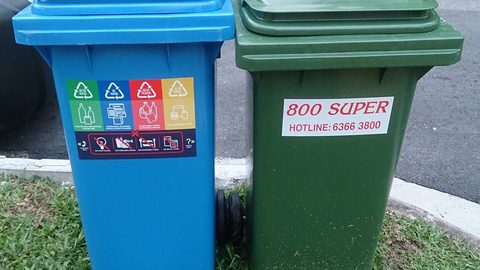 What the Blue Bin Actually Takes and What Happens When It Gets Contaminated
What Singapore's blue bin actually takes—and what happens to a whole truckload when one item is wrong. The contamination rule, not just the list.
What the Blue Bin Actually Takes and What Happens When It Gets Contaminated
What Singapore's blue bin actually takes—and what happens to a whole truckload when one item is wrong. The contamination rule, not just the list.
-
 What Must Never Go in a Singapore Household Bin and Where It Goes Instead
Batteries, lamps, chemicals and sharps must never go in a Singapore household bin. Where each goes instead, scoped to Singapore disposal law.
What Must Never Go in a Singapore Household Bin and Where It Goes Instead
Batteries, lamps, chemicals and sharps must never go in a Singapore household bin. Where each goes instead, scoped to Singapore disposal law.
-
E-waste
Singapore's e-waste Producer Responsibility Scheme makes producers fund collection and recycling. Small tonnage, high value, and a genuine battery fire risk.
-
Bulky waste in Singapore
What happens to bulky waste in Singapore after the town council collects it, from dismantling and metal recovery to incineration at Tuas South and the ash that reaches Semakau Landfill.
-
Plastic
Resin codes are not a recyclability rating. In Singapore's blue bin system, a plastic item is recycled only if it survives the MRF sort and finds a buyer.
-
Household batteries
Why household batteries cause fires in Singapore's waste system and the correct disposal pathway through ALBA E-waste collection points under the Producer Responsibility Scheme.
-
Food waste
Food waste is Singapore's heaviest household stream and the hardest to recover. Moisture and decomposition make it a problem before sorting even begins.
-
Glass
Glass is infinitely recyclable in theory but breaks in Singapore's commingled blue bin and contaminates paper. Ceramics are the specific poison.