Household Hazardous Waste in Singapore: Batteries, Lamps, Chemicals and Sharps Disposal
Batteries, lamps, chemicals and sharps must never go in a Singapore household bin. Where each goes instead, scoped to Singapore disposal law.
Household Hazardous Waste in Singapore: Batteries, Lamps, Chemicals and Sharps Disposal
A lithium ion battery dropped into the refuse chute can start a fire in a collection truck, a materials recovery facility, or a waste-to-energy plant within hours. That is the most urgent reason hazardous household waste must follow separate channels. The National Environment Agency (NEA) records multiple refuse-chute and collection-vehicle fires each year caused by discarded batteries. Every single one was preventable. The rule is simple: batteries, lamps, chemicals, and sharps never enter the blue recycling bin or the refuse chute. Each category has a designated, legal disposal route under the Resource Sustainability Act 2019 and the Environmental Public Health (General Waste Collection) Regulations.
Battery Disposal: the Fire Risk Determines the Route
Batteries are the most common hazardous item tossed into household bins, and the leading cause of fire in the waste system. A lithium-ion cell crushed in a collection truck or punctured at the plant feed hopper ignites instantly. The NEA has published warnings in annual waste statistics reports and operator incident summaries. The disposal route depends on whether the cell is rechargeable or single-use.
Rechargeable Cells: Lithium Ion, Nickel Cadmium, Nickel Metal Hydride
Take rechargeable units to a dedicated drop-off bin. The NEA runs a network of collection points with producers and retailers. Large electronics stores, supermarkets, and community centres host a bin. ALBA E-Waste Smart Recycling, the appointed Producer Responsibility Scheme (PRS) operator under the Resource Sustainability Act 2019, accepts them at its e-waste bins, the same receptacles used for regulated categories such as ICT equipment and portable batteries. Drop-off is free. Never place a rechargeable cell in the blue bin, even if it carries a recycling symbol from another country. Singapore's single-stream commingled system cannot sort them, and the mechanical process at the materials recovery facility (MRF) can crush the cell, causing a fire that contaminates the entire truckload.
Alkaline and Single-Use Units: The Shorter Route
Alkaline cells (AA, AAA, C, D, 9V) cause less trouble than rechargeable types but remain banned from the blue bin and the refuse chute. Use the same NEA collection bins and retailer take-back counters. The distinction matters because alkaline chemistry is tamer, but the metals and electrolytes inside still overwhelm the incineration process. Singapore's plants run at high temperature. A cell of any chemistry can explode in the furnace, damaging the grate and releasing metals into the fly-ash stream that requires separate treatment. Lead-acid vehicle batteries follow a different route: mandatory take-back by the retailer when you buy a replacement, governed by the Environmental Public Health (General Waste Collection) Regulations.

Fluorescent Lamp Recycling: Mercury Means it Cannot Be Incinerated
Fluorescent tubes, compact fluorescent lamps (CFLs), and circular tubes contain mercury. When a lamp breaks in a refuse chute or an incineration plant, mercury vapour releases into the air or gets captured in the baghouse filter and fly ash. The NEA's emission compliance standards for waste-to-energy plants require strict mercury control, but the protocol is designed for trace mercury in general refuse, not for the concentrated load from dozens of lamps. A single fluorescent lamp holds enough mercury to push the plant's baghouse-filter dioxin-control system past its design limits if it enters in quantity.
Where Lamps Go
The ALBA E-Waste Smart Recycling network handles all mercury-containing lamps. Extended Producer Responsibility (EPR) for lighting equipment began on 1 July 2021 and covers fluorescent tubes, CFLs, straight and circular tubes, and LED bulbs. The same e-waste bins that accept batteries also accept lamps. Large retailers selling lighting equipment must provide over-the-counter take-back. Drop lamps at designated e-waste points in shopping malls and community centres. The lamps travel to a dedicated recycling facility where mercury is recovered and glass and metals are separated. Never place a fluorescent lamp in the blue bin or the refuse chute. Mercury contamination turns the entire batch of recyclables or incineration residue into hazardous waste requiring special treatment.
Household Chemical Waste: One Rule, Three Routes
Household chemicals include solvents, thinners, kerosene, petrol, pesticides, and cleaning agents that are flammable, corrosive, or toxic. These items are illegal in the general waste bin under the Environmental Public Health (General Waste Collection) Regulations. They cannot go down the refuse chute because they ignite during collection or react with other refuse in the plant. They cannot go in the blue bin because they contaminate the entire recyclable stream.
Disposal Channels
First, some Town Councils schedule door-to-door collection for household hazardous waste on specific dates. The schedule varies by estate; check with your Town Council or the NEA's household hazardous waste programme page. Second, the NEA runs limited collection events a few times per year at designated community locations. Third, for large volumes or commercial quantities, engage a licensed chemical-waste contractor. The chemical waste undergoes a specialist incineration protocol with controlled temperature and residence time to destroy hazardous compounds. The fly ash from chemical-waste incineration is treated as hazardous waste and landfilled separately from the bottom ash that goes to Semakau Landfill.
For small household volumes, a single bottle of paint thinner or a can of insecticide, the safest option is to hold it until a scheduled collection event or door-to-door pickup. Never pour chemicals down the drain or flush them. That route sends them into the used-water system, a closed loop not designed for hazardous chemicals.
| Waste Type | Disposal Channel | Accepting Entity | Legal Basis |
|---|---|---|---|
| Rechargeable batteries | E-waste recycling bins, over-the-counter take-back | ALBA E-Waste Smart Recycling, NEA battery collection scheme | Resource Sustainability Act 2019, Part 3 |
| Alkaline batteries | E-waste recycling bins, over-the-counter take-back | NEA battery collection scheme, retailers | Environmental Public Health (General Waste Collection) Regulations |
| Fluorescent lamps (CFLs, tubes) | E-waste recycling bins, over-the-counter take-back | ALBA E-Waste Smart Recycling (EPR for lighting) | Resource Sustainability Act 2019, Part 3; EPR start date 2021-07-01 |
| Household chemicals | Door-to-door collection (Town Council), collection events, licensed contractor | NEA, Town Councils, licensed chemical-waste contractors | Environmental Public Health (General Waste Collection) Regulations |
| Sharps (syringes, lancets) | Rigid sharps container, collection at pharmacies or clinics | NEA clinical-waste guidelines, healthcare providers | Environmental Public Health (General Waste Collection) Regulations |
| Lead-acid batteries | Mandatory take-back by retailer on replacement purchase | Retailer | Environmental Public Health (General Waste Collection) Regulations |
Sharps Disposal: the Refuse Chute Must Never Be Used
Used syringes, lancets, and needles are clinical waste from households. They cannot go into the general waste bin, the blue bin, or the refuse chute. The reason is safety: a needle that punctures a worker's glove or a sort-line operator's hand transmits blood-borne disease. Singapore's system handles millions of tonnes of waste each year. A single improperly discarded sharp creates a biohazard incident that shuts down a route or a sorting line.
How to Package and Return Sharps
Place all household sharps in a rigid, puncture-resistant container. A thick plastic bottle with a screw cap works if you lack a commercial sharps container. Seal the filled container and label it. Return it to a pharmacy or clinic that offers sharps collection. Some community health centres and hospitals accept them. Never use a plastic bag. Never drop sharps loose into the chute. Never place them in the blue bin. If you need regular sharps disposal, ask your healthcare provider about a dedicated collection schedule. Expired medicines accompanying sharps should go back to a pharmacy for disposal. The NEA publishes guidelines for pharmaceutical waste disposal, and some pharmacies run a voluntary take-back programme.
The Legal Framework: What the Resource Sustainability Act 2019 Requires
The Resource Sustainability Act 2019 governs e-waste and packaging reporting. Part 3 establishes the Extended Producer Responsibility (EPR) scheme for electrical and electronic equipment, covering portable batteries and consumer lamps alongside ICT equipment, large household appliances, and electric mobility devices (e-bicycles, e-scooters, hoverboards). The Act obligates producers to fund collection and recycling. ALBA E-Waste Smart Recycling is the appointed PRS operator for the current contract period.
The Environmental Public Health (General Waste Collection) Regulations lists nine categories illegal in general waste: flammable liquids, compressed-gas cylinders, clinical waste, used cooking oil in commercial volumes, construction debris, automotive parts, asbestos-containing materials, radioactive waste, and dead animals. The NEA enforces it. Fines apply. The NEA also sets gate fees for incineration and Semakau Landfill; those are administrative prices, not market rates.
The Infrastructure That Handles What You Throw Away
Singapore's system is incineration-first. Over 95% of disposed waste travels to one of four waste-to-energy plants: Tuas South, TuasOne, Senoko, and Keppel Seghers Tuas. The ash, about 20% of the original weight, goes to Semakau Landfill, a 350-hectare engineered enclosure between Pulau Semakau and Pulau Sakeng. The NEA projects Semakau's closure around 2035. That date is a modelled estimate that shifts with new plant commissioning and waste-reduction policies. The Integrated Waste Management Facility (IWMF), now under construction, will co-locate incineration, materials recovery, and water reclamation, extending the timeline.
The Blue Bin Reality
The blue bin is the commingled receptacle under the National Recycling Programme. Its contamination rate is the dominant failure metric for the domestic system. Food-soiled items, plastic bags containing recyclables, and non-recyclable material such as textiles or toys render an entire truckload unrecyclable. The domestic recycling rate, which measures household-sector performance only, sits around 12% to 13%, distinct from the national recycling rate of roughly 55% that includes industrial and construction streams. The low domestic figure is not closing quickly. The table above shows exactly which items bypass this failing stream and why.
Who This Suits and Who Should Skip it
Get this guide if you drop items down the refuse chute or into the blue bin and need to know what actually happens next, and how a single wrong item contaminates a truckload. Get it if you run a small business handling e-waste, chemicals, or sharps under producer-responsibility and mandatory-reporting rules. Get it if you are a policy-curious resident or student who needs the honest gap between the national recycling rate and the domestic figure. Get it if you compare systems internationally and want the specific engineering and behavioural constraints that make Singapore's model hard to transplant.
Skip it if you handle industrial or construction waste and need detailed C&D or toxic-industrial disposal protocols. Skip it if you research NEWater or used-water treatment; that is a separate closed-loop system. Skip it if you audit corporate sustainability and need company-specific compliance data. The most common mistake is assuming the national recycling rate describes household behaviour. It does not. The domestic rate sits below 15%, and the gap is stubborn.
Common Questions
Can I put a lithium ion battery in the blue bin if it is from a rechargeable device?
No. Rechargeable batteries of any chemistry must go to an e-waste recycling bin or an over-the-counter take-back point. The blue bin collects single-stream commingled material. A cell crushed during sorting can start a fire at the MRF or inside the collection vehicle.
Where do I drop off fluorescent tubes in Singapore?
Fluorescent tubes and CFLs are accepted at ALBA E-Waste Smart Recycling bins in shopping malls, community centres, and large retail outlets. Over-the-counter take-back operates at retailers that sell lighting equipment. The EPR for lighting equipment began on 1 July 2021.
Can I put a small amount of paint thinner in the general waste chute?
No. Flammable liquids such as paint thinner, petrol, and kerosene are illegal in the general waste bin under the Environmental Public Health (General Waste Collection) Regulations. Use the household hazardous waste programme: door-to-door collection, scheduled collection events, or a licensed chemical-waste contractor.
What should I do with used syringes from a home medical condition?
Place used syringes and lancets in a rigid, puncture-resistant container with a screw cap. Seal and label it. Return the sealed container to a pharmacy or clinic that offers sharps collection. Never put sharps in the refuse chute or the blue bin.
Is it true that Singapore's national recycling rate is over 50%?
The national recycling rate includes all sectors and is dominated by industrial and construction waste. The domestic recycling rate, which measures household-sector performance only, is around 12% to 13%. The two numbers are distinct. The NEA publishes both annually in its Waste and Recycling Statistics.
What happens to the ash from Singapore's incineration plants?
Incineration bottom ash, roughly 20% of the original waste weight, is barged to Semakau Landfill. Fly ash, the lighter fraction captured by the baghouse filter, is treated separately and landfilled. Semakau's remaining capacity is projected to around 2035, but the date is recalculated annually based on disposal trends and new plant commissioning.
Can I put alkaline batteries in the blue bin because they are less hazardous?
No. Alkaline units are banned from the blue bin and the general waste bin. Use the same NEA battery-collection bins and over-the-counter take-back points as for rechargeable cells. They contain metals and electrolytes the incineration process cannot safely handle.
Read next
-
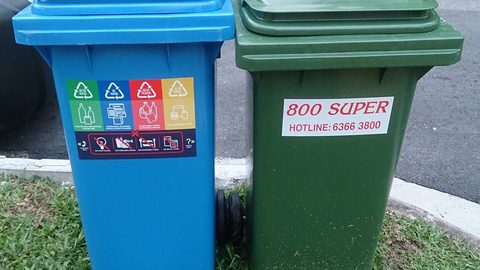 What the Blue Bin Actually Takes and What Happens When It Gets Contaminated
What Singapore's blue bin actually takes—and what happens to a whole truckload when one item is wrong. The contamination rule, not just the list.
What the Blue Bin Actually Takes and What Happens When It Gets Contaminated
What Singapore's blue bin actually takes—and what happens to a whole truckload when one item is wrong. The contamination rule, not just the list.
-
 E-waste
Singapore's e-waste Producer Responsibility Scheme makes producers fund collection and recycling. Small tonnage, high value, and a genuine battery fire risk.
E-waste
Singapore's e-waste Producer Responsibility Scheme makes producers fund collection and recycling. Small tonnage, high value, and a genuine battery fire risk.
-
 Bulky waste in Singapore
What happens to bulky waste in Singapore after the town council collects it, from dismantling and metal recovery to incineration at Tuas South and the ash that reaches Semakau Landfill.
Bulky waste in Singapore
What happens to bulky waste in Singapore after the town council collects it, from dismantling and metal recovery to incineration at Tuas South and the ash that reaches Semakau Landfill.
-
 Plastic
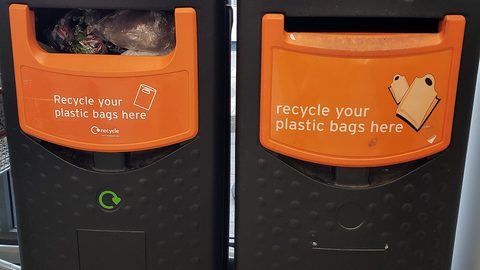
Resin codes are not a recyclability rating. In Singapore's blue bin system, a plastic item is recycled only if it survives the MRF sort and finds a buyer.
Plastic
Resin codes are not a recyclability rating. In Singapore's blue bin system, a plastic item is recycled only if it survives the MRF sort and finds a buyer.
-
 Household batteries
Why household batteries cause fires in Singapore's waste system and the correct disposal pathway through ALBA E-waste collection points under the Producer Responsibility Scheme.
Household batteries
Why household batteries cause fires in Singapore's waste system and the correct disposal pathway through ALBA E-waste collection points under the Producer Responsibility Scheme.
-
 Food waste
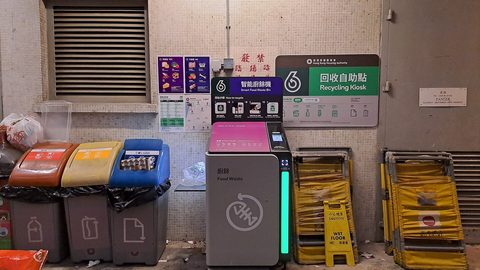
 is Singapore's heaviest household stream and the hardest to recover. Moisture and decomposition make it a problem before sorting even begins.
Food waste
Food waste is Singapore's heaviest household stream and the hardest to recover. Moisture and decomposition make it a problem before sorting even begins.
-
 Glass
Glass is infinitely recyclable in theory but breaks in Singapore's commingled blue bin and contaminates paper. Ceramics are the specific poison.
Glass
Glass is infinitely recyclable in theory but breaks in Singapore's commingled blue bin and contaminates paper. Ceramics are the specific poison.