What Recycling Contamination Means in Singapore's Blue Bins
How food residue, liquids, and wishcycling contaminate Singapore's blue bin loads, why the contamination rate exceeds 40%, and how contamination sends recyclables to the incinerator.
What Recycling Contamination Means in Singapore's Blue Bins
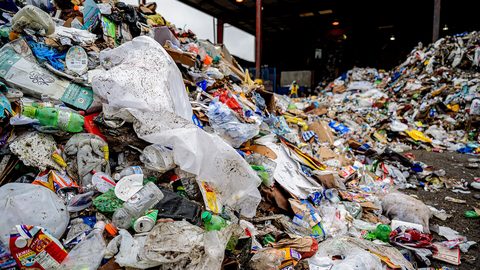
You carry a rinsed plastic container to the blue bin, drop it in, and walk away. Inside that bin, a few millilitres of leftover liquid from a half-empty bottle someone else tossed has already soaked the cardboard below it, turning it into pulp no materials recovery facility can sort. That single bottle, plus a food-smeared takeaway container from a third household, means the entire bag of paper and board surrounding them is now unrecyclable. By the time the collection truck reaches the MRF at Sarimbun Recycling Park, the load is already partially destined for incineration. That is recycling contamination: not a sorting error but a physical mechanism that ruins good recyclables by contact alone.
Singapore’s National Environment Agency reported that 40% of items placed in domestic blue recycling bins were contaminated in 2023. MRF operators see rates routinely exceeding 50%, depending on the housing sector and collection route. Multiply that across the 1.86 million tonnes of domestic waste generated each year, and the lost tonnage is enormous. The domestic recycling rate in 2023 was 12%. That means 88% of household waste went straight to incineration or landfill. Contamination is the binding constraint on that figure, not a lack of participation.

How a Single Contaminated Item Ruins a Whole Blue Bin Load
Singapore’s blue bins use a commingled collection system. Paper, board, plastic bottles, metal cans, glass, and Tetra Paks all go in together. At the MRF, mechanical sorters need these materials dry and free of food residue to separate them. The moment a food-smeared container, a half-full drink bottle, or a bag of wet food waste enters the bin, liquids and oils migrate. Paper absorbs moisture and becomes too weak for the sorting machinery. Board soaked in cooking oil cannot be pulped. A single soft-drink can with a tablespoon of leftover soda contaminates the five paper items pressed against it in the collection truck.
Why the Residual Rate Matters
The result is the MRF residual rate: the percentage of incoming commingled material the facility sends to incineration after sorting. For blue bin loads, that residual rate roughly equals the contamination rate, 40% or more. That material was collected as recyclable, counted in the domestic recycling rate at the point of collection, but incinerated at a waste-to-energy plant. The national recycling rate of 52% in 2023, which includes industrial waste, obscures this loss entirely.
What Contaminates Recycling Singapore: The Specific Items
The NEA Recycling Right campaign publishes a clear list of what belongs in the blue bin and what does not. Acceptable items: paper, board, plastic bottles and containers, glass bottles, metal and aluminium cans, and Tetra Paks, all rinsed. The unacceptable list is longer: food waste, liquids, textiles, shoes, toys, ceramics, light bulbs, mirrors, Styrofoam, disposable cutlery, plastic bags and soft plastics, e-waste, and batteries. In practice, the most common contaminants are straightforward.
Food Residue: The Number One Cause
A plastic container with leftover curry, a takeaway box with sauce stains, a milk carton not rinsed. Food residue is the single largest source of contamination. The oil and moisture spread through the bin, ruining paper and board they touch. Rinsing is a household obligation, not enforced, but it makes the difference between recyclable and waste.
Liquid Contamination: The Leaking Bottle Problem
A half-full water bottle or a drink can with leftover soda leaks during collection and transportation. The liquid soaks into surrounding paper, making it unrecyclable. The Beverage Container Return Scheme is legislated but not yet operational as of 2025, so many containers arrive at the blue bin still containing liquid.
Soft Plastic and Textile Wicking
Soft plastics like carrier bags and film wrap tangle in MRF sorting equipment, causing downtime and reducing throughput. Textiles placed in the blue bin absorb moisture and food residue, becoming unrecyclable and contaminating adjacent material. Both are listed as unacceptable by the NEA but appear regularly in blue bin audits.
Wishcycling: The Sincere Mistake
Wishcycling is putting a non-recyclable item in the blue bin hoping it will be recycled. The recycling symbol on packaging does not mean the item is accepted in Singapore’s blue bin. Many plastic items with a chasing arrows triangle are not recyclable here because the MRF at Sarimbun Recycling Park cannot handle that material type. A yogurt cup with a recycling symbol goes straight to incineration if placed in the blue bin, and its presence contaminates the surrounding load.
The Blue Bin Contamination Rate: NEA Reports Versus Operational Reality
The NEA’s official blue bin contamination rate was 40% in 2023, based on audits conducted during the Recycling Right campaign period. MRF operators, who see the material every day, report rates that can exceed 50%, especially in sectors with higher proportions of food waste and liquids. The gap sits between a campaign-period snapshot and daily operations. A load arriving at the MRF with visible liquid pooling on the floor is not salvageable. The entire batch goes to incineration.
The domestic recycling rate of 12% is measured at collection, not at material recovery. If 40% of that collected weight is contaminated and incinerated, the real domestic recycling rate after MRF sorting is closer to 7%. Contamination is the binding constraint. No improvement in participation can raise the real recycling rate without first reducing contamination.
Wishcycling: Why the Recycling Symbol Does Not Mean Accepted
The chasing arrows triangle with a number inside is a resin identification code, not a guarantee of local recyclability. In Singapore, the MRF accepts only certain plastic types. PET bottles (number 1) and HDPE containers (number 2) are the most common. Plastics numbered 3 to 7, including PVC, LDPE, PP, PS, and other mixed plastics, are not mechanically sortable at the standard MRF. A PP yogurt container with the number 5 symbol is not recyclable in the blue bin, no matter how clean it is.
Wishcycling happens because a householder sees the symbol and assumes the item is recyclable everywhere. The consequence is contamination. That yogurt container, placed in the blue bin, arrives at the MRF and is sent to incineration. If it was clean, it did not contaminate the rest of the load by itself. If it had food residue, it ruined the surrounding paper and board too.
What to Do Next: The Single Most Practical Action
Rinse every container before placing it in the blue bin. That single action has the greatest impact on reducing contamination. A rinsed plastic bottle or can does not leak liquid into surrounding paper. A rinsed takeaway container does not spread oil through the load. The NEA’s list of acceptable materials is clear: paper, board, plastic bottles, plastic containers, glass bottles, metal cans, aluminium cans, and Tetra Paks, all rinsed. The most common failure is not the wrong item. It is the right item not rinsed. Do that one thing, and the load you contribute has a chance of being recycled instead of incinerated.
Common Questions
What is the NEA blue bin contamination rate in Singapore?
The NEA reported a 40% contamination rate for domestic blue bins in 2023. MRF operators report rates exceeding 50% in some sectors. The rate is measured by weight during campaign-period audits.
Does a recycling symbol mean an item can go in the Singapore blue bin?
No. The chasing arrows symbol is a resin identification code, not a local recyclability guarantee. Only PET (1) and HDPE (2) plastics are accepted. Numbers 3 to 7 are not mechanically sortable at the MRF.
How does food residue in a blue bin cause other items to be incinerated?
Food residue releases oils and moisture that soak into paper and board in the commingled bin. These materials become too weak for MRF sorting and are sent to incineration. One container can ruin the surrounding load.
What is wishcycling and why is it a problem in Singapore?
Wishcycling is placing a non-recyclable item in the blue bin hoping it will be recycled. It is caused by the gap between the recycling symbol on packaging and the actual acceptance list. It adds contamination that lowers the MRF recovery rate.