How Recycling Actually Works in Singapore's System
How Singapore's recycling system actually works, from the blue bin to the materials recovery facility, with NEA figures on what gets recycled and what gets incinerated.
What Actually Happens After You Drop a Can Into a Blue Bin
You lift the flap, drop your rinsed can into the bin, and walk away. From that moment the can enters a chain of machinery, contracts and overseas markets that determines whether it becomes a new can or ends up as ash barged to the offshore landfill. The single most important fact about that chain: the national recycling rate of 52% (2023, NEA) has almost nothing to do with what you put in your blue bin. The household recycling rate, which covers homes and trade premises, was 12% in the same year. The gap is the difference between industrial scrap flows and the commingled, contamination-plagued household stream. Understanding recycling here means starting with that gap. Every other decision, whether to rinse, whether to bag, whether to use a segregated bin, follows from it.

- National recycling rate (2023): 52%
- Domestic recycling rate (2023): 12%
- Non-domestic recycling rate (2023): 72%
- Total waste generated (2023): 6.86 million tonnes
- Waste disposed at Semakau (2023): ~1.2 million tonnes of ash
- Blue bin contamination rate: ~40% by weight
Singapore Recycling System Explained: From Blue Bin to Materials Recovery Facility
The Singapore recycling system is not a single pipeline. It is three parallel streams, household, non-household, and regulated producer-responsibility streams, that converge only at the point of thermal treatment. The household stream runs through the National Recycling Programme, the blue bin scheme operated by the Public Waste Collectors. Public Waste Collectors hold six sector-based licences (current contract period 2021-2028) and collect commingled recyclables from HDB estates, landed properties, and condominiums. Commingled means paper, plastic bottles, glass, metal cans, and Tetra Paks all go into one bin. It also means the contamination rate routinely sits above 40% by weight. Food residue, liquids, soft plastics, and textiles get dropped in alongside the clean material.
What the Public Waste Collector Does With Your Bin
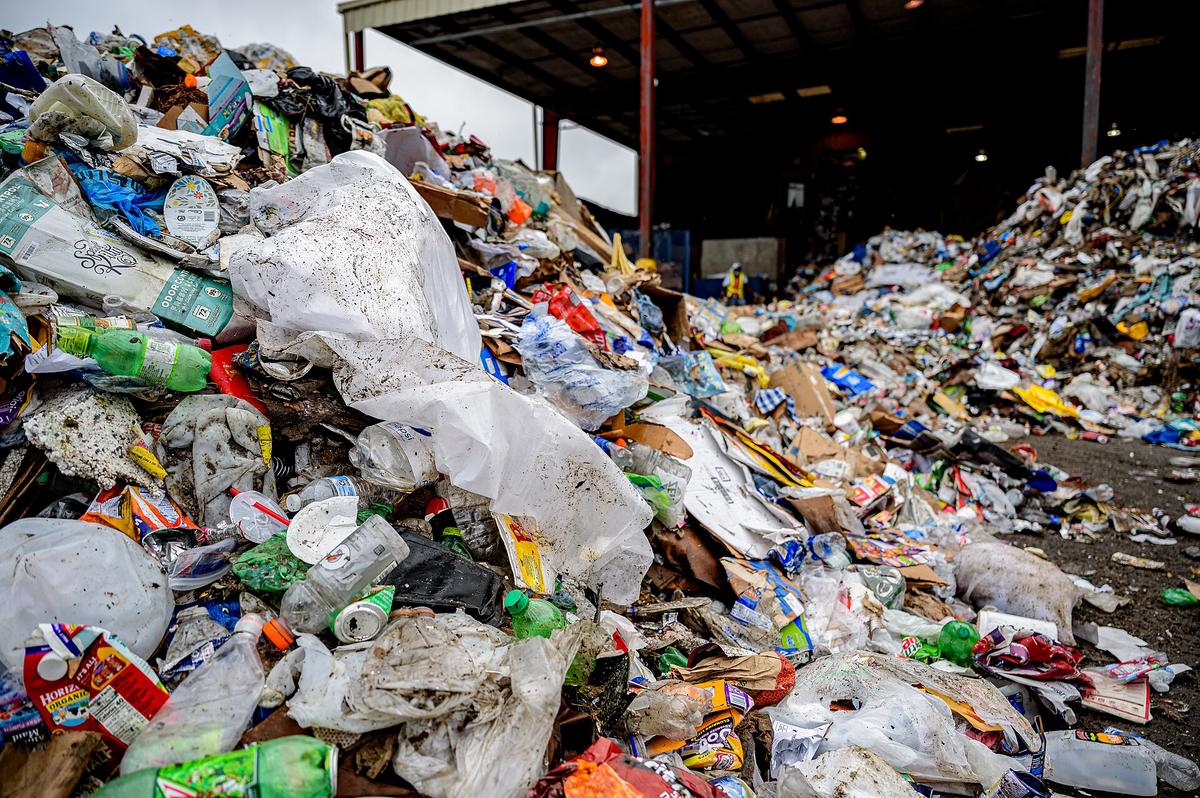
A Public Waste Collector empties the blue bin into a dedicated recycling truck, not a general waste truck. The truck delivers the load to a materials recovery facility. Most MRFs are at Sarimbun Recycling Park in Lim Chu Kang. At the MRF, the commingled stream passes through a sequence of trommel screens, magnets, eddy-current separators, optical sorters, and manual picking stations. Paper is baled. Plastic bottles are sorted by polymer type and baled. Metals are shredded and baled. Glass is crushed to a cullet. Everything that cannot be sorted, the MRF residual rate, is rejected and sent to a thermal-treatment plant. That residual includes the soft plastics that tangled the machinery, the food-soaked cardboard that the optical sorter could not read, and the non-recyclable items that should never have entered the bin.
What Happens to Recycling Singapore: The Incineration Backbone and Semakau Landfill
What leaves the MRF as a rejected residual enters Singapore's thermal-treatment system. The city-state operates three waste-to-energy plants: Tuas South (capacity ~3,000 tonnes per day, commissioned 2000), Senoko (~2,100 tonnes per day, 1992, slated for redevelopment), and the Keppel Seghers Tuas WTE Plant (~800 tonnes per day, 2009). A fourth facility, the Integrated Waste Management Facility at Tuas Nexus, is under construction and expected to begin operation in the mid-2020s, replacing the older plants with higher energy recovery efficiency. In 2023 roughly 39% of total waste generated, 58% of disposed waste, was thermally treated. The process reduces volume by about 90%. It does not eliminate the residue. The bottom ash, roughly 15-20% of the original waste mass, is barged to the offshore landfill.
The Semakau Landfill Trajectory
Semakau Landfill is an engineered enclosure between Pulau Semakau and Pulau Sakeng, covering 350 hectares with a design capacity of 63 million cubic metres. Phase I began operations on 1 April 1999; Phase II followed in 2015. The landfill receives only incineration bottom ash and non-incinerable waste, about 1.2 million tonnes in 2023. NEA projects closure around 2035, a date that has shifted repeatedly as waste generation changes. The landfill is the capacity constraint that makes every tonnage decision real. When it fills, Singapore has no second site prepared. The Zero Waste Masterplan, published in 2019, sets a target of reducing the landfill rate by 30% by 2030. The gap between the target and the trajectory is driven by the household recycling rate, not the industrial one.
NEA Recycling Process: The Domestic Rate Versus the National Rate
The National Environment Agency publishes annual waste statistics, typically with a one-year lag. The 2023 release shows a national recycling rate of 52%, a household rate of 12%, and a non-household rate of 72%. The national figure is the headline. It is the one you see in press releases and ministerial speeches. It is also the one that misleads. The non-household sector generates 4.99 million tonnes of waste and recycles 3.33 million tonnes of it, mostly scrap metal, construction material, and homogeneous industrial streams. The household sector generates 1.87 million tonnes and recycles 0.22 million tonnes. The household rate of 12% includes everything that enters the blue bin counted as recycled, regardless of what the MRF actually recovers. The real recovery rate after sorting is lower by roughly the contamination rate. The true household recycling rate is probably in the single digits.
Why the Gap Persists
The measurement point is at collection, not at material recovery. NEA counts the tonnage collected from blue bins as recycled. The contamination rate, which MRF operators put at 40% or higher depending on housing type, is not subtracted from the published figure. The gap between the claimed rate and the real rate is structural. It has been structural for years, and no amount of public education campaigns has closed it. The Resource Sustainability Act of 2019 is the legislative answer: it created Extended Producer Responsibility frameworks for e-waste (operational since July 2021, run by ALBA E-waste Smart Recycling), for packaging through Mandatory Packaging Reporting, and for food waste through a segregation mandate that began applying to large commercial premises in 2024. None of those instruments directly address the commingled blue bin. That is the point of failure for household recycling.
Singapore Blue Bin Recycling: What You Actually Need to Know
The blue bin accepts paper, cardboard, plastic bottles and containers, glass bottles, metal cans, aluminium cans, and Tetra Paks. It does not accept food waste, liquids, textiles, soft plastics (plastic bags, cling wrap), styrofoam, ceramics, light bulbs, batteries, or electronic waste. The most common failure mode is wishcycling: placing a non-recyclable item in the bin because it has a recycling symbol on its packaging. The second most common failure is contamination by food residue or liquids. It ruins the offending item and the clean material it touches in the bin and in the MRF. Rinse every container before you drop it in. That single action reduces the contamination rate at the source and gives the material a chance. The third failure mode is soft-plastic entanglement: plastic bags and film wrap around MRF sorting equipment, causing downtime and rejection of the entire batch. Do not bag your recyclables in a plastic bag. Empty them loose into the bin. Use a paper bag if you must contain them.
If You Live in an HDB or Condominium
HDB estates are served by the Public Waste Collector in their sector. Find the blue bins at ground level near the refuse chute. Condominiums may have segregated bins, a separate bin for paper, for example. That is an amenity the management chooses to provide, not a requirement of the National Recycling Programme. If you see a segregated bin, use it. The material goes to a different MRF stream with a lower contamination rate and higher recovery probability. If you only have a blue bin, you are in the commingled system. Rinsing and removing soft plastics are your most effective actions.
What the Beverage Container Return Scheme Will Change
The Beverage Container Return Scheme, legislated under the Resource Sustainability Act but not yet operational as of 2025, will introduce a deposit of 10-20 cents on drink containers. Implementation is scheduled for April 2026. When operational, it will remove a significant volume of clean, high-value PET and aluminium from the blue bin stream and divert it to a dedicated reverse-vending network. That will reduce the contamination rate of the residual blue bin stream and improve the MRF economics. It will also make the blue bin even more of a residual stream. Do not wait for the scheme. Rinse and sort now.
More in Recycling in Singapore
-
 Recycling contamination
How food residue, liquids, and wishcycling contaminate Singapore's blue bin loads, why the contamination rate exceeds 40%, and how contamination sends recyclables to the incinerator.
Recycling contamination
How food residue, liquids, and wishcycling contaminate Singapore's blue bin loads, why the contamination rate exceeds 40%, and how contamination sends recyclables to the incinerator.
-
 Recycling in HDB estates and condominiums
How recycling infrastructure and rules differ between HDB estates and condominiums in Singapore, from chutes and blue bins to Public Waste Collector collection under the National Recycling Programme.
Recycling in HDB estates and condominiums
How recycling infrastructure and rules differ between HDB estates and condominiums in Singapore, from chutes and blue bins to Public Waste Collector collection under the National Recycling Programme.
-
 What happens after collection
The full journey of Singapore's blue bin recycling from collection truck to sorting at Sarimbun Recycling Park, and the split between export for recycling and incineration at Tuas South.
What happens after collection
The full journey of Singapore's blue bin recycling from collection truck to sorting at Sarimbun Recycling Park, and the split between export for recycling and incineration at Tuas South.
Common Questions
What is the difference between the national recycling rate and the domestic recycling rate?
The national rate includes all waste streams, industrial, commercial, and household, and was 52% in 2023. The domestic rate covers only households and trade premises and was 12%. The national rate is dominated by industrial scrap; it does not describe household behaviour.
What actually happens to a contaminated item in the blue bin?
Contaminated items, food-soaked cardboard, half-full bottles, soft plastics, are rejected by the materials recovery facility and sent to a thermal-treatment plant. The contamination rate of the domestic recycling stream was roughly 40% in 2023, meaning nearly half of everything collected from blue bins is burned.
Where do blue bin recyclables go after collection?
Public Waste Collectors deliver commingled recyclables to materials recovery facilities, most located at Sarimbun Recycling Park. The MRF sorts the material into bales and rejects non-recyclable residue to thermal treatment.
How does incineration work in Singapore's waste system?
Singapore operates three waste-to-energy plants that burn about 39% of total waste generated. The process reduces volume by roughly 90%, but the bottom ash, about 15-20% of the original mass, is barged to the offshore landfill.
What is Semakau Landfill and when will it close?
Semakau Landfill is an engineered offshore facility between Pulau Semakau and Pulau Sakeng, receiving only incineration ash and non-incinerable waste. NEA projects closure around 2035, but this date shifts with waste generation rates.
What is the blue bin contamination rate?
NEA has published figures around 40% (2019 audit). MRF operators report rates exceeding 50% depending on housing type and collection sector. The rate is a snapshot from audits, not a continuous measurement.
What is the Resource Sustainability Act and what does it cover?
The 2019 Resource Sustainability Act created Extended Producer Responsibility frameworks for e-waste, packaging, and food waste. It requires e-waste collection via ALBA, Mandatory Packaging Reporting for large producers, and food waste segregation for large commercial premises starting 2024.
Read next
-
Recycling in HDB estates and condominiums
How recycling infrastructure and rules differ between HDB estates and condominiums in Singapore, from chutes and blue bins to Public Waste Collector collection under the National Recycling Programme.
-
Recycling contamination
How food residue, liquids, and wishcycling contaminate Singapore's blue bin loads, why the contamination rate exceeds 40%, and how contamination sends recyclables to the incinerator.
-
What happens after collection
The full journey of Singapore's blue bin recycling from collection truck to sorting at Sarimbun Recycling Park, and the split between export for recycling and incineration at Tuas South.