Testing Singapore's Waste System Against a Definition of Circular Economy That Excludes Things
Circular economy is used loosely enough to mean nothing. Here is a definition that excludes things, and how Singapore's waste system actually tests against it.

Testing Singapore’s Waste System Against a Definition of Circular Economy That Excludes Things
What the Circular Economy Definition Actually Requires
The word is used loosely enough to mean almost nothing, so start with a definition that excludes things: a circular arrangement keeps a material in use at its existing quality, rather than burning it for energy and calling the recovery a loop. The published national recycling rate sounds impressive. But a circular economy means materials cycle in closed loops at their highest utility, not that they are recovered once as energy before the residue is landfilled. By that definition, Singapore's system does not qualify. The domestic recycling rate sits at 12 percent. The national figure is inflated by construction and industrial streams. What happens after you drop something into the blue bin or the rubbish chute is more complicated than the brochures suggest.
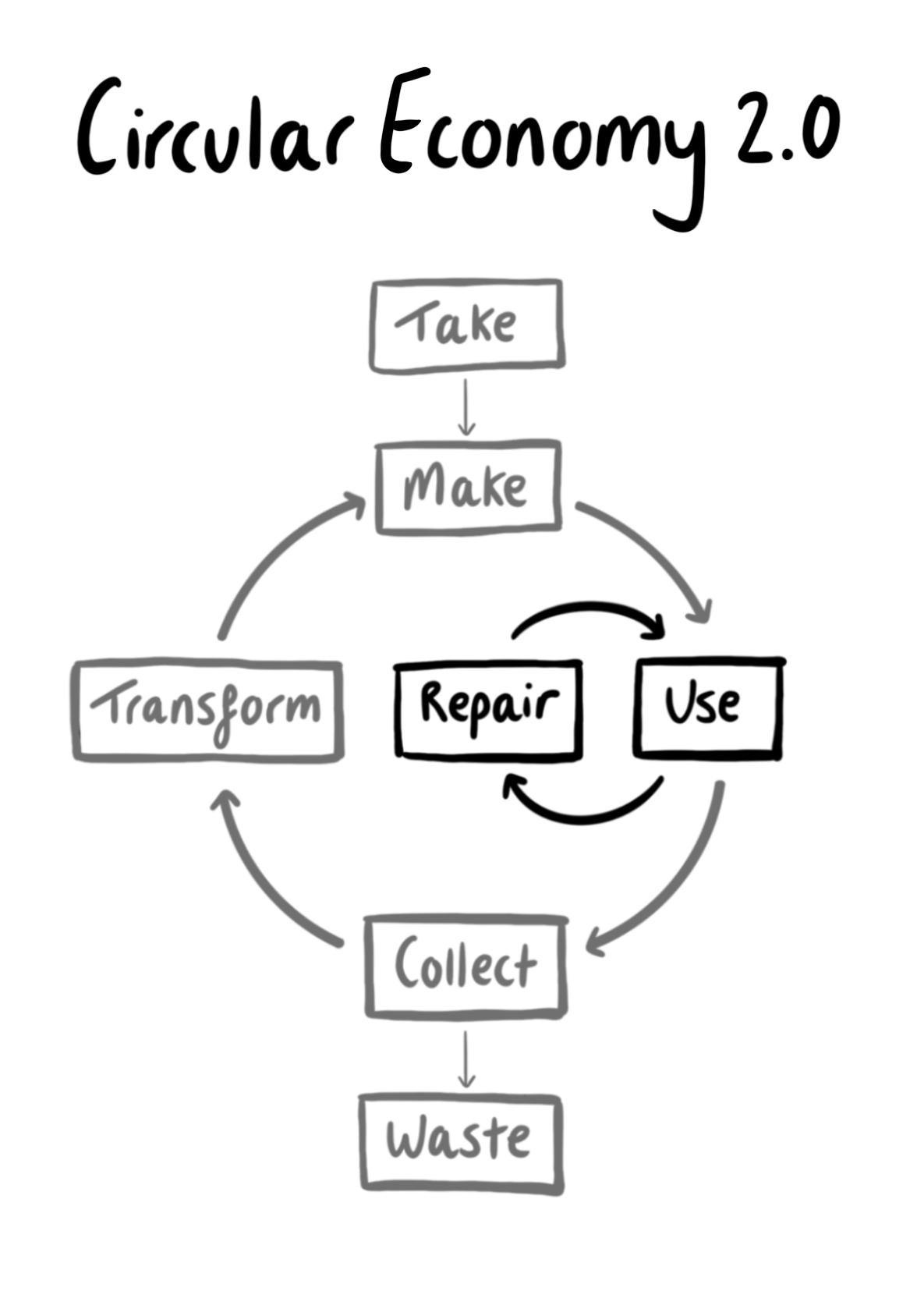
A circular economy has two distinct loops. Biological nutrients, food, wood, paper, return safely to the biosphere through composting or anaerobic digestion. Technical nutrients, metals, plastics, glass, stay in continuous high-quality cycles without downcycling. Energy recovery sits on the bottom tier of the reduce-reuse-recycle hierarchy, one step above landfill. Singapore's system is built on the opposite architecture: incineration with energy recovery is the default destination for anything not picked by a materials recovery facility. That is not circularity. It is delayed disposal.
Singapore Recycling Circularity Gap: 12 Percent Domestic Versus 57 Percent National
The circular economy definition Singapore policy documents reference the Zero Waste Masterplan, which targets a 70 percent overall recycling rate by 2030 and a 30 percent domestic rate by the same year. NEA figures from 2024 tell a different story. The national recycling rate was 57 percent. The domestic recycling rate was 12 percent. The gap is 45 percentage points.
The cause is structural: industrial and construction scrap is straightforward to re-process; household commingled waste is not. The Singapore recycling circularity gap is not a behaviour problem. It is a collection-model problem.
Incineration Circular Economy Conflict: Energy Recovery is Not Recycling
Singapore incinerates roughly 99 percent of non-recycled municipal waste across four active waste-to-energy plants. The 2024 disposed-waste figure was 2.89 million tonnes. Burning shrinks volume by about 80 percent, but the remaining bottom ash, roughly a fifth of input mass, goes to Semakau Landfill. The incineration circular economy conflict is this: energy recovery is classed as the second-lowest tier on the waste hierarchy, above only landfill. The system calls it recovery. A circular economy calls it a linear endpoint with a temporary energy dividend.
Singapore Material Loop Closure: Where it Works and Where it Breaks
Singapore material loop closure succeeds in exactly one stream. Metals, ferrous and non-ferrous, are extracted from the bottom ash at the incineration plants and sold for re-processing. That is genuine closed-loop recovery at high utility. Every other stream fails or downcycles.
Plastics collected in the blue bin are baled at the MRF and sold to export offtakers, but the purity depends on contamination. The blue-bin contamination rate is about 40 percent. A single food-soiled item can reject an entire batch. Glass is crushed for aggregate, not remelted into containers. There is no domestic remanufacturing capacity for bottle-to-bottle recycling. Paper and cardboard collected clean through segregated channels can be recycled, but the commingled blue bin makes that unlikely.
The Blue Bin Problem: Commingled Single-Stream Trade-Off
The National Recycling Programme uses blue bins for commingled collection: paper, cardboard, metal cans, plastic bottles, and glass. The commingled single-stream trade-off is convenience against contamination. Residents do not have to sort. They also do not have to rinse. Food residue on a plastic tub renders the whole batch hard to sort. Recyclables placed in plastic bags are treated as contamination. The MRF rejects anything it cannot clean.
The failure cases are predictable. Soft plastics, styrofoam, textiles, batteries, and e-waste all go into the blue bin despite being excluded. The system depends on the behaviour of the average user, and the average user is hurried and confused.
MRF Export Offtaker Dependence: a System Without Domestic Buyers
Singapore's materials recovery facilities sort and bale recyclables for sale into global commodity markets. The MRF export offtaker dependence means the acceptance standard is set by buyers in China, Vietnam, and other importing countries. When China's National Sword policy tightened contamination thresholds in 2018, baled recyclables from Singapore lost their main market. The result was stockpiling, price drops, and material sent for burning that had previously been exported.
Singapore has limited domestic remanufacturing. Without local processors for plastics, paper, or glass, the value of the recyclate is determined by shipping costs and foreign purity standards, not by local demand.
Incineration-First Architecture Lock-In: Why the System Cannot Easily Change
The incineration-first architecture lock-in is embedded in plant capacity, collection contracts, and gate-fee pricing. Singapore has four operational waste-to-energy plants: Tuas, Senoko, Tuas South, and Keppel Seghers. TuasOne is the most recent. Together they provide the capacity to burn nearly all disposed waste.
The Integrated Waste Management Facility, which began operations in 2026, co-locates a 2,900-tonnes-per-day incinerator with a 400-tonnes-per-day food waste treatment plant. The system is built to burn. Changing it would mean reducing throughput at plants that cost billions to construct, while the contracts with Public Waste Collectors assume incineration as the destination. No pressure to divert waste comes from the gate fee: the incineration gate fee is set by NEA, not by a market price for scarcity of landfill space.
Semakau Landfill Linear Endpoint: Ash Cannot Be Unburned
Semakau Landfill is the engineered enclosure between Pulau Semakau and Pulau Sakeng. It receives incineration bottom ash and non-incinerable waste. Daily input is roughly 2,000 tonnes. The Semakau Landfill linear endpoint is final: once bottom ash is on the island, it does not re-enter any material cycle.
Some ash is repurposed as NEWSand for non-structural construction, up to 20 percent, but the landfill itself is a permanent one-way flow. The closure date has shifted as new incineration plants came online. Originally projected for 2045, later revised to 2035, and then pushed back again by TuasOne. Each revision treats the landfill as a capacity problem to be solved by building more incinerators, not by reducing the ash output at source.
Energy Recovery Tier Limitation: Why Incineration Cannot Be Circular
The waste hierarchy ranks reduce, reuse, and recycle above recovery and disposal. Even efficient waste-to-energy plants, which convert a fraction of the calorific value into electricity, are still discarding materials that could be recycled. The biogenic carbon in food and paper returns to the atmosphere as CO₂, but the fossil carbon in plastics is released as a net emission. The energy generated displaces grid electricity. That is a one-time offset, not a cycle. The net carbon position depends on the biogenic fraction of the waste and the carbon intensity of the displaced fuel. NEA provides neither figure in its public annual reports.
Domestic Remanufacturing Capacity Absence: the Missing Second Half of the Loop
A circular economy requires that materials collected for recycling are remanufactured into new products in the same economy. Singapore has no bottle-to-bottle glass plant, no plastics-to-food-grade-pellets facility, and no paper pulp mill. The domestic remanufacturing capacity absence means every bale of plastic, every ton of crushed glass, and every bundle of cardboard leaves the country. The loop is not closed. It is exported.
The system depends on the willingness of overseas buyers to accept Singapore's recyclates and on the shipping routes that carry them. When those routes close or contamination standards tighten, the material has nowhere to go but the incinerator.
Where the System is Moving: Policy Frameworks That Could Change the Gap
E-Waste PRS Producer Obligation: Coverage and Gaps
The e-waste PRS producer obligation covers ICT equipment, large household appliances, electric mobility devices, portable batteries, industrial batteries, consumer lamps, and solar photovoltaic panels. Retailers with floor area of 300 square metres or more must provide in-store collection points. The collection target for large household appliances is 90 percent of placed-on-market weight by 2031. Baseline figures for the early years are still being established.
The gap: regulated e-waste still ends up in general waste. The public does not reliably use the collection channels, and the downstream fate of exported e-waste fractions is not broken out in public NEA data.
Mandatory Packaging Reporting: Data Before Enforcement
Mandatory Packaging Reporting began on 1 January 2021. It applies to producers with annual turnover above $10 million who place packaged goods on the market. They must report the volume and type of packaging and submit a 3R plan. No legislated reduction target for packaging exists yet. The scheme is in a data-gathering phase. Compliance among obligated producers shows engagement, but the scheme does not yet require any reduction in packaging weight or any minimum recycled content. That will depend on the future packaging EPR, which the MPR data is meant to inform.
IWMF Co-Location: Burning and Sorting Under One Roof
The IWMF co-locates materials recovery with incineration and water reclamation. Phase 1 at Tuas Nexus began operations in 2026. It processes 2,900 tonnes of waste per day through incineration and 400 tonnes of food waste through anaerobic co-digestion with used water sludge, producing biogas for electricity. Putting a sorting facility beside an incinerator means rejected recyclables go straight to the furnace. It does not reduce the total tonnage burned unless upstream behaviour changes. It makes extraction more efficient. It does not close the loop.
Zero Waste Masterplan Targets: the Numbers That Matter
The Zero Waste Masterplan targets set by NEA in 2019 include a 70 percent overall recycling rate by 2030 and a 30 percent domestic rate. In 2024, the domestic rate was 12 percent. Closing eighteen percentage points in six years demands systemic change, not incremental improvement.
The Singapore Green Plan 2030 includes the circular economy as a pillar, but the policy levers are still under construction. The gate-fee pricing signal remains an administrative choice set by NEA, not a market response to Semakau's remaining capacity. The disposable carrier bag charge of $0.05 per bag, effective July 2023, applies only at large supermarkets. It is a behaviour nudge, not a material flow intervention.
Which Streams Close Loops and Which Do Not
Metal closes the loop. Ferrous and non-ferrous metals are recovered from incineration bottom ash and re-processed at high purity. That is the only stream where Singapore achieves genuine material circularity.
Food waste is treated at the IWMF through anaerobic digestion, returning biogas to the grid and digestate to land. That is a proper biological vs technical nutrient cycles approach. But the food waste recycling rate stands at only 19 percent of the 766,000 tonnes generated in 2024. Plastics and glass are downcycled or landfilled. The distinction between downcycling vs closed-loop recycling is the difference between what Singapore advertises and what it achieves.
What the Reader Should Do Next
If you live in Singapore, stop using the blue bin for food-soiled packaging. Rinse every container. Remove plastic bags from your recyclables. That one change, done by enough people, reduces the contamination rate that is the primary failure of the domestic system.
The rest of the circular economy gap is structural and will take policy changes and infrastructure investment. Your choice does not close the loop, but it decides whether your bin load ends up baled for export or rejected to the incinerator. The failure case is not that you recycle too little. It is that your well-intentioned effort contaminates everything around it.
Common Questions
What happens to items I put in the blue bin?
They go to a Materials Recovery Facility where they are sorted by type, baled, and sold to export offtakers. About 40 percent of blue-bin contents are rejected due to contamination, food residue, non-recyclable items, or bagged recyclables, and sent for burning.
Does incineration count as recycling?
No. Incineration with energy recovery occupies the recover tier of the waste hierarchy, one step above landfill. Recycling means material is reprocessed into a new product at similar quality. Burning waste for electricity is a one-time energy extraction, not a cycle.
Is the 57 percent recycling rate real?
It is the national rate including industrial and construction waste. The domestic household rate is 12 percent. The two numbers are published separately by NEA each year. The national rate is often cited out of context as evidence of household success, which it is not.
What is the most practical change a householder can make?
Stop putting recyclables in plastic bags before tossing them into the blue bin. The bags are treated as contamination and the contents may not be recovered. Also, rinse food containers. Food residue is the single most common reason a batch is rejected at the MRF.