Plastic Waste in Singapore and What Resin Codes Actually Mean
Resin codes are not a recyclability rating. In Singapore's blue bin system, a plastic item is recycled only if it survives the MRF sort and finds a buyer.
You drop a plastic bottle into the blue bin. The lid is off, the bottle is empty, and you did a quick rinse. That act of placing it in the bin is the beginning of a long, uncertain journey, not the end of one. The plastic bottle is recyclable in principle, but it will be recycled only if it survives a high-speed sort at a Materials Recovery Facility, escapes contamination from the items around it, and finds a buyer, known as an offtaker, who will take the baled material off the island. Most of the plastic you carefully separate never completes that journey. Understanding why starts with the numbers on the bottom of the item you just dropped.
Resin Codes Are Not a Recyclability Rating
Look at the bottom of a plastic container. Inside the chasing arrows triangle you will see a number from 1 to 7. That is the Resin Identification Code, and it tells you the polymer family the item is made from. 1 is PET. 2 is HDPE. 3 is PVC. 4 is LDPE. 5 is PP. 6 is PS. 7 covers everything else including polycarbonate, acrylic, nylon, and multi-layer plastics. Many people treat that chasing arrows symbol as a recycling guarantee. It is not. The resin code was never designed to indicate whether a municipal collection system will accept the item. It was created in 1988 for manufacturers to sort post-industrial scrap, not for households to decide what goes in the bin.
In Singapore's system, the resin code on an item tells you almost nothing about its fate. Only two of the seven codes are recovered for reprocessing in meaningful volumes from the blue bin stream: resin code 1 (PET) and resin code 2 (HDPE). Resin code 5 (PP) is recovered in smaller amounts, though the National Environment Agency does not publish a separate recovery rate for it. The other four codes are burned. A PVC bottle marked with a 3, a polystyrene clamshell marked with a 6, and any item marked with a 4 or a 7 will almost certainly end up at a Waste to Energy plant, not at a recycler. The resin code is a chemistry label, not an environmental scorecard.

Plastic Waste in Singapore: the Recycling Rate That Matters
The published national recycling rate for Singapore is roughly 50 to 60 percent. That number is routinely cited as proof that the average household recycles half its waste. It does not. The national recycling rate is dominated by industrial and construction waste streams, which are heavy, well sorted, and commercially valuable. The domestic recycling rate, which measures only the household sector, has persistently sat below 15 percent. For plastics specifically, the gap is stark. According to the NEA Waste and Recycling Statistics for 2023, the national recycling rate for plastic was 5 percent. That means 48,000 tonnes of the 968,000 tonnes generated were recycled. The domestic recycling rate for plastic in the same year was 4 percent. A headline figure of 5 percent is not a rounding error; it is a system limit.
The 920,000 tonnes of plastic that were not recycled were disposed, which in Singapore means burned. The resulting bottom ash and the fly ash captured by baghouse filters are then barged to Semakau Landfill, the offshore site created by enclosing the sea between Pulau Semakau and Pulau Sakeng. As of the 2023 estimate, Semakau is projected to reach capacity around 2035, though that date has moved outward repeatedly as new combustion capacity comes online, such as the TuasOne WtE Plant. The headline national recycling rate gives the impression that plastic waste in Singapore is under control. The reality is that 95 percent of the plastic the country generates is burned or landfilled.
Singapore Plastic Recycling Rate: What the Numbers Actually Measure
Domestic Rate Versus National Rate
The NEA publishes two distinct figures each year, and they measure different things. The domestic recycling rate covers waste from households, including the contents of the blue bins and the general refuse chutes in HDB blocks. The national recycling rate covers all sectors: households, industry, commerce, and construction. Because construction and demolition waste is heavy and mostly inert, it is recycled at rates above 90 percent, which pulls the national average upward. The national recycling rate for plastic being 5 percent while the national total recycling rate sits around 50 percent tells you that plastic is the stream the system handles worst.
Why the 4 Percent Figure Is a System Failure
The 4 percent domestic recycling rate for plastic is not a participation problem. Surveys consistently show that most Singapore households claim to recycle. The failure is in the system design. The blue bin is a commingled collection receptacle. Every household in a block tosses every accepted item into the same bin. A single food-soiled plastic container or a plastic bag full of recyclables can contaminate an entire truckload. The contamination rate for blue bin contents is reported by NEA at 40 percent or higher. When a load is too contaminated, the MRF rejects it and the whole batch is sent for burning. The 4 percent figure is what survives contamination, sorting errors, and the search for an offtaker.
| Resin Code | Polymer | Recovered for Recycling | Typical Fate |
|---|---|---|---|
| 1 (PET) | Polyethylene terephthalate | Yes | Blue bin, MRF, baled, exported |
| 2 (HDPE) | High-density polyethylene | Yes | Blue bin, MRF, baled, exported |
| 3 (PVC) | Polyvinyl chloride | No | Incineration |
| 4 (LDPE) | Low-density polyethylene | No | Incineration |
| 5 (PP) | Polypropylene | Recovered in limited volumes | Blue bin, MRF, baled, exported |
| 6 (PS) | Polystyrene | No | Incineration |
| 7 (Other) | Polycarbonate, acrylic, nylon, multi-layer | No | Incineration |
Resin Codes Singapore Recycling: Why the Symbol Misleads
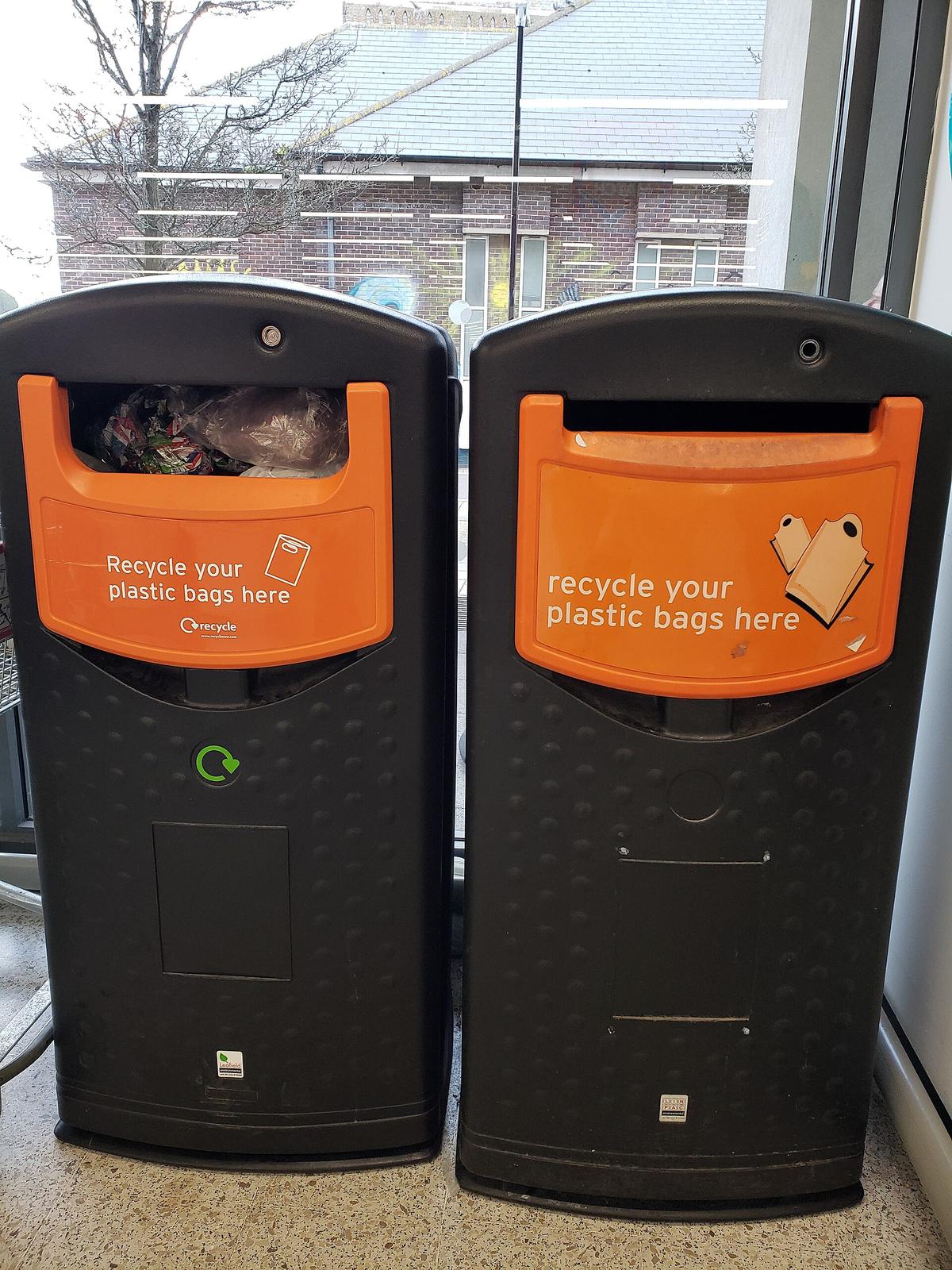
When you see a resin code on a plastic item sold in Singapore, the code tells you the polymer. It does not tell you whether the item is accepted in the blue bin. The blue bin acceptance criterion is stricter than the resin code. The item must be made of a polymer that the MRF can sort, but it must also be a clean, non-film form factor. Plastic bags, wrappers, film, and styrofoam are excluded regardless of their resin code. A polystyrene clamshell marked with a 6 is made of a technically recyclable polymer, but it is not accepted in the blue bin because it is a foam form factor that the MRF cannot process. A plastic bag marked with a 4 is also not accepted, even though LDPE is recyclable in principle. Film wraps around sorting machinery and causes shutdowns.
The mismatch between the resin code and the blue bin rules creates a persistent failure mode. A householder sees the chasing arrows symbol and assumes the item is recyclable. It goes into the blue bin. At the MRF, the item is rejected as contamination. If the rejection rate on a given load pushes the contamination level above the MRF's threshold, the entire truckload is diverted to the incinerator. The resin code symbol on a product is a global label applied by a manufacturer who may not design for Singapore's specific system. Treating it as a permission slip to put an item in the blue bin is the single most common mistake residents make.

Plastic Contamination Blue Bin Singapore: the Failure Mode
How a Single Dirty Container Spoils a Truckload
The blue bin system uses a single-stream, commingled collection model. All accepted items go into the same bin: plastic bottles, metal cans, glass bottles, paper, and cardboard. The model is convenient for the householder, who does not need to separate materials. It is disastrous for the quality of the recyclable stream. The dominant failure mode is not that people refuse to recycle. It is that the items they put in the bin are too soiled to be processed.
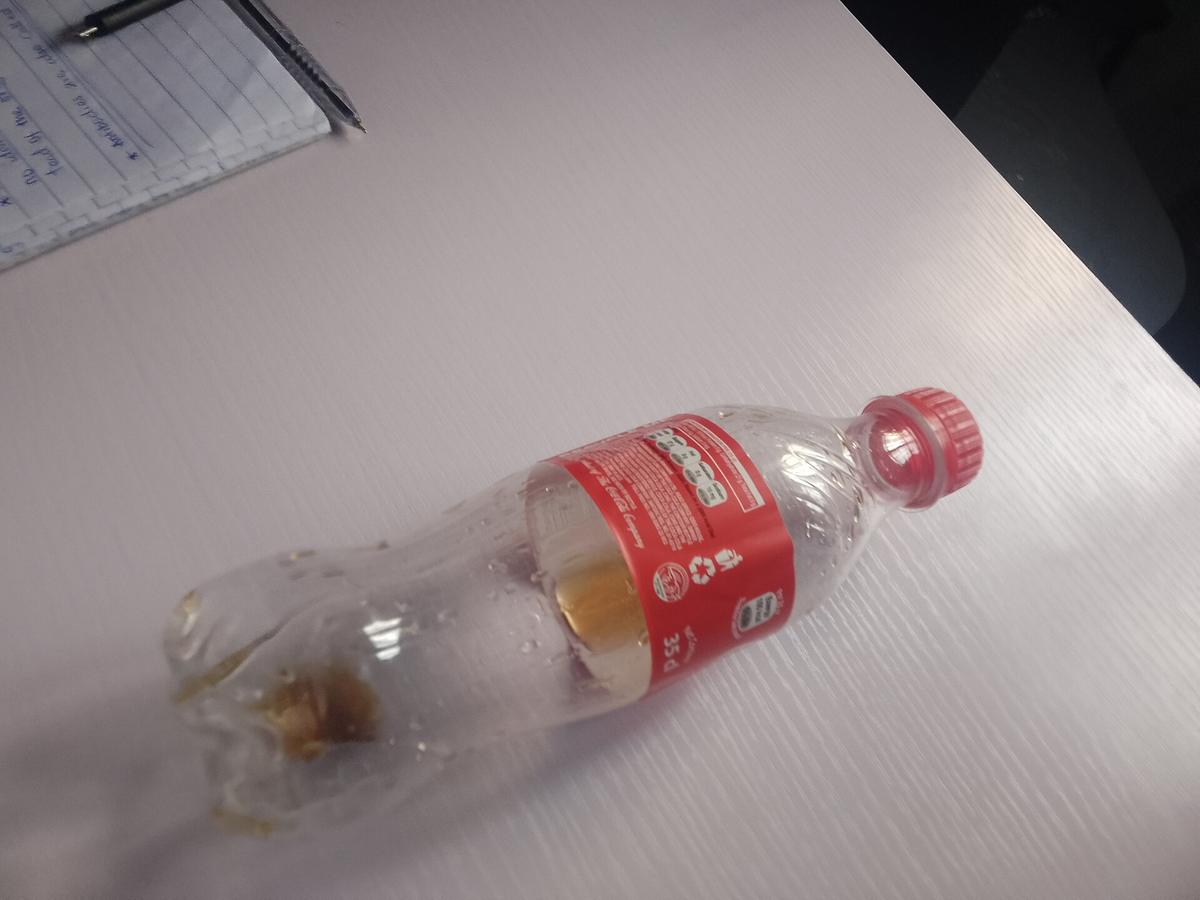
Food-soiled plastic is the most common contaminant. A used yoghurt pot with residue still inside, a takeaway container with curry stains, and a plastic bottle with leftover drink will contaminate not just itself but the paper and cardboard around it. The MRF sorts items by optical sensors and air jets. A wet, sticky plastic item cannot be sorted reliably. A single contaminated item can ruin an entire batch. The NEA has not published a precise breakdown of contamination sources in recent years, but industry reports and public waste collector data indicate that food-soiled items and plastic bags are the two largest categories of rejected material.
Never Bag Your Recyclables
Householders sometimes place loose recyclables inside a plastic bag and tie the bag before dropping it into the blue bin. The bag itself is contamination under the blue bin rules. At the MRF, the bag may not be opened, meaning the contents inside it are never recovered. The bag and its contents are rejected together and sent for burning. Empty the items loose into the bin. A plastic bag full of recyclables is not recycling; it is trash in a bag.
Another common failure is bagging recyclables. Householders sometimes place loose recyclables inside a plastic bag and tie the bag before dropping it into the blue bin. The bag itself is contamination under the blue bin rules. At the MRF, the bag may not be opened, meaning the contents inside it are never recovered. The bag and its contents are rejected together and sent for burning. Empty the items loose into the bin. A plastic bag full of recyclables is not recycling; it is trash in a bag.
Plastic Incineration Singapore: the Default Destination
Where the 920,000 Tonnes Go
Of the 920,000 tonnes of plastic disposed in 2023, nearly all were burned at one of four active WtE plants: Tuas South Incineration Plant, Senoko Incineration Plant, Keppel Seghers Tuas WtE Plant, and the newer TuasOne WtE Plant. A fifth plant, the Integrated Waste Management Facility, is under construction and will co-locate combustion with materials recovery and water reclamation, but it has not yet changed the system's dependence on burning.
Burning reduces the volume of waste by roughly 80 percent, leaving bottom ash and fly ash. The bottom ash, about 20 percent of the input mass, is barged to Semakau Landfill. The fly ash, captured by baghouse filters that remove dioxins and particulates, is treated separately and landfilled. The Semakau closure date of approximately 2035, based on the 2023 projection, is a moving target. Every new WtE plant and every reduction in waste generation pushes the date further out. But the projection assumes that plastic waste generation does not continue to rise. In the decade from 2013 to 2023, plastic waste generation in Singapore grew by roughly 20 percent, even as the population grew more slowly. Combustion is not a solution to plastic waste; it is a disposal method that turns plastic into ash and carbon dioxide.
The Carbon Reality
The energy recovery from plastic combustion is real. WtE plants generate electricity from the heat. But the carbon accounting is complicated. Plastic is made from fossil fuels. Burning it releases fossil carbon that was locked underground. The WtE plant's energy recovery efficiency, the share of the calorific value converted to electricity, is published by each plant operator, but the net carbon position depends on what the displaced electricity would have been and on the biogenic fraction of the waste. NEA's annual reports do not include a lifecycle carbon analysis of the combustion stream. The energy recovered does not make the carbon cost neutral.
Full specification
| Accepted in the blue bin | Yes, if it is clean and dry | manufacturer |
|---|---|---|
| What ruins a batch | Liquid left in the container | manufacturer |
| Where it ends up | A small recovered fraction; the rest is incinerated | manufacturer |
| Prepare it like this | Empty, quick rinse, no need to remove labels | manufacturer |
| Why this stream is difficult | Seven resin types that cannot be melted together, arriving mixed | manufacturer |
Figures labelled manufacturer are the maker's own claim and are measured by them. Owner reported figures are aggregated from owners and are the ones worth planning around.
Common Questions
What do the numbers inside the recycling symbol on plastic mean?
The number, called a Resin Identification Code, identifies the polymer type: 1 is PET, 2 is HDPE, 3 is PVC, 4 is LDPE, 5 is PP, 6 is PS, and 7 is everything else. It does not mean the item is recyclable in your local blue bin system.
Which plastic resin codes are actually recycled in Singapore?
Resin codes 1 (PET) and 2 (HDPE) are the primary plastics recovered for reprocessing from the blue bin stream. Resin code 5 (PP) is recovered in smaller volumes. Codes 3, 4, 6, and 7 are not recovered and are sent for burning.
Why is the Singapore plastic recycling rate only 5 percent?
That is the national recycling rate for plastic in 2023, published by NEA. The low rate is driven by contamination in the blue bin system, the limited number of resin codes that the system can process, and the fact that most plastic ends up in general waste and is burned.
Can I put plastic bags in the blue recycling bin?
No. Plastic bags, wrappers, and film are not accepted, regardless of their resin code. They jam sorting machinery at the MRF. Loose recyclables should be placed directly into the bin, not inside a plastic bag.
What happens to plastic that goes into the general waste chute?
It is collected by Public Waste Collectors and sent to a Waste to Energy plant. The resulting ash is barged to Semakau Landfill, an offshore ash landfill.
How is the domestic recycling rate different from the national recycling rate?
The domestic recycling rate measures only household sector waste. The national recycling rate includes all sectors, including industrial and construction waste. In 2023, the domestic recycling rate for plastic was 4 percent, while the national rate was 5 percent.
Does rinsing a plastic container make a difference?
Yes. Food-soiled plastic is a major cause of contamination in the blue bin. A quick rinse removes residue that can spoil the item and the items around it. Empty and dry items are far more likely to be sorted and baled successfully at the MRF.
Read next
-
 What the Blue Bin Actually Takes and What Happens When It Gets Contaminated
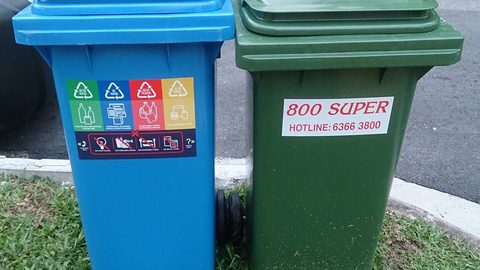
What Singapore's blue bin actually takes—and what happens to a whole truckload when one item is wrong. The contamination rule, not just the list.
What the Blue Bin Actually Takes and What Happens When It Gets Contaminated
What Singapore's blue bin actually takes—and what happens to a whole truckload when one item is wrong. The contamination rule, not just the list.
-
 What Must Never Go in a Singapore Household Bin and Where It Goes Instead
Batteries, lamps, chemicals and sharps must never go in a Singapore household bin. Where each goes instead, scoped to Singapore disposal law.
What Must Never Go in a Singapore Household Bin and Where It Goes Instead
Batteries, lamps, chemicals and sharps must never go in a Singapore household bin. Where each goes instead, scoped to Singapore disposal law.
-
 E-waste
Singapore's e-waste Producer Responsibility Scheme makes producers fund collection and recycling. Small tonnage, high value, and a genuine battery fire risk.
E-waste
Singapore's e-waste Producer Responsibility Scheme makes producers fund collection and recycling. Small tonnage, high value, and a genuine battery fire risk.
-
 Bulky waste in Singapore
What happens to bulky waste in Singapore after the town council collects it, from dismantling and metal recovery to incineration at Tuas South and the ash that reaches Semakau Landfill.
Bulky waste in Singapore
What happens to bulky waste in Singapore after the town council collects it, from dismantling and metal recovery to incineration at Tuas South and the ash that reaches Semakau Landfill.
-
 Household batteries
Why household batteries cause fires in Singapore's waste system and the correct disposal pathway through ALBA E-waste collection points under the Producer Responsibility Scheme.
Household batteries
Why household batteries cause fires in Singapore's waste system and the correct disposal pathway through ALBA E-waste collection points under the Producer Responsibility Scheme.
-
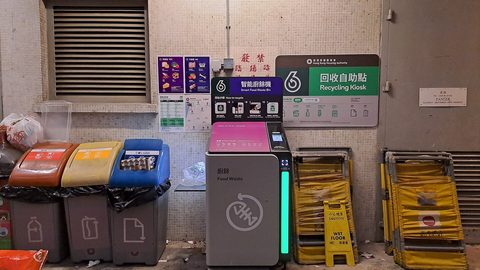 Food waste
 is Singapore's heaviest household stream and the hardest to recover. Moisture and decomposition make it a problem before sorting even begins.
Food waste
Food waste is Singapore's heaviest household stream and the hardest to recover. Moisture and decomposition make it a problem before sorting even begins.
-
 Glass
Glass is infinitely recyclable in theory but breaks in Singapore's commingled blue bin and contaminates paper. Ceramics are the specific poison.
Glass
Glass is infinitely recyclable in theory but breaks in Singapore's commingled blue bin and contaminates paper. Ceramics are the specific poison.
-
 Textiles
Textile waste in Singapore is growing faster than any other stream with almost no recycling. Blended fibres cannot be separated, so reuse is the only real option for households.
Textiles
Textile waste in Singapore is growing faster than any other stream with almost no recycling. Blended fibres cannot be separated, so reuse is the only real option for households.