Why Singapore's Plastic Recycling Rate Is Low: Contamination, Resin Types, and End-Markets
Plastic recycling in Singapore is constrained by contamination, the economics of resin types, and the lack of domestic reprocessing. Most plastic from the blue bin is incinerated.
Singapore recycles just 5% of its 958,000 tonnes of plastic waste each year. The 2023 plastic recycling rate of 5%, and 4% for household plastic, makes a mockery of the blue bin's promise. Two binding constraints explain why plastic recycling is low in Singapore: contamination by food and liquids in the commingled bin, and resin-type economics that leave most soft plastics and polypropylene without viable end-markets. A third factor, the absence of a domestic reprocessing industry, forces recyclate onto an overseas market sealed by import restrictions.
The blue bin is Singapore's most visible recycling infrastructure, yet it operates as a single-stream collection system where paper, metal, glass, and plastic are mixed together at the point of disposal. That design choice, not a lack of public willingness, is the root cause of the gap between what householders place in the bin and what actually gets recycled. This guide traces the fate of a plastic item from bin chute to incinerator gate, and explains why the material households most want to recycle has the lowest recovery rate in the national waste profile.
Singapore Plastic Recycling Rate: The Real Number
The National Environment Agency publishes a national recycling rate of 52% for 2023. That headline figure includes non-household streams: construction debris, industrial scrap metal, and homogeneous factory waste. The household recycling rate stood at 12% in 2023. The household plastic recycling rate was 4%. Of the 958,000 tonnes of plastic waste generated nationally, only 50,000 tonnes were recycled. The rest went to incineration.
The gap between the national rate and the household rate is structural. It is not a measurement error. The annual Waste and Recycling Statistics release from NEA presents both numbers, but the 52% figure is the one quoted in news headlines and government announcements. A reader who sees "Singapore recycles over half its waste" and assumes their household effort is the driver is being misled by the metric, not by the facts.
For context, NEA's 2022 data shows a similar pattern: total waste generated 7.39 million tonnes, plastic generated 1,001,000 tonnes, plastic recycled just 57,000 tonnes for a rate of 6%. The trend is flat or declining, not improving.
Why Contamination in the Blue Bin Is the Binding Constraint
What the Blue Bin Collects, and What It Does Not
The blue bin collects paper, cardboard, plastic bottles, rigid packaging, metal cans, glass bottles, old clothing, and shoes, all commingled. It does not accept styrofoam, soft plastics, bags, food-soiled packaging, ceramics, light bulbs, batteries, or e-waste. In practice, householders place all of those non-accepted items into the bin, a behaviour called wishcycling: placing a non-recyclable item in the blue bin hoping it will be recycled.
NEA publishes a contamination rate of 40% for the household recycling stream in 2023, 2022, and 2021. That figure is based on audits at materials recovery facilities. MRF operators report rates that exceed 50% depending on the housing type and the collection sector. The gap between the official figure and operational reality matters because the 40% is a campaign-period snapshot, not a continuous measurement. The contamination rate means that roughly 40% of everything collected from blue bins by weight is sent to incineration rather than to a recovery process.
Food Residue and Liquids: The Dominant Problem
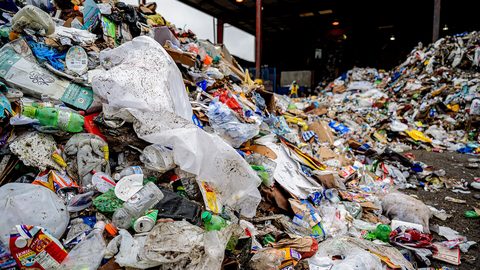
Food residue and liquids are the dominant contaminants. A half-full drink bottle leaks into the bin, soaking the cardboard and paper around it. A takeaway container with curry residue contaminates the entire bag of recyclables. The commingled design makes rinsing a household obligation that is not enforced, and the bin has no drainage. The result is that a clean PET bottle can be rendered unrecyclable by the proximity of a dirty polypropylene container that leaked.
How Resin Type Determines Whether a Plastic Is Really Recycled
Not all plastics are equal in the recycling system. The resin identification code, the number inside the triangle on the bottom of a container, tells the MRF and the exporter what the material is, but it does not tell the householder whether that material has a viable recovery pathway in Singapore.
PET and HDPE: The Only Resins With Reliable End-Markets
Polyethylene terephthalate, code 1, and high-density polyethylene, code 2, are the plastics that have established overseas markets. Clean PET bottles, rinsed, labels removed, caps off, can be baled at the MRF and exported to reprocessors in Malaysia, Thailand, or China. HDPE containers like shampoo bottles and detergent jugs follow a similar path. These two resins account for the bulk of the 50,000 tonnes of plastic recycled in 2023.
But "clean" is the operative word. A PET bottle that arrives at the MRF with liquid inside or a label still attached is downgraded or rejected. The margin between an exportable bale and an incinerated ton is a few minutes of rinsing at the tap.
Polypropylene and LDPE: The Streams That Go to Incineration
Polypropylene (code 5) and low-density polyethylene (code 4) have limited end-markets. Polypropylene is the resin used for takeaway containers, bottle caps, and many food-packaging lids. Low-density polyethylene is the resin of soft plastics: bags, cling film, bubble wrap, and flexible packaging. Soft plastics are not accepted in the blue bin at all. When they appear, and they do, because the householder does not distinguish between "plastic bottle" and "plastic bag", they entangle MRF sorting equipment, causing downtime and damage.
Even when polypropylene and LDPE are clean and separated, Singapore has no large domestic reprocessing facility for these resins. The recyclate must be exported, and export markets for mixed or low-value resins have shrunk since China's 2018 National Sword policy restricted imports of contaminated recyclables. Other Southeast Asian countries have followed with their own import restrictions. The result is that a bale of mixed polypropylene and LDPE has a negative value at the MRF gate: it costs more to bale and ship than it is worth.
What Happens to a Plastic Bottle in the Blue Bin
Trace the path. A clean PET bottle placed in a blue bin is collected by the public waste collector serving that sector: 800 Super Waste Management for City-Punggol, ALBA W&H Smart City for Jurong-Bukit Batok, SembWaste for Woodlands-Yishun. The commingled load goes to a materials recovery facility at Sarimbun Recycling Park or a similar sorting site. There, magnets, eddy-current separators, optical sorters, and hand-pickers separate the stream. The clean PET bottle is baled and stacked for export.
A contaminated polypropylene takeaway container from the same bin, perhaps the one that leaked its residue onto the PET, is sorted as residue. That residue, which includes all the non-recyclable materials and the soiled recyclables, is loaded into a collection vehicle and sent to one of Singapore's four incineration plants: TuasOne, Tuas South, Senoko, or Keppel Seghers Tuas. The container is burned. Its volume is reduced by roughly 90%. The remaining incineration bottom ash is barged to Semakau Landfill, the offshore landfill that has been projected to close "in about 15 years" since at least 2019.
The MRF residual rate, the percentage of incoming commingled material sent to incineration after sorting, is the real recycling loss point. That rate is driven by contamination, not by the recyclability of the base material.
Soft Plastic Recycling: The Structural Problem
Soft plastics, bags, wrappers, pouches, flexible packaging, are not accepted in the blue bin. NEA's advisory list is clear on this. Yet soft plastics make up a large share of the plastic waste stream, particularly in the household sector. They are lightweight, high-volume, and almost entirely non-recyclable in Singapore's current infrastructure.
The reason is mechanical. Standard MRFs are designed for rigid containers: bottles, tubs, jugs. Soft plastics wrap around sorting rolls, jam optical sorters, and contaminate downstream streams. The cost of removing them from the sorting line exceeds the value of any material recovered. A few dedicated soft-plastic collection points exist at supermarkets and community centres, but they collect a tiny fraction of the tonnage. No public waste collector offers a kerbside soft-plastics collection because the economics do not support it.
The consequence is that soft plastics, when placed in the blue bin, become contamination. They reduce the efficiency of the MRF and increase the residual rate. When placed in general waste, which is the correct disposal route for soft plastics in Singapore, they are incinerated. The energy recovery from burning a plastic bag is low, and the carbon emitted is high. Soft-plastic recycling in Singapore is a problem without a technical solution at scale.
Incineration: The Default Destination
Singapore operates four waste-to-energy plants. Approximately 90% of disposed waste is incinerated. The plants reduce the volume of waste by roughly 90%, but they do not eliminate it. The incineration bottom ash, roughly 15 to 20% of the original waste mass, is barged daily to Semakau Landfill.
Semakau Landfill is an engineered enclosure between Pulau Semakau and Pulau Sakeng. Its Phase 1 covers 350 hectares; Phase 2 adds 160 hectares. The Zero Waste Masterplan published in 2019 projects full capacity around 2035 at current waste generation rates. That date has been moving for two decades. The constraint is not a fixed volume limit but a function of how high the ash bunds can be raised. The real limit is that Singapore has no second offshore landfill site prepared.
The dominance of incineration means that any plastic that is not recycled, which is 95% of it, is burned. The energy recovered from burning plastic is low compared to its calorific value in fossil feedstock. The carbon dioxide emitted from thermal treatment is a direct contribution to Singapore's emissions inventory. The system treats burning as diversion from landfill, which is technically true but misleading: the ash still requires landfill, and the carbon is released to the atmosphere.
The Missing Domestic Reprocessing Industry
Singapore has no large-scale domestic plastics reprocessing facility. The materials recovery facilities at Sarimbun Recycling Park sort and bale recyclables, but they do not convert them into new resin. The bales are exported to overseas reprocessors, primarily in Southeast Asia. That export dependence exposes Singapore's recycling system to import restrictions in the destination countries.
China's National Sword policy, introduced in 2018, banned imports of many recyclable materials and set a strict contamination limit of 0.5% for those still permitted. Malaysia, Thailand, and Vietnam followed with their own restrictions, including import permits, quotas, and bans on mixed plastics. The effect on Singapore was immediate: bales that previously had a market became stranded. Exporters had to either clean the bales to meet the new standards, which raised costs, or divert them to incineration.
Without a domestic reprocessing plant, Singapore cannot control the end-market for its recyclate. The price Singapore gets for a bale of PET is determined by demand in Malaysia, not by any local manufacturing pull. For polypropylene and LDPE, the price is negative: it costs more to ship and process than the material is worth. The economic logic of the system is that only clean, high-value resins in exportable quantities will be recycled. Everything else goes to the incinerator.
What the Beverage Container Return Scheme Could Change
The Beverage Container Return Scheme, legislated under the Resource Sustainability Act, will place a SGD 0.10 deposit on each drink container between 150 ml and 3 litres. The scheme is intended to capture the clean PET bottles that currently go to incineration because they are disposed as general waste or contaminated in the blue bin. The implementation date has been delayed from 2024 to 2026.
A deposit-return system changes the economics of plastic recycling at the household level. A container that has a deposit value is less likely to be thrown away and more likely to be returned empty. The deposit incentivises rinsing. The returned containers are cleaner than anything collected through the blue bin because they are handled individually, not commingled. The BCRS could raise the plastic recycling rate significantly, but only for beverage containers. It does not address the contamination problem in the blue bin for the other 90% of plastic packaging.
Singapore's existing producer-responsibility schemes provide the legal chassis for the BCRS: the Mandatory Packaging Reporting requirement for producers with turnover above SGD 10 million, and the e-waste scheme operated by ALBA E-waste Smart Recycling since 2021. The Resource Sustainability Act allows new waste-stream regulations to be bolted onto the same framework. The BCRS is the test case for whether Singapore can operate a household-level incentive system at scale.
What Happens to a Contaminated Takeaway Container
Take the specific case that recurs in every household: a polypropylene takeaway container from a hawker centre, still holding curry residue. The householder, wanting to do the right thing, rinses it briefly and places it in the blue bin. The rinsing was insufficient. Oil residue remains. The container enters the commingled stream.
At the MRF, the optical sorter identifies the container as polypropylene. It is ejected into the polypropylene fraction. But the residue means that fraction is tainted. The MRF operator has a choice: either include the contaminated items in the polypropylene bale, which lowers the bale's quality and risks rejection by the overseas buyer, or divert them to the residual stream. The decision is financial. If the impurity rate of the polypropylene fraction exceeds the import threshold of the destination country, typically 0.5% or less, the entire bale is at risk. The operator sends the borderline items to residue. The polypropylene container, placed in the bin in good faith by the householder, goes to incineration.
The failure mode is not that the container was placed in the wrong bin. It was placed in the right bin. The failure is that the commingled system cannot handle the residue. The householder's action was correct in intention but wrong in outcome because the system is designed for perfectly clean, single-resin items. That gap between intention and outcome is the core of the contamination problem.
Who Should Understand the Plastic Recycling Constraint
The answer to why plastic recycling is low in Singapore suits anyone who places an item in a blue bin and wonders whether it makes a difference. It suits a householder who sees contradictory rules, rinse your containers, but do not wash them with running water, and wants to know which items actually have a recovery pathway. It suits a small-business operator in F&B or retail deciding whether a segregated collection makes financial sense: the answer is that segregated collection avoids the contamination penalty of the commingled bin, but the economics depend on which resins the business generates.
It does not suit a reader looking for a directory of scrap metal buyers or a price list for post-consumer waste. Those change weekly and belong on a marketplace site. It does not suit someone seeking a lifecycle assessment of incineration versus landfill. That is a different system boundary. It does not suit a reader who wants industrial symbiosis data or hazardous waste regulations. The National Environment Agency's waste statistics annexes cover those streams separately.
The single thing most often misunderstood about Singapore's plastic recycling system is that the blue bin is a collection system, not a recycling system. Collection and recycling are two different outcomes, and the gap between them is the contamination rate. Until that gap is closed, by a deposit-return scheme, by source-segregated collection, or by domestic reprocessing capacity, the plastic recycling rate will stay at 5%.
More in this guide
Recycling in Singapore: What Actually Happens to Your WasteWhich bin does it go in?What Happens to Singapore's Recycling After the Blue Bin Is Collected.
Common Questions
Why is Singapore's plastic recycling rate so low?
Two reasons: contamination of the commingled blue bin stream (40% or more goes to incineration), and resin-type economics that make only PET and HDPE worth exporting. A third factor is the absence of a domestic reprocessing industry. 95% of plastic waste is incinerated.
Can I recycle soft plastics in the blue bin?
No. Soft plastics, bags, cling film, wrappers, are not accepted. They entangle MRF sorting equipment and have no viable end-market. Dispose of them in general waste, or find a dedicated soft-plastic collection point at participating supermarkets.
What does the blue bin contamination rate actually mean?
NEA reports a 40% contamination rate for the household recycling stream. That means 40% of what is collected from blue bins by weight is sent to incineration because it is non-recyclable or soiled. MRF operators report rates above 50% in some sectors.
Does incineration count as recycling?
No. Incineration is thermal treatment with energy recovery. It reduces volume but does not recover material. The incineration bottom ash is landfilled at Semakau. Recycling means the material entered a recovery process that produces new material.