Why Food Waste in Singapore Is the Hardest Household Stream to Recover
Food waste is Singapore's heaviest household stream and the hardest to recover. Moisture and decomposition make it a problem before sorting even begins.
Why Food Waste in Singapore is the Hardest Household Stream to Recover
The most common mistake newcomers make about Singapore's waste system is assuming the published 50 to 60 percent recycling rate describes what homes do. It does not. That headline figure is dominated by industrial and construction streams. The domestic recycling rate, which measures only household sector performance, has stayed below 15 percent for years. For food, the gap is even starker. Of the 755,000 tonnes generated in 2024, only 133,000 tonnes were recycled. That is a food waste recovery rate of 18 percent. The remaining 622,000 tonnes were disposed of, almost entirely through incineration. Food waste is the heaviest household stream by weight and the one with the worst recovery rate. The reasons are physical, not behavioural. Food waste is wet. It is mixed with other waste before it reaches any sorting point. It begins decomposing inside the refuse chute. Those properties defeat every stage of the system designed to recover materials.
The Physical Problem: Moisture, Contamination, and the Refuse Chute
Food waste in Singapore arrives at the disposal point inside a plastic bag that has been dropped down a refuse chute. The chute system, standard in high rise Housing and Development Board (HDB) blocks, is the fastest way to remove waste from a home. It is also the reason source separation is so hard to retrofit. Once food waste enters the chute, it mixes with general household refuse: packaging, hygiene products, and anything else that fits through the opening. There is no downstream process that can separate the food from the rest.
How Moisture Sabotages the Incineration Plant
The high water content of food waste, routinely above 70 percent, causes two measurable failures. It lowers the energy recovery efficiency of every waste to energy (WtE) plant that burns it. Water absorbs heat during combustion instead of releasing it, so the same tonne of waste produces less electricity. It also increases the mass of incineration bottom ash that must be barged to Semakau Landfill. The ash to landfill ratio rises with every wet load. The National Environment Agency (NEA) does not publish a separate energy recovery efficiency figure for food waste alone, but the mechanism is well understood by operators of the four active WtE plants: Tuas South, Senoko, Keppel Seghers Tuas, and TuasOne.
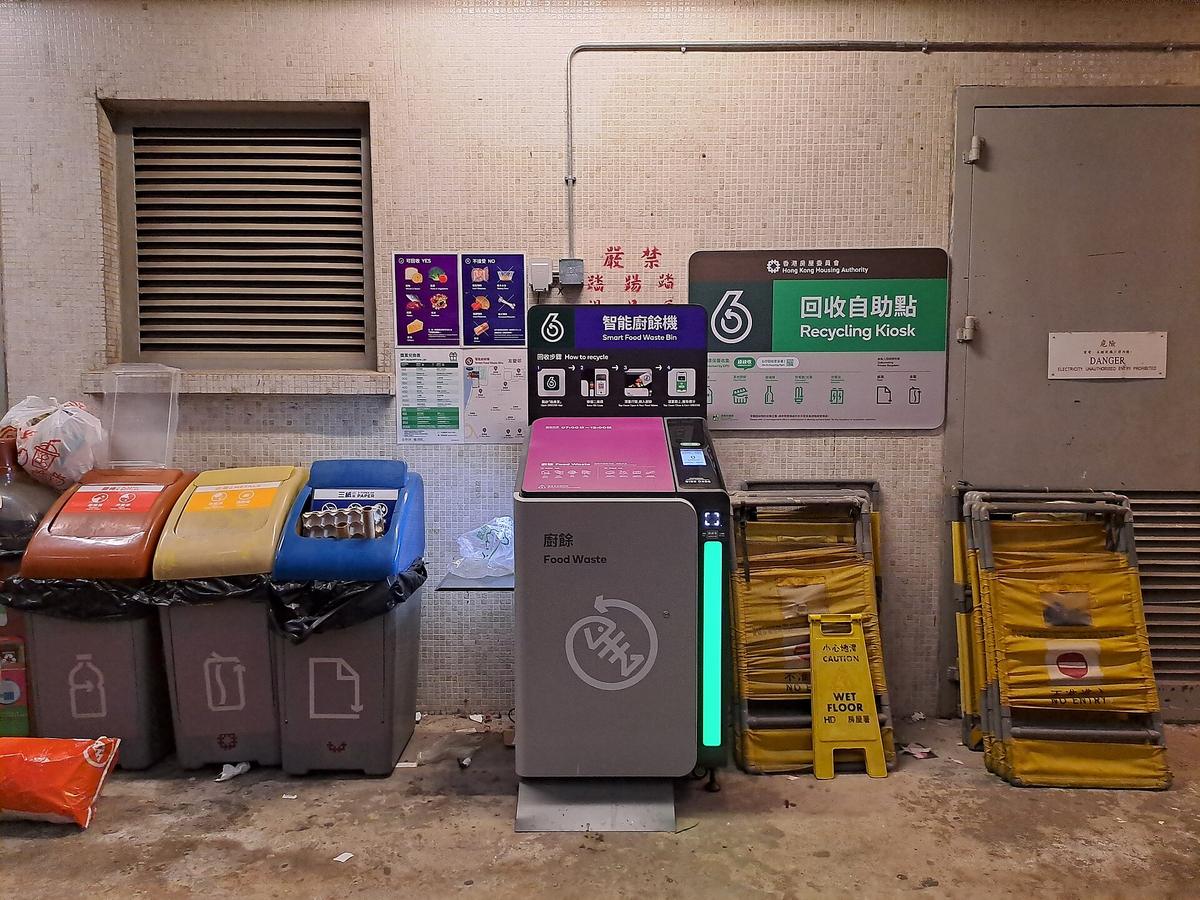

Singapore Food Waste Recycling Rate: the 18 Percent Reality
The 2024 food waste recycling rate of 18 percent sounds low until you compare it to the domestic recycling rate for all household streams, which was 12 to 13 percent in recent NEA publications. Food waste recycling performs slightly better than the household average because of two specific channels.
The Commercial Digester Mandate
Large commercial food waste generators, such as hotels, shopping malls, industrial canteens, and educational institutions with food courts, are now subject to the on site food waste digester mandate that took effect in 2024 under Part 5 of the Resource Sustainability Act 2019. Any new development with a food preparation or handling area of at least 750 square metres of gross floor area must install an aerobic or anaerobic digester that converts food waste into non potable water discharged to the sewer or into compost. That mandate drives a portion of the 133,000 tonnes recycled figure. The rest comes from a small number of voluntary programmes and pilot schemes.
No Blue Bin for Food
Household food waste has no equivalent infrastructure. No blue bin under the National Recycling Programme accepts food waste of any kind. The exclusion list is absolute: no food scraps, no food soiled paper, no pizza boxes, no leftover cooked food. The reason is contamination. Food residue soaks into paper and cardboard fibres, rendering them unrecyclable at the materials recovery facility (MRF). It coats plastics and glass in a film that requires washing the MRF does not perform. A single wet bag of food waste dropped into a blue bin can downgrade the entire truckload. Loads with visible food contamination are rejected at the MRF gate and sent directly to incineration.
Why Food Waste is Hard to Recycle: the Mechanism of Contamination
Food waste is hard to recycle because of overlapping properties that no sorting technology fully solves. Its water content is high and variable. A load can be 70 to 80 percent water, which means the dry solid fraction available for composting or digestion is small relative to the transport and processing cost. It is chemically unstable. Decomposition begins within hours at Singapore's ambient temperature, producing leachate, odour, and methane if left in a collection bin. That decomposition changes the material properties before any treatment can begin. It is almost never found in pure form. In the home stream, food waste is commingled with packaging, utensils, bones, and non organic items that must be removed before any recycling process can work.
The Contamination Chain from Chute to MRF
The contamination rate of the blue bin system, routinely reported by NEA above 40 percent, is driven primarily by food residue on otherwise recyclable items. The practical consequence is that household segregation infrastructure does not exist for food waste. The refuse chute system collects everything together. To change that, every HDB block would need a separate chute for food waste, or a community composting station on each floor, or a collection service that visits before the waste decomposes. None of those options are installed at scale. The Integrated Waste Management Facility (IWMF), currently under construction and designed to co locate incineration, materials recovery, and water reclamation, will not solve household segregation. It processes waste that has already been collected.
Food Waste Incineration Singapore: What Happens When You Drop it Down the Chute
Drop food waste into the general waste chute and it follows a predictable path. The refuse chute feeds into a centralised bin on the ground floor of the HDB block. The Public Waste Collector (PWC) servicing that sector collects the bin and transports the load to one of the four active WtE plants. At Tuas South or Senoko or Keppel Seghers Tuas, the mixed waste is tipped into the furnace. The furnace operates at temperatures high enough to destroy dioxins and pathogens. The combustion process converts the organic fraction of the food waste, known as biogenic carbon, into carbon dioxide and water vapour. The fossil carbon fraction from plastic packaging mixed with the food releases fossil CO2.
Energy Loss and the Ash Burden
The energy released turns water into steam that drives a turbine and generates electricity. The net energy recovery efficiency depends on the water content of the waste entering the furnace. Food waste with 70 percent moisture reduces that efficiency measurably. The solid residue left after combustion is incineration bottom ash, roughly 20 percent of the input mass by NEA estimates. That ash is barged to Semakau Landfill, the engineered enclosure between Pulau Semakau and Pulau Sakeng. A smaller fraction, fly ash captured by baghouse filters in the air pollution control system, is treated separately and landfilled. The ash to landfill ratio is higher for loads with high food waste content because the water evaporates but the inert mineral content of the food, bones, shells, and soil contaminants, remains as ash.
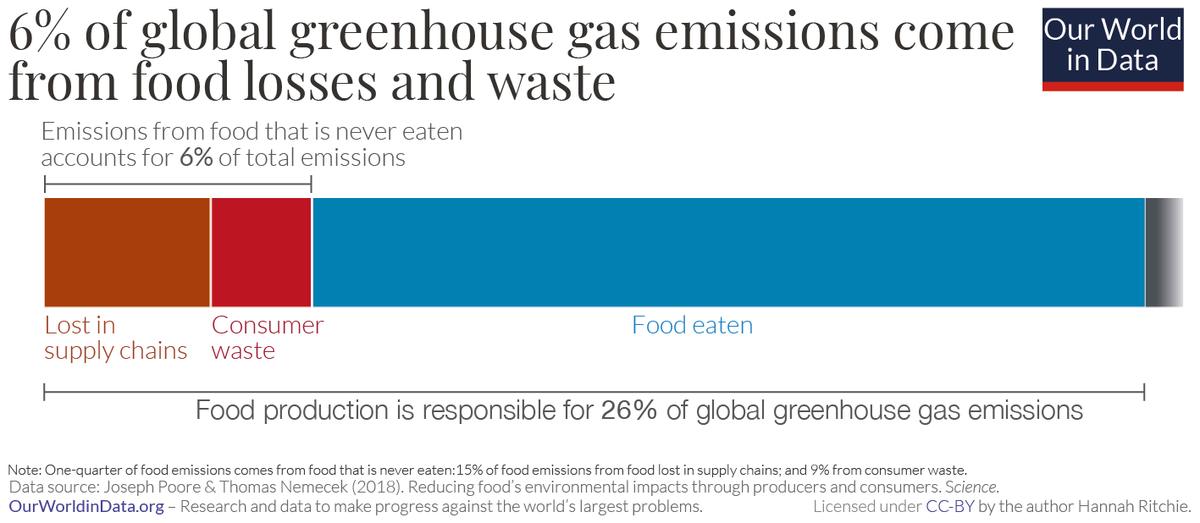

Food Waste Segregation Singapore: What Would Need to Change
Segregation of food waste at the household level would require a physical infrastructure that does not currently exist. The refuse chute system collects all waste into one stream. To separate food waste, every high rise building would need a second chute, or a collection point on each floor with a separate bin, or a kerbside collection service that visits multiple times per week to prevent decomposition. None of these are present in the existing HDB stock.
Policy Gaps and What They Mean
The Zero Waste Masterplan, published in 2019, set a target of 30 percent landfill reduction by 2030. It identified food waste as a priority stream. Yet the policy instruments available to address household food waste are limited. The on site digester mandate applies only to new commercial and institutional developments above the floor area threshold. Existing buildings are not required to retrofit. The mandatory packaging reporting (MPR) scheme under the Resource Sustainability Act covers packaging but not food waste itself. The producer responsibility scheme (PRS) for e waste, operated by ALBA E waste, has no equivalent for food because there is no single producer to hold responsible. The practical result is that household food waste segregation remains voluntary and rare. A resident who wants to separate food waste must find a community composter, a private collection service, or a pilot programme that accepts drop offs. The NEA does provide information on home composting, but the scale is negligible relative to the 622,000 tonnes disposed annually.
The One Thing a Household Can Do: Separate at the Point of Production
Separate food waste at the moment it is produced, not later. Once food waste is dropped into the refuse chute, it is mixed with everything else and cannot be recovered. If you separate it before disposal, you create a clean stream that can be composted or digested. Get a small kitchen caddy. Find a regular collection point or set up a home compost pile. Divert the fraction of food waste that is unavoidable: peels, cores, and eggshells. The larger fraction, plate waste and leftovers, requires planning to reduce at the cooking and ordering stage.
This matters. Every tonne of food waste diverted from incineration reduces the ash to landfill ratio, lowers the moisture load on the WtE plant, and extends the remaining capacity of Semakau Landfill, a moving target recalculated annually based on disposal trends. The gap between the national recycling rate and the domestic recycling rate is driven by exactly this kind of missed opportunity. The system is built for convenience, not for recovery. The change that matters is the one you make before the chute opens.
Full specification
| Accepted in the blue bin | No - it contaminates everything it touches | manufacturer |
|---|---|---|
| How it is collected | General waste chute or bin | manufacturer |
| What ruins a batch | Food waste IS the contaminant for other streams; a single wet bag can downgrade a whole blue-bin load | manufacturer |
| Where it ends up | Incineration, then ash to Semakau | manufacturer |
| The one thing a household can do | Separate it at the point it is produced, not later | manufacturer |
| Why this stream is difficult | It is wet, it is mixed, and it decomposes before it can be sorted | manufacturer |
Figures labelled manufacturer are the maker's own claim and are measured by them. Owner reported figures are aggregated from owners and are the ones worth planning around.
Common Questions
What is the food waste recycling rate in Singapore?
The food waste recycling rate in Singapore was 18 percent in 2024, according to the National Environment Agency. Of 755,000 tonnes generated, 133,000 tonnes were recycled and 622,000 tonnes were disposed of, almost all through incineration.
Why is food waste so difficult to recycle in Singapore?
Food waste is wet, mixed with other household refuse in the common chute, and begins decomposing before sorting. Its water content lowers incineration energy recovery efficiency, increases ash volume for Semakau Landfill, and contaminates blue bin recyclables at the MRF.
Can I put food waste in the blue recycling bin?
No. The blue bin under the National Recycling Programme excludes all food waste, including food soiled paper, pizza boxes, and any item with food residue. Loads with visible food contamination are rejected at the MRF and sent to incineration.
What happens to food waste that goes down the refuse chute?
It is collected by the Public Waste Collector and taken to a waste to energy plant such as Tuas South or TuasOne. The high water content reduces electricity generation per tonne. The remaining incineration bottom ash is barged to Semakau Landfill between Pulau Semakau and Pulau Sakeng.
Read next
-
 What the Blue Bin Actually Takes and What Happens When It Gets Contaminated
What Singapore's blue bin actually takes—and what happens to a whole truckload when one item is wrong. The contamination rule, not just the list.
What the Blue Bin Actually Takes and What Happens When It Gets Contaminated
What Singapore's blue bin actually takes—and what happens to a whole truckload when one item is wrong. The contamination rule, not just the list.
-
 What Must Never Go in a Singapore Household Bin and Where It Goes Instead
Batteries, lamps, chemicals and sharps must never go in a Singapore household bin. Where each goes instead, scoped to Singapore disposal law.
What Must Never Go in a Singapore Household Bin and Where It Goes Instead
Batteries, lamps, chemicals and sharps must never go in a Singapore household bin. Where each goes instead, scoped to Singapore disposal law.
-
 E-waste
Singapore's e-waste Producer Responsibility Scheme makes producers fund collection and recycling. Small tonnage, high value, and a genuine battery fire risk.
E-waste
Singapore's e-waste Producer Responsibility Scheme makes producers fund collection and recycling. Small tonnage, high value, and a genuine battery fire risk.
-
 Bulky waste in Singapore
What happens to bulky waste in Singapore after the town council collects it, from dismantling and metal recovery to incineration at Tuas South and the ash that reaches Semakau Landfill.
Bulky waste in Singapore
What happens to bulky waste in Singapore after the town council collects it, from dismantling and metal recovery to incineration at Tuas South and the ash that reaches Semakau Landfill.
-
 Plastic
Resin codes are not a recyclability rating. In Singapore's blue bin system, a plastic item is recycled only if it survives the MRF sort and finds a buyer.
Plastic
Resin codes are not a recyclability rating. In Singapore's blue bin system, a plastic item is recycled only if it survives the MRF sort and finds a buyer.
-
 Household batteries
Why household batteries cause fires in Singapore's waste system and the correct disposal pathway through ALBA E-waste collection points under the Producer Responsibility Scheme.
Household batteries
Why household batteries cause fires in Singapore's waste system and the correct disposal pathway through ALBA E-waste collection points under the Producer Responsibility Scheme.
-
 Glass
Glass is infinitely recyclable in theory but breaks in Singapore's commingled blue bin and contaminates paper. Ceramics are the specific poison.
Glass
Glass is infinitely recyclable in theory but breaks in Singapore's commingled blue bin and contaminates paper. Ceramics are the specific poison.
-
 Textiles
Textile waste in Singapore is growing faster than any other stream with almost no recycling. Blended fibres cannot be separated, so reuse is the only real option for households.
Textiles
Textile waste in Singapore is growing faster than any other stream with almost no recycling. Blended fibres cannot be separated, so reuse is the only real option for households.