Festive Packaging Waste in Singapore: What Mooncakes, Mandarin Oranges and Gift Hampers Cost the System
Why mooncake boxes, mandarin orange cartons and gift hampers spike Singapore's waste and why reduction beats recycling for festive packaging.

Why Festive Packaging Clogs Singapore’s Waste System
Three festivals, Mid-Autumn, Chinese New Year, and Christmas, drive a predictable surge in festive packaging waste Singapore cannot recycle away. The National Environment Agency (NEA) does not publish a separate tonnage for holiday packaging, but the evidence is visible to anyone: refuse chutes jammed with multi-tier mooncake boxes in September, blue bins overflowing with mandarin orange cartons and ribbon-tied gift hampers in February, and a December carpet of shredded gift wrap. The spike is real. Industry estimates put the Chinese New Year packaging surge 30% to 50% above baseline, and the system’s answer is incineration. But the problem is not that people throw things out. It is that the packaging is designed to be unrecyclable in Singapore’s commingled blue-bin collection. Most of it heads straight for the furnace and its ash ends up at Semakau Landfill.
Mooncake Packaging Waste Singapore: the Mid-Autumn Surge
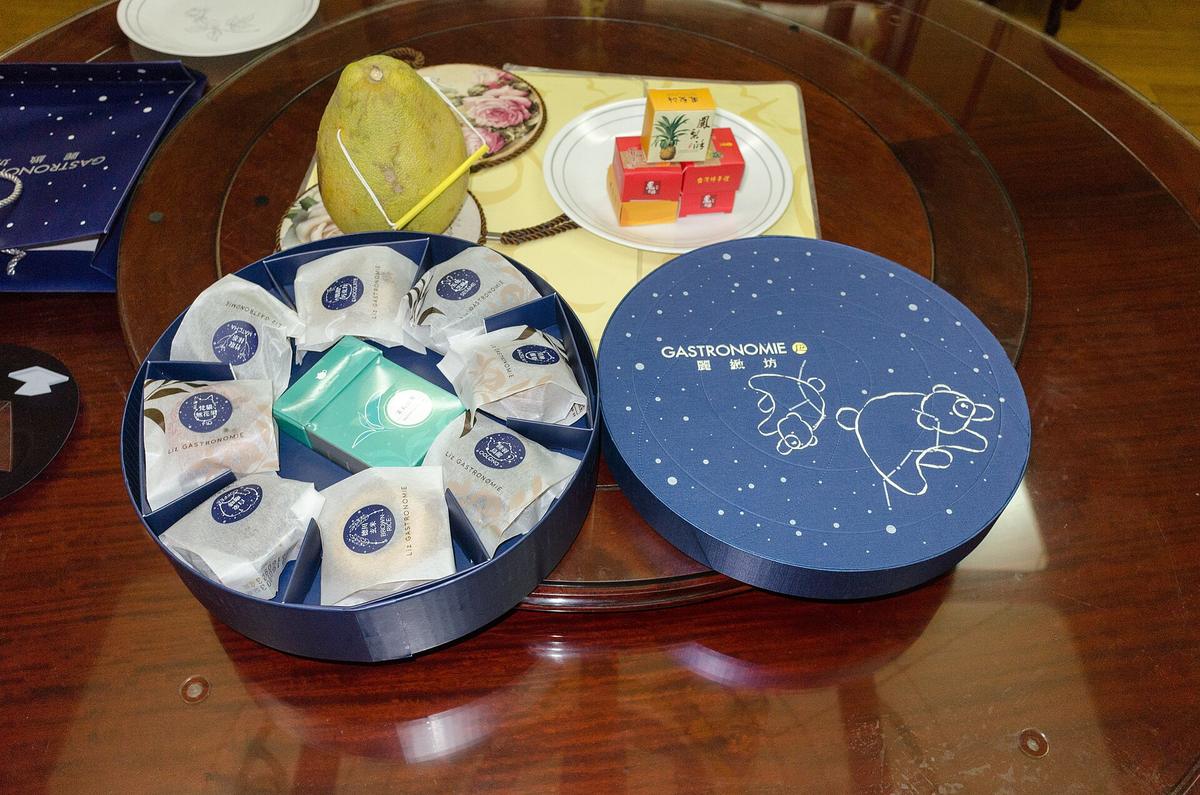
Mid-Autumn Festival produces the most concentrated packaging footprint of any holiday. In 2019, media surveys estimated 1.6 million mooncake boxes were discarded over a few weeks. A single box is a case study in mixed-material packaging: a rigid paperboard outer sleeve, a polymer window film, a foam or vacuum-formed insert holding each cake, a foil lid, and a separate outer bag. Every one of those layers is laminated or bonded to another material.
What Happens at the MRF
Place a laminated mooncake box in the blue bin and it will be rejected at the Materials Recovery Facility (MRF). The paperboard is bonded to a film that cannot be separated in a standard pulper. The plastic insert is a different polymer from the film and too small for optical sorters. The ribbon or string handle tangles sorting machinery. The NEA’s accepted-items list for the blue bin excludes laminated paper and mixed-material packaging. Every box that enters the bin becomes contamination. It spoils not just itself but the batch around it. The contamination rate for blue bins already exceeds 40% in some collection rounds. Festive packaging makes it worse.
The path is straightforward: the box goes from the blue bin to the incineration plant. The energy is recovered but the material is lost. The bottom ash, roughly 20% of the input mass, is barged to Semakau, the offshore landfill that at current fill rates is projected to close around 2035. Mooncake packaging does not need to be here.
Chinese New Year Packaging Waste: Mandarin Oranges and Gift Hampers
Chinese New Year generates the biggest volumetric spike of the year. Mandarins arrive in cardboard cartons that carry a wax coating or a polymer film window, making them non-recyclable in the commingled system. Gift hampers, woven baskets, rigid paperboard boxes, tissue paper, wraps, and ribbons, are the worst offender. Each hamper combines paperboard, plastic, textile, and foam inserts, all bonded or fastened together.
The Contamination Cascade
Drop a gift hamper into the blue bin and the sorting line stops. Ribbons wrap around conveyor rollers. Tissue paper, lightweight and often food-soiled, is too contaminated for fibre recovery. The plastic wrap is a mixed film that optical sorters cannot identify. A single hamper can cause a whole batch of recyclable paperboard to be diverted to incineration as contaminated reject. The domestic recycling rate stood at just 12% in 2024. Holiday contamination pulls that figure lower.
Red packets (ang pow) are another problem. Most are foil-laminated or coated, making them unrecyclable. Disposable decorations, polymer banners, synthetic cloth, go straight to the rubbish chute. Here is what to do. Buy unpackaged mandarins from a stall that sells them loose. FairPrice Group trialled unpackaged mandarins at Xtra hypermarkets, and Sheng Siong has encouraged loose sales since at least 2020. Skip the hamper and give a digital voucher or a bottle of oil instead.
Christmas Packaging Waste Singapore: Gift Wrap and Boxes
December sees a 20% to 30% rise in packaging waste, driven by gift wrap, gift boxes, and e-commerce cartons. Most gift wrap is plastic-coated or metallic-laminated. The blue bin does not accept it. If you rip the paper off and throw it in the recycling bin, you have contaminated that bin. Gift boxes with glossy coatings or foil stamping face the same rejection. Online-shopping corrugated cartons are recyclable if they are clean and dry, but the tape must be removed. The NEA’s list states that cardboard with tape on it is a contaminant: the tape does not break down in the pulper.
The failure mode is aspirational recycling. People see a cardboard box and believe it belongs in the blue bin without checking whether the coating, tape, or insert makes it unrecyclable. The result is a bin full of material that the MRF diverts to incineration. Single-use partyware, polymer plates, cutlery, napkins, is incinerated by design; it cannot go in the blue bin. The national recycling rate of 52% (2024) seems high, but strip out construction and industrial streams and the domestic rate of 12% tells a different story.
| Packaging Item | Recyclable In Blue Bin? | Actual Fate In The System |
|---|---|---|
| Paperboard mooncake box with film window | No (laminated, mixed-material) | Rejected at MRF → incineration → bottom ash to Semakau |
| Foam mooncake insert | No (not accepted) | Rejected → incineration |
| Gift hamper: paperboard + ribbon + wrap + foam | No (multi-material bonded) | Ribbon tangles machinery, whole hamper rejected → incineration |
| Mandarin orange carton with wax coating | No (coating not removable) | Rejected → incineration |
| Foil-laminated red packet (ang pow) | No (laminated) | Rejected → incineration |
| Glossy gift wrap (plastic-coated) | No (not accepted) | Rejected → incineration |
| Clean, dry, untaped corrugated cardboard | Yes | Recovered if not contaminated by adjacent items |
| Food-soiled paper napkin | No (food contamination) | Rejected → incineration |
| Plastic party plate | No (single-use, not accepted) | Rejected → incineration |
Reduce Festive Waste Singapore: Source Reduction Beats Recycling Here
Singapore’s waste hierarchy, reduce, reuse, recycle, recover, dispose, is set out in the Zero Waste Masterplan. Festive packaging is where the reduce step matters most. The recycling step does not work for mixed-material packaging because the system is not designed to handle it. The blue bin is a commingled collection: all recyclables go into one bin, and the MRF separates them mechanically. Laminated paperboard, polymer film, foam, and ribbons cannot be sorted by the equipment or accepted by the offtakers. Trying to recycle the unrecyclable is wasted effort.
What Actually Moves The Needle
Individual refusal of overpackaged products changes the system because it sends a market signal. When enough householders stop buying mooncakes in five-tier boxes, hotels and bakeries redesign the packaging. Raffles and Marriott properties publicly switched to FSC-certified paper and reduced-tier boxes from around 2019. The Mandatory Packaging Reporting scheme, in effect since 1 January 2021, requires brand owners with turnover over SGD 10 million to report packaging data and submit 3R plans. Reporting does not equal reduction. The earlier Singapore Packaging Agreement, concluded in 2020, saved 46,000 tonnes of packaging and SGD 106 million across 238 signatories, but it was voluntary and limited in scope.
The single highest-impact action: buy loose products with no packaging. Unpackaged mandarins, mooncakes sold by the piece from a tray, gift experiences instead of hampers. The mandatory carrier-bag charge of SGD 0.05 per bag, in force since 3 July 2023 at large supermarkets, has started to shift behaviour, but the real target is the packaging inside the bag. Refuse the box. If it has a ribbon, a window, a foam insert, or a gloss coat, it is heading for the furnace.

.jpg)
Why the Blue Bin Cannot Handle Festive Packaging
The blue bin is a commingled collection system. Residents drop paper, plastic, metal, and glass into a single bin. A Public Waste Collector (PWC) empties it into a truck with a compactor. At the MRF, conveyors, magnets, eddy-current separators, and optical sorters attempt to separate the stream. Every element of festive packaging fights this process.
Laminated paperboard is the most common offender. A mooncake box made of paperboard with a glued window film cannot have the film removed mechanically. The MRF’s paper pulper cannot break the bond, so the entire item is rejected. Ribbons and string wrap around rotating shafts and require a manual stop to cut them free. Foam inserts break into small, lightweight pieces that clog the air-classification system. Food-soiled fibre, a napkin or cake-box bottom with grease, is contamination because the residue spoils the material for remanufacturing. The NEA publishes a clear list. The list is ignored during the festive rush.
The result: a blue bin that is 40% or more contaminated sends its entire truckload to the incineration plant, not to the recycler. The energy-from-waste plants, Tuas South, Senoko, Keppel Seghers, TuasOne, burn the lot, recover electricity, and send the bottom ash to Semakau. The system works as a waste-disposal machine. It fails as a recycling machine when the material is designed to be unrecyclable.
Who Should Act on This and Who Can Skip it
This subject suits a householder who wants to know whether their blue-bin effort matters and what happens after the bag disappears through the refuse chute. It also suits a small-business operator deciding how to handle product packaging under the Mandatory Packaging Reporting rules, and a zero-waste practitioner comparing national systems. The honest difference between the 52% national recycling rate and the 12% domestic rate is the detail that changes how you evaluate the system’s performance.
Skip this subject if you are an industrial-waste or construction-waste professional needing detailed disposal protocols, a water-systems researcher looking at NEWater, or a corporate sustainability auditor needing company-specific compliance data. That information belongs to separate waste streams that operate under different rules. The grey bin, the food-waste bin, and the e-waste collection channel each have their own failures and their own fixes.
The single thing that most often goes wrong: a householder sees a festive box that looks recyclable, it is cardboard, after all, and puts it in the blue bin. That single item, if laminated or ribbon-tied, contaminates the whole bin. The instruction is simple. If the package has mixed materials, it is not recyclable in this system. Refuse it at the shop, and the waste never starts.
Common Questions
Can I recycle a mooncake box if I remove the plastic insert?
No. The paperboard itself is often laminated with a film that cannot be separated. Even clean paperboard with a glued window is rejected at the MRF. Only plain, uncoated, unlaminated board goes into the recycling stream.
What happens to gift wrap if I put it in the blue bin?
Most gift wrap is plastic-coated or metallic-laminated. The MRF rejects it, and it goes to the incineration plant. The energy is recovered, but the material is lost. Use plain paper gift wrap, uncoated, or skip it entirely.
Does the 12% domestic recycling rate mean only 12% of household waste is collected?
No. It means 12% of household waste is actually recycled. The rest is incinerated. The national rate of 52% (2024) includes construction and industrial waste, which are recycled at much higher rates. The two numbers are not comparable.
How long until Semakau Landfill is full?
NEA projected closure around 2035 at current fill rates, but the date is a moving target. Each new incineration plant, like TuasOne or the upcoming Integrated Waste Management Facility, reduces ash volume and pushes the date outward. It is not a fixed deadline.