What the Zero Waste Masterplan Targets Mean in Practice and Which Have Moved Since 2019
The Zero Waste Masterplan is NEA's 2019 waste policy. What its targets mean in practice, which have moved since publication, and the gap the official document cannot explain.
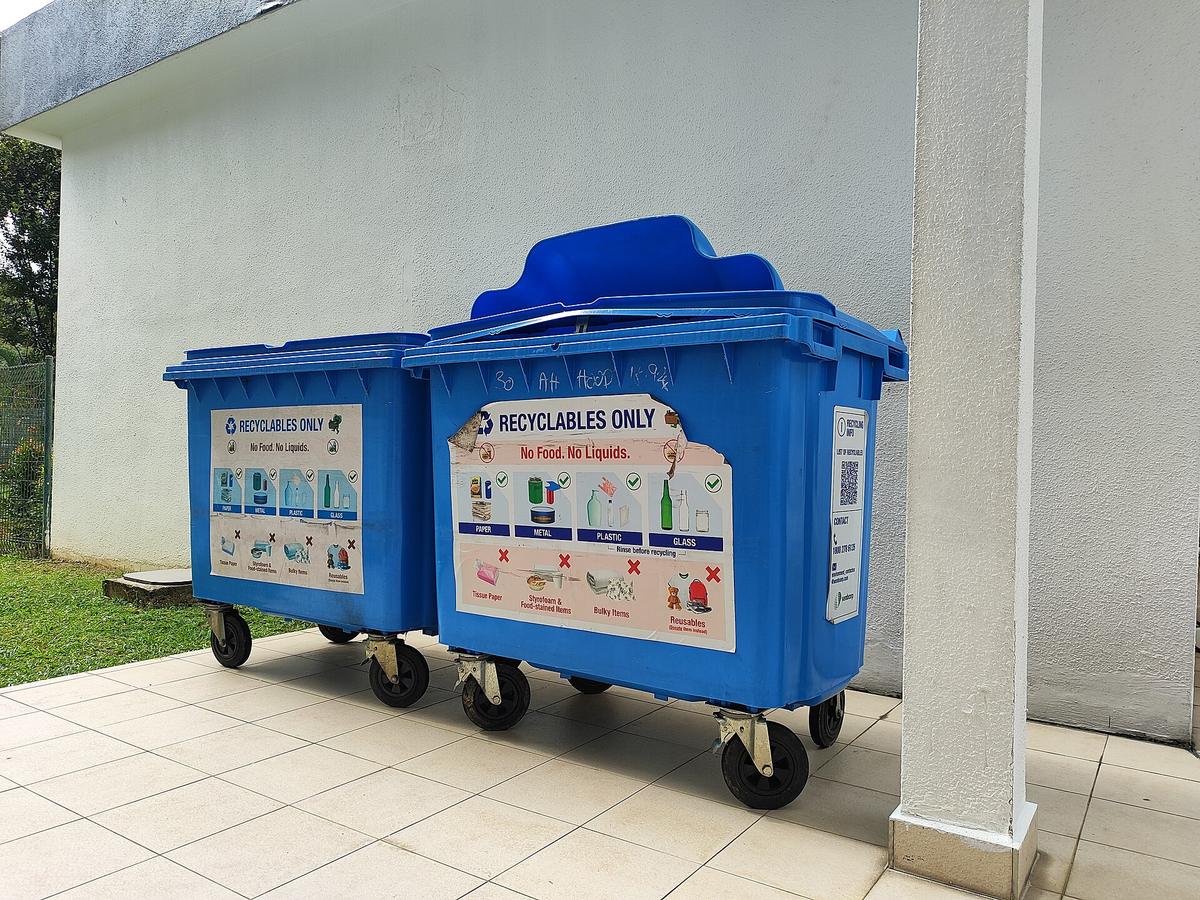

What the Zero Waste Masterplan Actually Says Vs. What People Think
The published recycling rate of 50-60% does not mean household sorting works. That figure is dominated by construction debris and industrial scrap. The domestic recycling rate, which measures what households put in the blue bin, has sat at 12-13% in recent NEA annual waste statistics. The Zero Waste Masterplan, published by the National Environment Agency in 2019, set out to close that gap. Here is what the targets mean for residents, which have moved since 2019, and what the numbers demand of households.
The Masterplan sits under the Resource Sustainability Act 2019, which created the legal framework for three extended producer responsibility schemes: e-waste, packaging, and food waste. Four headline targets drive the policy. A 70% overall recycling rate by 2030. A 30% reduction in waste-to-landfill per capita per day by 2030. A 30% domestic recycling rate by 2030. An 81% non-domestic recycling rate by 2030. As of 2024, the first two targets were unchanged. The 30% domestic rate was also unchanged, but the gap between expectation and current performance is roughly 18 percentage points. Only the waste-to-landfill reduction has moved: an interim 20% reduction by 2026 was introduced in 2023, creating a stepping stone toward the 2030 goal.
National Recycling Rate Vs. Domestic Recycling Rate: the Gap That Matters
The 70% national target can be met while household performance stays flat. Industrial and construction streams dominate the tonnage. In NEA's latest data, the domestic rate was around 12% to 13%, while the non-domestic rate was above 70%. The denominator explains the gap: total waste generated includes hundreds of thousands of tonnes of construction debris (concrete, metal, timber) recycled at high rates by law or by economics. Household waste is lighter, wetter, and contaminated with food residue.
A householder who recycles perfectly makes no visible change to the national rate. The domestic rate is the only number that responds to their behaviour. NEA publishes both figures annually in the Waste and Recycling Statistics release. The gap is not a data error. It is a structural feature of a system where incineration handles over 95% of disposed waste and the blue-bin recovery rate is low.
What the 30% Domestic Target Means on the Ground
A 30% domestic rate by 2030 would require doubling or tripling the current recovery rate. This is not a marginal improvement. Households must stop contaminating the blue bin. Collection frequency must improve. The materials recovery facility must handle cleaner feedstock. The single biggest obstacle is the blue-bin contamination rate, which NEA has reported above 40% in some periods. One food-soiled pizza box can contaminate an entire truckload. The baghouse filter emission standards on incineration plants do not change this: the problem is upstream, at the bin.
Singapore Waste Reduction Targets 2030: Which Have Moved and Which Have Not
Of the four headline targets set in 2019, three remain unchanged as of 2024: the 70% overall rate, the 30% domestic rate, and the 81% non-domestic rate. The target that has moved is the waste-to-landfill reduction. The original Masterplan set a 30% reduction in waste-to-landfill per capita per day by 2030. In 2023, NEA introduced an interim 20% reduction by 2026. This reflects the reality that Semakau Landfill's closure date is a moving projection, not a fixed deadline. Every new WtE plant and policy change recalculates the years remaining. The Integrated Waste Management Facility, currently under construction, will add incineration, materials recovery, and water reclamation in a single site, pushing the Semakau timeline outward again.
Per-capita waste generation has also been stubborn. Singapore generates roughly 0.8 to 0.9 kg of domestic waste per capita per day. To hit the 2026 interim target, that number needs to fall measurably. The target review mechanism built into the Masterplan allows NEA to adjust the trajectory without amending the Resource Sustainability Act 2019.
NEA Zero Waste Masterplan Summary: What Has Been Implemented
Three major provisions of the Masterplan are now operational, with a fourth in development.
E-waste Producer Responsibility Scheme. Launched in 2021 under Part 2 of the Resource Sustainability Act 2019. ALBA E-waste is the appointed operator for consumer e-waste collection. Producers must fund the collection and recycling of regulated consumer electrical and electronic equipment. Collection rates are still establishing baselines, and NEA does not publicly disaggregate what portion of collected material is dismantled for recovery versus exported. The gap in downstream fate remains a reporting limitation.
Mandatory Packaging Reporting. Part 3 of the Act requires producers meeting an annual turnover threshold to report packaging volumes and their waste reduction plans. This is a reporting obligation, not a recovery obligation. The data collected is the precursor to a future packaging EPR, which the Masterplan describes as the next step. Compliance rates in the first years were above 90% for obligated producers, indicating industry engagement.
Food Waste Segregation
The Masterplan committed to piloting and scaling food waste segregation at large commercial and industrial premises. Implementation is underway but household infrastructure is limited. Food waste in high-rise housing goes down the refuse chute and is incinerated. The high moisture content reduces waste-to-energy efficiency and increases the ash-to-landfill ratio. Segregation at source is the stated goal, but the physical chute system makes retrofitting difficult.
Singapore Landfill Reduction Policy and Semakau Capacity Timeline
Semakau Landfill is an engineered enclosure built between Pulau Semakau and Pulau Sakeng, receiving incineration bottom ash and non-incinerable waste. The original projected closure date, around 2035 to 2045, has moved outward with each new WtE plant. The TuasOne WtE Plant, the most recent, shifted the timeline. The IWMF commissioning timeline will push it further. NEA recalculates the closure date annually based on disposal trends and plant capacity. The gate fee for landfill tipping is low relative to the true scarcity of capacity, a policy choice that affects the price signal to waste producers.
The incineration rate routinely exceeds 95% of disposed waste. The remaining capacity at Semakau is the binding constraint on the entire system. Every kilogram that cannot be recycled and is incinerated becomes bottom ash (roughly 20% of input mass) that goes to Semakau. Fly ash is captured by baghouse filters and treated separately. The WtE plant availability factor determines whether waste is incinerated promptly or stockpiled. Senoko Incineration Plant and Tuas South Incineration Plant remain operational alongside Keppel Seghers Tuas WtE Plant and TuasOne.
Zero Waste Masterplan Progress Update: Known and Unknown
Progress is uneven. The e-waste PRS and Mandatory Packaging Reporting are live. Food waste segregation infrastructure is still scaling. The packaging EPR remains in development. The distinction between the Zero Waste Masterplan and the Singapore Green Plan 2030 is scope: the Masterplan is waste-specific; the Green Plan covers energy, water, and transport.
The failure modes the Masterplan must overcome are well documented. Blue-bin contamination from food-soiled items and non-accepted materials remains above 40% in some periods. Recyclable bagging, where residents place recyclables inside plastic bags before discarding them, causes whole batches to be rejected at the MRF. Rechargeable batteries in general waste cause fires at collection vehicles, MRFs, and incineration plants. The contamination rate reduction targets have not been met as of the latest NEA data.
The policy target review mechanism allows NEA to adjust the trajectory. The 2023 interim target for waste-to-landfill reduction is the first such adjustment. Whether the domestic rate target will be revised depends on whether household behaviour shifts.
| Target | Original 2019 Goal | Status as of 2024 |
|---|---|---|
| Overall recycling rate | 70% by 2030 | Unchanged; current rate ~55%, dominated by non-domestic streams |
| Domestic recycling rate | 30% by 2030 | Unchanged; current rate ~12-13% |
| Non-domestic recycling rate | 81% by 2030 | Unchanged; current rate above 70% |
| Waste-to-landfill reduction per capita per day | 30% by 2030 | Interim 20% reduction target by 2026 added in 2023 |
| E-waste PRS | Implement by 2021 | Operational; ALBA E-waste appointed operator |
| Mandatory Packaging Reporting | Reporting scheme live | Live; compliance >90% among obligated producers |
| Packaging EPR | Future scheme | In development; MPR data is precursor |
| Food waste segregation infrastructure | Scale commercial segregation | Underway; limited household infrastructure |
Practical Implications for Households
Three direct actions matter for a householder. First, put only clean, dry, and loose recyclables in the blue bin. Food residue, liquid, and plastic bags are contamination. One dirty item spoils a batch. Second, never put e-waste in the rubbish chute. Take regulated e-waste to ALBA E-waste collection points. Third, cut food waste. High-moisture food waste incinerates inefficiently and increases the ash volume that goes to Semakau.
The blue-bin acceptance list is narrower than international labels suggest. A package marked recyclable in Europe may not be accepted here. The MRF and offtaker demand determine what goes through. Singapore's baled recyclables are sold into global commodity markets, and the offtaker sets the purity standard. Export purity is the real test of whether an item was recovered or incinerated. The national rate does not capture this distinction.
What Small Businesses Must Do
Mandatory Packaging Reporting applies if annual turnover exceeds the regulatory threshold. E-waste PRS obligations apply to producers who place regulated consumer electronics on the market. The Resource Sustainability Act 2019 sets the legal framework. Penalties apply for non-compliance.
Who This Policy Affects and Who Can Skip the Details
The Masterplan's provisions directly affect three groups. Household residents in high-rise housing who use the blue bin and the refuse chute. Small-business operators who must comply with Mandatory Packaging Reporting or e-waste PRS obligations. And policy-curious residents or students who need the honest difference between the national and domestic rates. Anyone comparing international systems will find the specific engineering constraints that make Singapore's model hard to transplant: the incineration-first architecture, the refuse chute infrastructure, and the Semakau constraint.
Industrial-waste and construction-waste professionals seeking detailed disposal protocols for toxic or hazardous streams should look elsewhere; this covers municipal streams and mentions industrial totals only for context. Water-systems researchers looking for NEWater or used-water treatment will not find it here. Corporate sustainability auditors needing company-specific compliance data should consult NEA's regulatory filings.
The single thing that most often goes wrong is assuming the national rate reflects household behaviour. It does not. The domestic rate is the only number that responds to what residents do. Until the blue-bin contamination rate drops and the domestic rate rises, the 30% target by 2030 remains the system's hardest challenge.
Common Questions
What is the difference between the national recycling rate and the domestic recycling rate?
The national recycling rate includes all waste streams: industrial, construction, commercial, and household. The domestic recycling rate covers only household waste. The national rate sits at 50-60%. The domestic rate is 12-13%. Construction debris dominates the national figure.
Has the Semakau Landfill closure date changed since 2019?
Yes. The original projection of 2035-2045 has moved outward with each new WtE plant and policy measure. NEA recalculates the closure date annually based on disposal trends and plant capacity. It is a moving projection, not a fixed deadline.
What does the 30% domestic recycling rate target mean for me?
NEA expects households to recover roughly two and a half times more material than they do now. The main barrier is blue-bin contamination, which can exceed 40%. You must put only clean, dry, loose recyclables in the blue bin.
Is the e-waste Producer Responsibility Scheme working?
The scheme is operational. ALBA E-waste manages collection points. Collection volumes are still establishing baselines. NEA does not publicly disaggregate what percentage of collected e-waste is materially recovered versus exported for processing.
What is the Mandatory Packaging Reporting scheme?
It is a reporting obligation under Part 3 of the Resource Sustainability Act 2019. Producers above a turnover threshold must report packaging volumes and waste reduction plans. It is a precursor to a future packaging EPR scheme.
Why is the blue-bin contamination rate so high?
Food-soiled items, liquid residue, non-acceptable materials, and recyclables placed in plastic bags all cause contamination. The commingled collection model means a single dirty item can spoil an entire truckload.
What is the Integrated Waste Management Facility?
An under-construction facility that co-locates incineration, materials recovery, and water reclamation in a single site. It will replace some existing WtE plants and extend the Semakau capacity timeline.